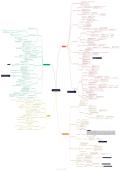
Death rate had increased Few soldiers to carry on fighting
Starvation and Germany had no more
Reasons why Germany lost WWI resources
American troops had double the strength
and troops
Kaiser potentially powerless + in danger Kaiser fled
Kiel Mutiny, Oct-Nov 1918, workers and
Kaiser abdication soldiers rebelled against the government
German workers and soldiers came up with
the Weimar Republic
Democracy: all could vote for parliament
and president
Weimar Republic Strengths
Reichstag appoint government + made
laws
4 hr drive from Berlin (capital city) No direct control over country
Coalition government - proportional Easy for small parties to get seats in Difficult to pass laws (51%)
Weaknesses representation Reichstag
Extremist views, unstable
Weakened Germans’ confidence in
Article 48 (overused) democracy
War guilt Clause Resented by German public
Reparations 132 billion gold marks to USA+France+UK
100,000 in army only Made them look weak
Terms Armed forces No tanks, submarines, air force
6 battle ships
Alsace, Lorraine => France
Treaty of Versailles 1919 Territory
East Upper Silesia => Poland
Very unpopular to the German public
Reaction The claim that Germany could have kept
Stab in the back myth fighting but that the army was betrayed
‘Protective custody’ - over 200,000 arrested Commanders of the German Army created
& imprisoned without trial myths to take the blame of the Kaiser
Civilian officials that took control after the Had crimes because they signed the
Guard concentration camps November criminals kaiser left Armistice and T.o.V
Commission of Holocaust Waffen SS
The SS (Himmler as leader, trusted by seized newspaper and communication
Mass shooting
Hitler) Communists revolted in Berlin buildings
Information on political opponents Nazi intelligence SD
Spartacist, Jan 1919 Lack of planning
Surveillance
Disparity: 100,000 civilians against 3000 100+ killed
How did it fail
Torture Invest¡titration for political opponents Police State - Hitler relied on heavily, soon Freikorps (ex-army soldiers, predominantly armed soldiers
became independent to judicial control Legal system right-wing views, strongly against easily crushed
Informat communists)
Gestapo (7000+)
Karl Liebknecht and Rosa Luxemburg
Coordinated deportation of Jews to arrested + murdered Leaderless
ghettos Left
Kurt Eisner (leader) over how monarchy and
Served other parties before - made Bavaria an independent country - Threat to Germany because it look a large
German police separate from Germany amount of German land
Seldom used Bavarian Uprising 1918-19
How did it fail Eisner was assassinated in Feb 1919
Made any unfavourable verdict (e.g. Judges had to swear an oath to act always
Reichstag Fire Trial) impossible in the interests of Hitler and the Nazi State People’s Courts Uprisings 1919-20
Communist workers wanted to arm
Ruhr Uprising 1920 themselves against the Kapp Putsch
Hitler’s personality convinced people of his
ideas
Freikorps due to disband because of T.o.V
Speeches
Broadcasted everywhere in loudspeakers
for all to hear 5000 gained control of Berlin and were German army felt sympathy and refused to
Right Kapp Putsch, March 1920 about to declare a new government stop the Freikorps (their friends)
Became official form of greeting (used Left
everyday) ‘Heil Hitler’ salut 1930s Nazi Propaganda 1. Weimar Kapp realised that he did not have the
more
Passive resistance: workers went on strike, Essential services (e.g. gas, electricity, support he would need to govern the
How did it fail would not cooperate tranport) unable to function country
Cheap + easy way of exposing German Nazi party controlled what was
citizens to Nazi ideas all day broadcasted Radios
T.o.V => huge reparations, income-
generating areas taken away (coal fields in
Wanted the birth of as many Aryans as East Upper Silesia and Saar)
possible Encourage marriage and family
Importance of Ruhr
Main industrial area
Rose by 2.4 mil: shortage of workers in
rearmament factories & autarky drive Discouraged employment Women Ruhr Occupation 1923 Cause Dec 1922 defaulted reparations payment French impatient (owed debts to the USA) Retaliation alongside Belgium
Traditional German fashion + blonde hair + 100 killed & 100,000 expelled
Workers went on strike to stop French and
blue eyes + plaits + flat shoes Appearance
Effect Belgium soldiers
Halt in industrial production
Had to reach the subjects concentrated on Teacher had to be par of the National
Nazi ideas Socialist Teacher’s League
1. Already happening due to war & growing
Education debt & Ruhr Occupation
Physical exercise + political indoctrination Future soldiers Hitler Youth/ League of German Maidens:
compulsory, other youth groups banned 2. No money BUT promised to pay striking
Deutshemark decrease in value + prices of
Future motherhood Causes workers
goods increase
Churches were a threat to Hitler because 3. Printing more paper currency without
religious leaders could give alternate views backing it up with goods => money
of authority becomes worthless
Catholic Church stay out of politics => 1. Load of break 250 marks in Jan 1923 =>
freedom of worship & running its own 200 billion marks in Nov 1923
youth groups
2. Worthless (costs more money to print a
Newspaper censored note than its actually worth)
Nazis infiltrated schools with their Hyperinflation 1919-23
Summary ideologies Concordat 1933 3. Life during the Nazis
Church schools shut down + Hitler Youth Effects 3. Hard to store/carry
became mandatory Religion: undermining influence
Those with fixed incomes: income did not
Didn’t work because Catholic Bishops keep up with price
4. Millions of middle class thrown into
Galen started to criticisethe Nazis poverty
Those with savings: savings became
Aimed to control all the churches in one worthless
organisation
Money loses more value which creates a
National church that advocated an alter, Governments solution Printing more money vicious cycle
E.g. banning Old Testament - Jewish book Nazi-influenced form of religion Reich Church
Bases on industrial & agricultural wealth
Didn’t work because most people stayed
Germans didn’t care about Reich Church loyal to their own local churches stabilised prices and restored confidence in
Rentenmarks, Nov 1923 German economy
All young men aged 18-25 served 6 months
in the National Labour Service (RAD) Public work scheme 1 rentenmark => 10 billion marks
Sympathy of the Allies
By 1938, unemployment was almost
Armed forces grew from 0.4 million (1935) Men where forcefully signed up the army Promised reparations
completely eradicated excluding women
to 1.4 million (1939) for 2 years Fr & Bg end occupation April 1924 Resume production of goods Boost of industry
and those considered ‘non-citizens’
Supporting industries: manufacturing Reduced to 50 million per years + 800
uniform, weapons & arms Rearmament/Conscription million mark loan from US Wages rose, cost of living dropped Standard of living improved
Employment
Demanded employment Burst of investment (billions) Vulnerable + badly affected by Wall Street
Renegotiated reparations Dawes Plan 1924 Reliant on US loan Crash (date)
Follow wishes of employers
Timescale too long Limited Germany’s progress as a nation
Could not strike, bargain wages, leave jobs Successes
without permission German Labour Front (DAF)
Treaty signed with France, Belgium, Italy,
Britain, Czechoslovakia and Poland
Longer working hours
Lives of workers
Germany accepted its new western borders
Positive image of Nazis All countries agreed to avoid military force
Leisure activities Strength through Joy Treaty of Locarno 1925 except in self-defense
Ruhr protected + guaranteed Germany’s
Satisfied workers, more productive at work security Production of goods Boost in industry
‘Untermensch’: Jews, Slavs, gypsies,
homosexuals, disables Germany was now being treated as an Shows that Germany was accepting the
equal - improvement in relations Versailles settlement (e.g. Alsace-Lorraine) Caving in to France Angry nationalists
By eliminating those who ‘contaminated’ Anti-semitism
Aryans, the master race could restore Stresemann 1923-29 League of Nations 1926 Germany joined LoN Regained respect from other countries
Germany’s dominance in the world
Stripped Jews of German Citizenship Germany 1918-45 Kellog-Briand Pact 1928
64 countries agreed not to go to war with
one another Germany was included
Stresemann was an internationally
Outlawed marriage & sexual relationships Nuremberg Laws 1935
recognised leader and his government was The German Zentrum Party criticised
taken seriously Stresemann for allowing bad influences to
Decree on Passport of Jews 1938 Culture be published in Germany
Racial Policies 1933-1945
invalidated German passports Removed all civil & political rights
Criticised by German economists for relying
400 synagogues, 7500 shops destroyed on the Dawes plan and not putting enough
SS attacked Jewish homes, businesses,
synagogues (Jewish temple) Night of Broken Glass (9 Nov 1938) Reliance of US loans money into better infrastructure
Kindertransport (scheme to evacuate Failures
Jewish children to Britain)
Stresemann made farming policies which Farmers were already poor and were left
Farmers didn’t work, less crops produced behind by the government
Disabled children Wards in 1939 were
Claimed the lives of 70,273 disabled people made to kill disabled children
Right wing Germans criticised Stresemann
Stab in the back myth for following T.o.V
Many Germans froze to death Cold winter 1939-40 Shortage of raw materials (e.g. coal) Failure to achieve Autarky (economic self-
suffiency)
Membership: less than 1000, 1919=> 3000,
Monotonous diets Meat shortage Lack of imports from USA 1920
Better resources given to more important Money: 7=>180,000 marks
people Food and clothes entitlement Rationing
25 point plan: scrapping T.o.V + depriving
Towards end of the war: 3 million fled from Jews of German citizenship
More starvation Worsened food shortage east to west to escape Soviet army
Changed name from DAP to NSDAP Pushed Drexler out
Dresden: 70% of buildings destroyed,
25,000 killed 61 cities ‘Area bombing’ policy, 1942: large industrial Hyperinflation made people question the
NSDAP development because of Hitler
cities + incendiary (cause fire) bombs government
Severe overcrowding 7.5 mil made homeless
Allied bombing (Catholic) population in Bavaria disliked
Cause New Weimar and saw it as weak
Propaganda downplayed destruction
Morale Plan was to march through the streets of
Lying about damage Determination or Frustration? Hitler plotted with nationalists politicians, Munich and take control of the war and
Kahn & Lossow, to take over Munich ministry building
Huge labour shortage on the home front 13.7 million men in army
Employment Munich Putsch 1923 Kahr had changed his mind and called in
Armament factories & medics Women were 60% of workforce police and army reinforcement to stop
How did it fail Hitler
Forced segregation of Jews
Nazi party banned
Ghettoisation (1941-42)
Warsaw ghetto: 400,000 + Jews confined
in 1.3 sq miles Reflected on the Munich putsch and
4. WWII Effect realised he couldn’t gain power through Wrote the Mein Kampf and thought about
violent actions ideas to help survival of Nazi party
Systematic, deliberate, physical
annihilation of European Jews Final solution Wannsee Conference (Jan 1942) Escalated racial persecution Hitler sentenced to five years
Got increased publicity and public Only served 3 months because judges
sympathy supported him
Concentration camp => extermination
Auschwitz-Birkenau: 2.5 mill mudered camp
Führerprinzip Hitler has full power over party
6 million Jews 5 million non-Jews died
1942-48 Holocaust Each region had a leader for each area
Killed 1.2 million USSR civilians by 1943 Death squad: Einsatzgruppen Gauleiters Easy to control regions (take over countries)
War on two fronts: Allies + USSR Nazi is present, well-known, organised
Reorganisation 1924-29
Increased bombing Nazi ideology to infiltrate + spread among
Leagues different groups
Economy had decrease because of lack of
trade Enemies had far more resources Reasons for Germany’s defeat Protection against government forces +
SA intimidate anti-Nazis
Japan, Italy, Hungary and occupied
End of Third Reich
territories Lack of loyal allies Protect senior members
SS
Surrendered 7 May 1945 (a week later) Admiral Doenitz made leader Hitler’s death 30 April 1945 Responsible for Concentration camps
Vicious Cycle
Lower production
Industry loses moeny
Spend less Prices drop Demands falls
Lay of workers 1/3 unemployment
2. Hitler’s rise to power What happened US calls in loans
Poverty, hunger, homelessness
Could get no loans
9000+ banks fail
Great Depression 1929 Lose savings
Raised taxes + cut wages + cut
unemployment pay Worsened situation
Government’s Response Heinrich Brüning
Made Hindenburg use Article 48 Undermined democracy
Germans lost faith in democracy - looked
to extreme parties for help
Offered solution to nations’ problem:
economic recovery by demolishing T.o.V
Warned people about dangers of
communism (USSR- million killed) Frightened middle class supported Nazi
Nazis went from having 12 seats in
Reichstag, 1928, to having 230 seats in 1932
How Hitler became chancellor (30th Jan Nazi gained recognition as a major political
1933) July 1932 election Biggest party in Reichstag (37.3%) force
Proved Hitler’s ‘legitimacy’ to becoming
chancellor
Vast scale Nazi propaganda
Hindenburg’s advisors convinced him that
Hitler must be given chancellorship to
Von Schleicher could not create collation ensure the support of the Nazi Party and a Von Papen believed he could control Hitler,
with Nazi Party functional government so Hindenburg agreed
Reichstag Fire (27th Feb 1933) Communist leaders imprisoned
Removed Reichstag (444 votes to 94 votes)
by intimidating oppositions into agreeing
Enabling Act (23rd March 1933) with him by using the SA Absolute power to make laws Removed external sources of opposition
Banned trade unions Could unite people to protest against Hitler
Creation of dictatorship Banned all other parties Destroyed democracy, one-part state
Law of restoration of Professional Civil Banned Jews and other political
Service opponents from getting jobs
400+ SA murdered, including Röhm (its
leader), von Schleicher (previous Removed oppositions within Nazi Party
Night of Long Knives (30th Jun 1934) Hitler saw SA as a threat chancellor)
Head of army, personal oath of allegiance
Became Führer (19 Aug 1934) sworn to Hitler Paved way for Germany’s rearmament Neutralised opposition within the army
Starvation and Germany had no more
Reasons why Germany lost WWI resources
American troops had double the strength
and troops
Kaiser potentially powerless + in danger Kaiser fled
Kiel Mutiny, Oct-Nov 1918, workers and
Kaiser abdication soldiers rebelled against the government
German workers and soldiers came up with
the Weimar Republic
Democracy: all could vote for parliament
and president
Weimar Republic Strengths
Reichstag appoint government + made
laws
4 hr drive from Berlin (capital city) No direct control over country
Coalition government - proportional Easy for small parties to get seats in Difficult to pass laws (51%)
Weaknesses representation Reichstag
Extremist views, unstable
Weakened Germans’ confidence in
Article 48 (overused) democracy
War guilt Clause Resented by German public
Reparations 132 billion gold marks to USA+France+UK
100,000 in army only Made them look weak
Terms Armed forces No tanks, submarines, air force
6 battle ships
Alsace, Lorraine => France
Treaty of Versailles 1919 Territory
East Upper Silesia => Poland
Very unpopular to the German public
Reaction The claim that Germany could have kept
Stab in the back myth fighting but that the army was betrayed
‘Protective custody’ - over 200,000 arrested Commanders of the German Army created
& imprisoned without trial myths to take the blame of the Kaiser
Civilian officials that took control after the Had crimes because they signed the
Guard concentration camps November criminals kaiser left Armistice and T.o.V
Commission of Holocaust Waffen SS
The SS (Himmler as leader, trusted by seized newspaper and communication
Mass shooting
Hitler) Communists revolted in Berlin buildings
Information on political opponents Nazi intelligence SD
Spartacist, Jan 1919 Lack of planning
Surveillance
Disparity: 100,000 civilians against 3000 100+ killed
How did it fail
Torture Invest¡titration for political opponents Police State - Hitler relied on heavily, soon Freikorps (ex-army soldiers, predominantly armed soldiers
became independent to judicial control Legal system right-wing views, strongly against easily crushed
Informat communists)
Gestapo (7000+)
Karl Liebknecht and Rosa Luxemburg
Coordinated deportation of Jews to arrested + murdered Leaderless
ghettos Left
Kurt Eisner (leader) over how monarchy and
Served other parties before - made Bavaria an independent country - Threat to Germany because it look a large
German police separate from Germany amount of German land
Seldom used Bavarian Uprising 1918-19
How did it fail Eisner was assassinated in Feb 1919
Made any unfavourable verdict (e.g. Judges had to swear an oath to act always
Reichstag Fire Trial) impossible in the interests of Hitler and the Nazi State People’s Courts Uprisings 1919-20
Communist workers wanted to arm
Ruhr Uprising 1920 themselves against the Kapp Putsch
Hitler’s personality convinced people of his
ideas
Freikorps due to disband because of T.o.V
Speeches
Broadcasted everywhere in loudspeakers
for all to hear 5000 gained control of Berlin and were German army felt sympathy and refused to
Right Kapp Putsch, March 1920 about to declare a new government stop the Freikorps (their friends)
Became official form of greeting (used Left
everyday) ‘Heil Hitler’ salut 1930s Nazi Propaganda 1. Weimar Kapp realised that he did not have the
more
Passive resistance: workers went on strike, Essential services (e.g. gas, electricity, support he would need to govern the
How did it fail would not cooperate tranport) unable to function country
Cheap + easy way of exposing German Nazi party controlled what was
citizens to Nazi ideas all day broadcasted Radios
T.o.V => huge reparations, income-
generating areas taken away (coal fields in
Wanted the birth of as many Aryans as East Upper Silesia and Saar)
possible Encourage marriage and family
Importance of Ruhr
Main industrial area
Rose by 2.4 mil: shortage of workers in
rearmament factories & autarky drive Discouraged employment Women Ruhr Occupation 1923 Cause Dec 1922 defaulted reparations payment French impatient (owed debts to the USA) Retaliation alongside Belgium
Traditional German fashion + blonde hair + 100 killed & 100,000 expelled
Workers went on strike to stop French and
blue eyes + plaits + flat shoes Appearance
Effect Belgium soldiers
Halt in industrial production
Had to reach the subjects concentrated on Teacher had to be par of the National
Nazi ideas Socialist Teacher’s League
1. Already happening due to war & growing
Education debt & Ruhr Occupation
Physical exercise + political indoctrination Future soldiers Hitler Youth/ League of German Maidens:
compulsory, other youth groups banned 2. No money BUT promised to pay striking
Deutshemark decrease in value + prices of
Future motherhood Causes workers
goods increase
Churches were a threat to Hitler because 3. Printing more paper currency without
religious leaders could give alternate views backing it up with goods => money
of authority becomes worthless
Catholic Church stay out of politics => 1. Load of break 250 marks in Jan 1923 =>
freedom of worship & running its own 200 billion marks in Nov 1923
youth groups
2. Worthless (costs more money to print a
Newspaper censored note than its actually worth)
Nazis infiltrated schools with their Hyperinflation 1919-23
Summary ideologies Concordat 1933 3. Life during the Nazis
Church schools shut down + Hitler Youth Effects 3. Hard to store/carry
became mandatory Religion: undermining influence
Those with fixed incomes: income did not
Didn’t work because Catholic Bishops keep up with price
4. Millions of middle class thrown into
Galen started to criticisethe Nazis poverty
Those with savings: savings became
Aimed to control all the churches in one worthless
organisation
Money loses more value which creates a
National church that advocated an alter, Governments solution Printing more money vicious cycle
E.g. banning Old Testament - Jewish book Nazi-influenced form of religion Reich Church
Bases on industrial & agricultural wealth
Didn’t work because most people stayed
Germans didn’t care about Reich Church loyal to their own local churches stabilised prices and restored confidence in
Rentenmarks, Nov 1923 German economy
All young men aged 18-25 served 6 months
in the National Labour Service (RAD) Public work scheme 1 rentenmark => 10 billion marks
Sympathy of the Allies
By 1938, unemployment was almost
Armed forces grew from 0.4 million (1935) Men where forcefully signed up the army Promised reparations
completely eradicated excluding women
to 1.4 million (1939) for 2 years Fr & Bg end occupation April 1924 Resume production of goods Boost of industry
and those considered ‘non-citizens’
Supporting industries: manufacturing Reduced to 50 million per years + 800
uniform, weapons & arms Rearmament/Conscription million mark loan from US Wages rose, cost of living dropped Standard of living improved
Employment
Demanded employment Burst of investment (billions) Vulnerable + badly affected by Wall Street
Renegotiated reparations Dawes Plan 1924 Reliant on US loan Crash (date)
Follow wishes of employers
Timescale too long Limited Germany’s progress as a nation
Could not strike, bargain wages, leave jobs Successes
without permission German Labour Front (DAF)
Treaty signed with France, Belgium, Italy,
Britain, Czechoslovakia and Poland
Longer working hours
Lives of workers
Germany accepted its new western borders
Positive image of Nazis All countries agreed to avoid military force
Leisure activities Strength through Joy Treaty of Locarno 1925 except in self-defense
Ruhr protected + guaranteed Germany’s
Satisfied workers, more productive at work security Production of goods Boost in industry
‘Untermensch’: Jews, Slavs, gypsies,
homosexuals, disables Germany was now being treated as an Shows that Germany was accepting the
equal - improvement in relations Versailles settlement (e.g. Alsace-Lorraine) Caving in to France Angry nationalists
By eliminating those who ‘contaminated’ Anti-semitism
Aryans, the master race could restore Stresemann 1923-29 League of Nations 1926 Germany joined LoN Regained respect from other countries
Germany’s dominance in the world
Stripped Jews of German Citizenship Germany 1918-45 Kellog-Briand Pact 1928
64 countries agreed not to go to war with
one another Germany was included
Stresemann was an internationally
Outlawed marriage & sexual relationships Nuremberg Laws 1935
recognised leader and his government was The German Zentrum Party criticised
taken seriously Stresemann for allowing bad influences to
Decree on Passport of Jews 1938 Culture be published in Germany
Racial Policies 1933-1945
invalidated German passports Removed all civil & political rights
Criticised by German economists for relying
400 synagogues, 7500 shops destroyed on the Dawes plan and not putting enough
SS attacked Jewish homes, businesses,
synagogues (Jewish temple) Night of Broken Glass (9 Nov 1938) Reliance of US loans money into better infrastructure
Kindertransport (scheme to evacuate Failures
Jewish children to Britain)
Stresemann made farming policies which Farmers were already poor and were left
Farmers didn’t work, less crops produced behind by the government
Disabled children Wards in 1939 were
Claimed the lives of 70,273 disabled people made to kill disabled children
Right wing Germans criticised Stresemann
Stab in the back myth for following T.o.V
Many Germans froze to death Cold winter 1939-40 Shortage of raw materials (e.g. coal) Failure to achieve Autarky (economic self-
suffiency)
Membership: less than 1000, 1919=> 3000,
Monotonous diets Meat shortage Lack of imports from USA 1920
Better resources given to more important Money: 7=>180,000 marks
people Food and clothes entitlement Rationing
25 point plan: scrapping T.o.V + depriving
Towards end of the war: 3 million fled from Jews of German citizenship
More starvation Worsened food shortage east to west to escape Soviet army
Changed name from DAP to NSDAP Pushed Drexler out
Dresden: 70% of buildings destroyed,
25,000 killed 61 cities ‘Area bombing’ policy, 1942: large industrial Hyperinflation made people question the
NSDAP development because of Hitler
cities + incendiary (cause fire) bombs government
Severe overcrowding 7.5 mil made homeless
Allied bombing (Catholic) population in Bavaria disliked
Cause New Weimar and saw it as weak
Propaganda downplayed destruction
Morale Plan was to march through the streets of
Lying about damage Determination or Frustration? Hitler plotted with nationalists politicians, Munich and take control of the war and
Kahn & Lossow, to take over Munich ministry building
Huge labour shortage on the home front 13.7 million men in army
Employment Munich Putsch 1923 Kahr had changed his mind and called in
Armament factories & medics Women were 60% of workforce police and army reinforcement to stop
How did it fail Hitler
Forced segregation of Jews
Nazi party banned
Ghettoisation (1941-42)
Warsaw ghetto: 400,000 + Jews confined
in 1.3 sq miles Reflected on the Munich putsch and
4. WWII Effect realised he couldn’t gain power through Wrote the Mein Kampf and thought about
violent actions ideas to help survival of Nazi party
Systematic, deliberate, physical
annihilation of European Jews Final solution Wannsee Conference (Jan 1942) Escalated racial persecution Hitler sentenced to five years
Got increased publicity and public Only served 3 months because judges
sympathy supported him
Concentration camp => extermination
Auschwitz-Birkenau: 2.5 mill mudered camp
Führerprinzip Hitler has full power over party
6 million Jews 5 million non-Jews died
1942-48 Holocaust Each region had a leader for each area
Killed 1.2 million USSR civilians by 1943 Death squad: Einsatzgruppen Gauleiters Easy to control regions (take over countries)
War on two fronts: Allies + USSR Nazi is present, well-known, organised
Reorganisation 1924-29
Increased bombing Nazi ideology to infiltrate + spread among
Leagues different groups
Economy had decrease because of lack of
trade Enemies had far more resources Reasons for Germany’s defeat Protection against government forces +
SA intimidate anti-Nazis
Japan, Italy, Hungary and occupied
End of Third Reich
territories Lack of loyal allies Protect senior members
SS
Surrendered 7 May 1945 (a week later) Admiral Doenitz made leader Hitler’s death 30 April 1945 Responsible for Concentration camps
Vicious Cycle
Lower production
Industry loses moeny
Spend less Prices drop Demands falls
Lay of workers 1/3 unemployment
2. Hitler’s rise to power What happened US calls in loans
Poverty, hunger, homelessness
Could get no loans
9000+ banks fail
Great Depression 1929 Lose savings
Raised taxes + cut wages + cut
unemployment pay Worsened situation
Government’s Response Heinrich Brüning
Made Hindenburg use Article 48 Undermined democracy
Germans lost faith in democracy - looked
to extreme parties for help
Offered solution to nations’ problem:
economic recovery by demolishing T.o.V
Warned people about dangers of
communism (USSR- million killed) Frightened middle class supported Nazi
Nazis went from having 12 seats in
Reichstag, 1928, to having 230 seats in 1932
How Hitler became chancellor (30th Jan Nazi gained recognition as a major political
1933) July 1932 election Biggest party in Reichstag (37.3%) force
Proved Hitler’s ‘legitimacy’ to becoming
chancellor
Vast scale Nazi propaganda
Hindenburg’s advisors convinced him that
Hitler must be given chancellorship to
Von Schleicher could not create collation ensure the support of the Nazi Party and a Von Papen believed he could control Hitler,
with Nazi Party functional government so Hindenburg agreed
Reichstag Fire (27th Feb 1933) Communist leaders imprisoned
Removed Reichstag (444 votes to 94 votes)
by intimidating oppositions into agreeing
Enabling Act (23rd March 1933) with him by using the SA Absolute power to make laws Removed external sources of opposition
Banned trade unions Could unite people to protest against Hitler
Creation of dictatorship Banned all other parties Destroyed democracy, one-part state
Law of restoration of Professional Civil Banned Jews and other political
Service opponents from getting jobs
400+ SA murdered, including Röhm (its
leader), von Schleicher (previous Removed oppositions within Nazi Party
Night of Long Knives (30th Jun 1934) Hitler saw SA as a threat chancellor)
Head of army, personal oath of allegiance
Became Führer (19 Aug 1934) sworn to Hitler Paved way for Germany’s rearmament Neutralised opposition within the army