Germany 8 Markers
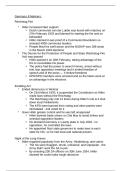
Reichstag Fire
Hitler increased Nazi support
o Dutch communist van der Lubbe was found with matches on
27th February 1933 and blamed for starting the fire and so
beheaded
o Hitler claimed it was proof of a Communist Revolution so
arrested 4000 communist leaders
o People liked his swift action and the NSDAP won 288 seats
in the March 1933 elections
The Decree for the Protection of People and State (Reichstag Fire
Act) was passed
o Hitler passed it on 28th February, taking advantage of the
fire to consolidate his power
o The police had the power to search homes, arrest without
trial, ban opposition meetings and it ended freedom of
speech and of the press — it limited freedoms
o KPD/SPD members were arrested and so the Nazis were at
an advantage in the elections
Enabling Act
Ended democracy in Weimar
o On 23rd March 1933, it suspended the Constitution so Hitler
made laws without the Reichstag
o The Reichstag only met 12 times during Hitler's rule & it shut
down local Parliaments
o The KPD were banned from voting and other parties were
intimidated - 444 voted for it
Gave Hitler greater control and he was left unopposed
o Hitler banned trade unions on 2nd May to avoid strikes and
arrested opposition leaders
o He declared Germany a 1-party state in July 1933 - no
opposition, he controlled the laws
o He appointed Nazi state governors to make laws in each
state for him, so he had local and national powers
Night of the Long Knives
Hitler regained popularity from the Army, Hindenburg, and voters
o The SA were thuggish, drunk, untrained, and unpopular - the
Army didn't want the SA to join
o By arresting 200 SA officers on 30th June 1934, Hitler
showed he could make tough decisions
, o The Army were thankful they wouldn't be sullied by the SA
and Hindenburg middle-class voters were glad Hitler had
removed the thugs
Hitler regained more control over the SA
o Ernst Röhm disliked Hitler's affiliations with businessmen and
Hitler thought he was going to try and usurp him as leader;
he claimed Röhm was plotting against Germany
o Hitler executed Röhm and weakened the SA so was at less
risk of being overthrown
o 400 SA killed
o He completely controlled the SA and removed un-Nazi
behaviour (e.g. homosexuality)
Führer Decree
It secured Hitler's power
o Hindenburg died on 2nd August 1934 and was the only
person who could sack the Chancellor
o Hitler combined Chancellor and President into Führer and so
was completely in charge
o He couldn't be sacked and had eradicated the Weimar
Constitution§
Hitler ensured loyalty
o Soldiers in the army swore oaths to Hitler - they would obey
him completely
o A plebiscite (survey) gave a 90% agreement with the decree
- the public mainly had confidence in him
o Despite the SA intimidating voters, some still voted against
the Decree showing some members of the public were
discontented and disliked Hitler
Police state
The Nazis gained power over the citizens
o The law became fascist: Germans could be imprisoned
without trial and opponents were killed
200,000 people imprisoned with fair trial
o Himmler's SS arrested political prisoners and ran
concentration camps - and tortured many
Waffen SS - ran concentration camps + ghettoisation
SD - Nazi intelligence on opponents
Gestapo - 7000+ - took care of political opponents
Himmler supported racial purity: SS members had to
be racially pure and heterosexual
Reichstag Fire
Hitler increased Nazi support
o Dutch communist van der Lubbe was found with matches on
27th February 1933 and blamed for starting the fire and so
beheaded
o Hitler claimed it was proof of a Communist Revolution so
arrested 4000 communist leaders
o People liked his swift action and the NSDAP won 288 seats
in the March 1933 elections
The Decree for the Protection of People and State (Reichstag Fire
Act) was passed
o Hitler passed it on 28th February, taking advantage of the
fire to consolidate his power
o The police had the power to search homes, arrest without
trial, ban opposition meetings and it ended freedom of
speech and of the press — it limited freedoms
o KPD/SPD members were arrested and so the Nazis were at
an advantage in the elections
Enabling Act
Ended democracy in Weimar
o On 23rd March 1933, it suspended the Constitution so Hitler
made laws without the Reichstag
o The Reichstag only met 12 times during Hitler's rule & it shut
down local Parliaments
o The KPD were banned from voting and other parties were
intimidated - 444 voted for it
Gave Hitler greater control and he was left unopposed
o Hitler banned trade unions on 2nd May to avoid strikes and
arrested opposition leaders
o He declared Germany a 1-party state in July 1933 - no
opposition, he controlled the laws
o He appointed Nazi state governors to make laws in each
state for him, so he had local and national powers
Night of the Long Knives
Hitler regained popularity from the Army, Hindenburg, and voters
o The SA were thuggish, drunk, untrained, and unpopular - the
Army didn't want the SA to join
o By arresting 200 SA officers on 30th June 1934, Hitler
showed he could make tough decisions
, o The Army were thankful they wouldn't be sullied by the SA
and Hindenburg middle-class voters were glad Hitler had
removed the thugs
Hitler regained more control over the SA
o Ernst Röhm disliked Hitler's affiliations with businessmen and
Hitler thought he was going to try and usurp him as leader;
he claimed Röhm was plotting against Germany
o Hitler executed Röhm and weakened the SA so was at less
risk of being overthrown
o 400 SA killed
o He completely controlled the SA and removed un-Nazi
behaviour (e.g. homosexuality)
Führer Decree
It secured Hitler's power
o Hindenburg died on 2nd August 1934 and was the only
person who could sack the Chancellor
o Hitler combined Chancellor and President into Führer and so
was completely in charge
o He couldn't be sacked and had eradicated the Weimar
Constitution§
Hitler ensured loyalty
o Soldiers in the army swore oaths to Hitler - they would obey
him completely
o A plebiscite (survey) gave a 90% agreement with the decree
- the public mainly had confidence in him
o Despite the SA intimidating voters, some still voted against
the Decree showing some members of the public were
discontented and disliked Hitler
Police state
The Nazis gained power over the citizens
o The law became fascist: Germans could be imprisoned
without trial and opponents were killed
200,000 people imprisoned with fair trial
o Himmler's SS arrested political prisoners and ran
concentration camps - and tortured many
Waffen SS - ran concentration camps + ghettoisation
SD - Nazi intelligence on opponents
Gestapo - 7000+ - took care of political opponents
Himmler supported racial purity: SS members had to
be racially pure and heterosexual