2 Memory
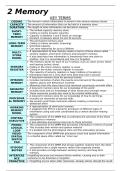
KEY TERMS
CODING The format in which information is stored in the various memory stores
CAPACITY The amount of information that can be held in a memory store
DURATION The length of time information can be held in memory
The limited-capacity memory store
SHORT-
Coding is mainly acoustic (sounds)
TERM
Capacity is between 5 and 9 items on average
MEMORY Duration is between about 18 and 30 seconds
The permanent memory store
LONG-TERM Coding is mainly semantic (meaning)
MEMORY Unlimited capacity
Can store memories for up to a lifetime
A representation of how memory works in terms of three stores called
MULTI-
sensory register, short-term memory and long-term memory
STORE
It also describes how information is transferred from one store to
MODEL another, how it is remembered and how it is forgotten
The memory stores for each of our 5 senses, such as vision (iconic store)
and hearing (echoic store)
SENSORY Coding in the iconic sensory register is visual
REGISTER Coding in the echoic sensory register is acoustic
The capacity of sensory registers is huge (millions of receptors)
Information lasts for a very short time (less than half a second)
A long-term memory store for personal events
EPISODIC Includes memories of when the events occurred and of the people,
MEMORY objects, places and behaviours involved
Memories from this store have to be retrieved consciously and with effort
A long-term memory store for our knowledge of the world
SEMANTIC
Includes facts and our knowledge of what words and concepts mean
MEMORY These memories usually also need to be recalled deliberately
A long-term memory store for our knowledge of how to do things
PROCEDUR Includes out memories of learned skills
AL MEMORY We usually recall these memories without making a conscious or
deliberate effort
A representation of short-term memory
WORKING
It suggests that STM is a dynamic processor of different types of
MEMORY
information using sub-units coordinated by a central decision-making
MODEL system
The component of the WMM that co-ordinates the activities of the three
CENTRAL
subsystems in memory
EXECUTIVE It also allocates processing resources to those activities
PHONO- The component of the WMM that processes information in terms of sound
LOGICAL This includes both written and spoken material
LOOP It’s divided into the phonological store and the articulatory process
VISUO- The component of the WMM that processes visual and spatial information
SPATIAL in a mental space often called our ‘inner eye’
SKETCH
PAD
The component of the WMM that brings together material from the other
EPISODIC subsystems into a single memory rather than separate strands
BUFFER It also provides a bridge between working memory and long-term
memory
INTERFERE Forgetting because one memory blocks another, causing one or both
NCE memories to be distorted or forgotten
PROACTIVE Forgetting occurs when older memories, already stored, disrupt the recall
,INTERFERE of newer memories
NCE The degree of forgetting is greater when the memories are similar
RETROACTI Forgetting occurs when newer memories disrupt the recall of older
VE memories that are already stored
INTERFERE The degree of forgetting is greater when the memories are similar
NCE
A form of forgetting
RETRIEVAL It occurs when we don’t have the necessary cues to access memory
FAILURE The memory is available but not accessible unless a suitable cue is
provided
A ‘trigger’ of information that allows us to access a memory
Such cues may be meaningful or may be indirectly linked by being
CUE encoded at the time of learning
For example, cues may be external (environmental context) or internal
(mood or degree of drunkenness)
The ability of people to remember the details of events, such as
EYEWITNES
accidents and crimes, which they themselves have observed
S Accuracy of EWT can be affected by factors such as misleading
TESTIMONY information, leading questions and anxiety
MISLEADIN Incorrect information given to the eyewitness usually after the event
G (hence often called ‘post-event information’)
INFORMATI It can take many forms, such as leading questions and post-event
ON discussion between co-witnesses and/or other people
A question which, because of the way it is phrased, suggests a certain
LEADING answer
QUESTION For example: “Was the knife in the accused’s left hand?”. This suggests
the answer is ‘left hand’
POST- Occurs when there is more than one witness to an event
EVENT Witnesses may discuss what they have seen with co-witnesses or with
DISCUSSIO other people
N This may influence the accuracy of each witness’s recall of the event
A state of emotional and physical arousal
The emotions include having worried thoughts and feelings of tension
ANXIETY Physical changes include an increased heart rate and sweatiness
Anxiety is a normal reaction to stressful situations, but can affect the
accuracy and detail of eyewitness testimony
WEAPON An eyewitness’ concentration on a weapon resulting in the exclusion of
FOCUS other details of a crime
EFFECT
A method of interviewing eyewitnesses to help them retrieve more
accurate memories
COGNITIVE
It uses four main techniques, all based on well-established psychological
INTERVIEW knowledge of human memory – report everything, reinstate the context,
reverse the order, and change perspective
, KEY PSYCHOLOGISTS & DATES
BADDELEY (1966) JACOBS (1887) MILLER (1956)
COWAN (2001) SOLSO (1991) ATKINSON & SHIFFRIN
(1968+1971)
BAHRICK et al. (1975) SHEPARD (1967) SHALLICE & WARRINGTON
(1970)
TULVING (1972) BADDELEY & HITCH LOGIE (1995)
(1974)
MCGEOCH & MCDONALD TULVING & THOMSON ETHEL ABERN (______)
(1931)
GOODWIN (_____) LOFTUS & PALMER ZARAGOSA & MCCLOSKEY
(1975) (1989)
SMITH & VELA (2001) NAIRNE (2002)
JOHNSON & SCOTT (1976) (NOT SURE YET) YERKES & DODSON (1908)
DEFFENBACHER (1983) FISHER & GEISELMAN KEBELL & WAGSTAFF
(1992) (1996)
MILNE & BULL (2002)
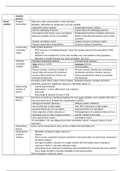
Coding, capacity and duration of memory
KEY TERMS
CODING The format in which information is stored in the various memory stores
CAPACITY The amount of information that can be held in a memory store
DURATION The length of time information can be held in memory
The limited-capacity memory store
SHORT-
Coding is mainly acoustic (sounds)
TERM
Capacity is between 5 and 9 items on average
MEMORY Duration is between about 18 and 30 seconds
The permanent memory store
LONG-TERM Coding is mainly semantic (meaning)
MEMORY Unlimited capacity
Can store memories for up to a lifetime
A representation of how memory works in terms of three stores called
MULTI-
sensory register, short-term memory and long-term memory
STORE
It also describes how information is transferred from one store to
MODEL another, how it is remembered and how it is forgotten
The memory stores for each of our 5 senses, such as vision (iconic store)
and hearing (echoic store)
SENSORY Coding in the iconic sensory register is visual
REGISTER Coding in the echoic sensory register is acoustic
The capacity of sensory registers is huge (millions of receptors)
Information lasts for a very short time (less than half a second)
A long-term memory store for personal events
EPISODIC Includes memories of when the events occurred and of the people,
MEMORY objects, places and behaviours involved
Memories from this store have to be retrieved consciously and with effort
A long-term memory store for our knowledge of the world
SEMANTIC
Includes facts and our knowledge of what words and concepts mean
MEMORY These memories usually also need to be recalled deliberately
A long-term memory store for our knowledge of how to do things
PROCEDUR Includes out memories of learned skills
AL MEMORY We usually recall these memories without making a conscious or
deliberate effort
A representation of short-term memory
WORKING
It suggests that STM is a dynamic processor of different types of
MEMORY
information using sub-units coordinated by a central decision-making
MODEL system
The component of the WMM that co-ordinates the activities of the three
CENTRAL
subsystems in memory
EXECUTIVE It also allocates processing resources to those activities
PHONO- The component of the WMM that processes information in terms of sound
LOGICAL This includes both written and spoken material
LOOP It’s divided into the phonological store and the articulatory process
VISUO- The component of the WMM that processes visual and spatial information
SPATIAL in a mental space often called our ‘inner eye’
SKETCH
PAD
The component of the WMM that brings together material from the other
EPISODIC subsystems into a single memory rather than separate strands
BUFFER It also provides a bridge between working memory and long-term
memory
INTERFERE Forgetting because one memory blocks another, causing one or both
NCE memories to be distorted or forgotten
PROACTIVE Forgetting occurs when older memories, already stored, disrupt the recall
,INTERFERE of newer memories
NCE The degree of forgetting is greater when the memories are similar
RETROACTI Forgetting occurs when newer memories disrupt the recall of older
VE memories that are already stored
INTERFERE The degree of forgetting is greater when the memories are similar
NCE
A form of forgetting
RETRIEVAL It occurs when we don’t have the necessary cues to access memory
FAILURE The memory is available but not accessible unless a suitable cue is
provided
A ‘trigger’ of information that allows us to access a memory
Such cues may be meaningful or may be indirectly linked by being
CUE encoded at the time of learning
For example, cues may be external (environmental context) or internal
(mood or degree of drunkenness)
The ability of people to remember the details of events, such as
EYEWITNES
accidents and crimes, which they themselves have observed
S Accuracy of EWT can be affected by factors such as misleading
TESTIMONY information, leading questions and anxiety
MISLEADIN Incorrect information given to the eyewitness usually after the event
G (hence often called ‘post-event information’)
INFORMATI It can take many forms, such as leading questions and post-event
ON discussion between co-witnesses and/or other people
A question which, because of the way it is phrased, suggests a certain
LEADING answer
QUESTION For example: “Was the knife in the accused’s left hand?”. This suggests
the answer is ‘left hand’
POST- Occurs when there is more than one witness to an event
EVENT Witnesses may discuss what they have seen with co-witnesses or with
DISCUSSIO other people
N This may influence the accuracy of each witness’s recall of the event
A state of emotional and physical arousal
The emotions include having worried thoughts and feelings of tension
ANXIETY Physical changes include an increased heart rate and sweatiness
Anxiety is a normal reaction to stressful situations, but can affect the
accuracy and detail of eyewitness testimony
WEAPON An eyewitness’ concentration on a weapon resulting in the exclusion of
FOCUS other details of a crime
EFFECT
A method of interviewing eyewitnesses to help them retrieve more
accurate memories
COGNITIVE
It uses four main techniques, all based on well-established psychological
INTERVIEW knowledge of human memory – report everything, reinstate the context,
reverse the order, and change perspective
, KEY PSYCHOLOGISTS & DATES
BADDELEY (1966) JACOBS (1887) MILLER (1956)
COWAN (2001) SOLSO (1991) ATKINSON & SHIFFRIN
(1968+1971)
BAHRICK et al. (1975) SHEPARD (1967) SHALLICE & WARRINGTON
(1970)
TULVING (1972) BADDELEY & HITCH LOGIE (1995)
(1974)
MCGEOCH & MCDONALD TULVING & THOMSON ETHEL ABERN (______)
(1931)
GOODWIN (_____) LOFTUS & PALMER ZARAGOSA & MCCLOSKEY
(1975) (1989)
SMITH & VELA (2001) NAIRNE (2002)
JOHNSON & SCOTT (1976) (NOT SURE YET) YERKES & DODSON (1908)
DEFFENBACHER (1983) FISHER & GEISELMAN KEBELL & WAGSTAFF
(1992) (1996)
MILNE & BULL (2002)
Coding, capacity and duration of memory