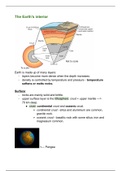
The Earth's interior
Earth is made up of many layers:
- layers become more dense when the depth increases.
- density is controlled by temperature and pressure - temperature
softens or melts rocks.
Surface:
- rocks are mainly solid and brittle.
- upper surface layer is the lithosphere: crust + upper mantle --->
70 km deep.
● crust: continental crust and oceanic crust.
➢ continental crust - silica and aluminium are common,
granitic rock.
➢ oceanic crust - basaltic rock with some silica; iron and
magnesium common.
<--- Pangea
, Evidence for plate tectonics and their global
patterns
- the past + present distribution of earthquakes
- changes in the Earth's magnetic field where tectonic activity has
taken place.
- the fit of continents.
- glacial deposits in Brazil match those in West Africa - they used to
be together.
- fossil remains in India match those in Australia.
Earth is made up of many layers:
- layers become more dense when the depth increases.
- density is controlled by temperature and pressure - temperature
softens or melts rocks.
Surface:
- rocks are mainly solid and brittle.
- upper surface layer is the lithosphere: crust + upper mantle --->
70 km deep.
● crust: continental crust and oceanic crust.
➢ continental crust - silica and aluminium are common,
granitic rock.
➢ oceanic crust - basaltic rock with some silica; iron and
magnesium common.
<--- Pangea
, Evidence for plate tectonics and their global
patterns
- the past + present distribution of earthquakes
- changes in the Earth's magnetic field where tectonic activity has
taken place.
- the fit of continents.
- glacial deposits in Brazil match those in West Africa - they used to
be together.
- fossil remains in India match those in Australia.