
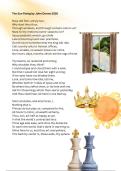
The Sun Rising by John Donne 2026
Busy old fool, unruly sun,
Why dost thou thus,
Through windows, and through curtains call on us?
Must to thy motions lovers' seasons run?
Saucy pedantic wretch, go chide
Late school boys and sour prentices,
Go tell court huntsmen that the king will ride,
Call country ants to harvest offices,
Love, all alike, no season knows nor clime,
Nor hours, days, months, which are the rags of time.
Thy beams, so reverend and strong
Why shouldst thou think?
I could eclipse and cloud them with a wink,
But that I would not lose her sight so long;
If her eyes have not blinded thine,
Look, and tomorrow late, tell me,
Whether both th' Indias of spice and mine
Be where thou leftst them, or lie here with me.
Ask for those kings whom thou saw'st yesterday,
And thou shalt hear, All here in one bed lay.
She's all states, and all princes, I,
Nothing else is.
Princes do but play us; compared to this,
All honor's mimic, all wealth alchemy.
Thou, sun, art half as happy as we,
In that the world's contracted thus.
Thine age asks ease, and since thy duties be
To warm the world, that's done in warming us.
Shine here to us, and thou art everywhere;
This bed thy center is, these walls, thy sphere.
, The speaker mocks the sun as annoying and
interfering, suggesting it has no authority over
love.
Busy old fool, unruly sun, By treating it like an unwanted intruder, he
immediately establishes a playful, defiant tone that
places human passion above nature and time.
The speaker questions the sun’s rude behaviour,
treating it like an interfering person.
Why dost thou thus, He suggests the sun has no right to intrude on the
lovers’ private world, reinforcing the idea that love
is more important than time or nature’s rules.
The speaker complains that the sun intrudes too
Through windows, and boldly into their private space.
Its light feels like an unwanted interruption,
through curtains call on breaking intimacy and rest, as if it has no right to
us? disturb lovers who exist outside ordinary rules of
time.
The speaker questions why lovers should organise
their lives around time and nature.
Must to thy motions He suggests love is independent of external
lovers' seasons run? rhythms, arguing that emotional connection should
not be controlled by clocks, days, or the sun’s
movement.
The speaker mocks the sun as arrogant and
annoying, treating it like an overbearing
Saucy pedantic wretch, go schoolmaster.
chide By insulting it, he asserts human emotion over
natural authority, suggesting love deserves respect
and freedom from external rules or discipline.
This phrase refers to people who dislike early
mornings because of duty and discipline.
Late school boys and sour It contrasts compulsory work and learning with the
prentices, speaker’s joyful love, suggesting the sun should
bother those trapped in routine, not lovers who
exist beyond schedules.
The speaker mocks the sun by suggesting it should
wake people whose lives truly depend on
Go tell court huntsmen schedules and authority.
that the king will ride, Royal duties and court rituals matter less than love,
which he presents as superior to political power
and daily obligations.
Busy old fool, unruly sun,
Why dost thou thus,
Through windows, and through curtains call on us?
Must to thy motions lovers' seasons run?
Saucy pedantic wretch, go chide
Late school boys and sour prentices,
Go tell court huntsmen that the king will ride,
Call country ants to harvest offices,
Love, all alike, no season knows nor clime,
Nor hours, days, months, which are the rags of time.
Thy beams, so reverend and strong
Why shouldst thou think?
I could eclipse and cloud them with a wink,
But that I would not lose her sight so long;
If her eyes have not blinded thine,
Look, and tomorrow late, tell me,
Whether both th' Indias of spice and mine
Be where thou leftst them, or lie here with me.
Ask for those kings whom thou saw'st yesterday,
And thou shalt hear, All here in one bed lay.
She's all states, and all princes, I,
Nothing else is.
Princes do but play us; compared to this,
All honor's mimic, all wealth alchemy.
Thou, sun, art half as happy as we,
In that the world's contracted thus.
Thine age asks ease, and since thy duties be
To warm the world, that's done in warming us.
Shine here to us, and thou art everywhere;
This bed thy center is, these walls, thy sphere.
, The speaker mocks the sun as annoying and
interfering, suggesting it has no authority over
love.
Busy old fool, unruly sun, By treating it like an unwanted intruder, he
immediately establishes a playful, defiant tone that
places human passion above nature and time.
The speaker questions the sun’s rude behaviour,
treating it like an interfering person.
Why dost thou thus, He suggests the sun has no right to intrude on the
lovers’ private world, reinforcing the idea that love
is more important than time or nature’s rules.
The speaker complains that the sun intrudes too
Through windows, and boldly into their private space.
Its light feels like an unwanted interruption,
through curtains call on breaking intimacy and rest, as if it has no right to
us? disturb lovers who exist outside ordinary rules of
time.
The speaker questions why lovers should organise
their lives around time and nature.
Must to thy motions He suggests love is independent of external
lovers' seasons run? rhythms, arguing that emotional connection should
not be controlled by clocks, days, or the sun’s
movement.
The speaker mocks the sun as arrogant and
annoying, treating it like an overbearing
Saucy pedantic wretch, go schoolmaster.
chide By insulting it, he asserts human emotion over
natural authority, suggesting love deserves respect
and freedom from external rules or discipline.
This phrase refers to people who dislike early
mornings because of duty and discipline.
Late school boys and sour It contrasts compulsory work and learning with the
prentices, speaker’s joyful love, suggesting the sun should
bother those trapped in routine, not lovers who
exist beyond schedules.
The speaker mocks the sun by suggesting it should
wake people whose lives truly depend on
Go tell court huntsmen schedules and authority.
that the king will ride, Royal duties and court rituals matter less than love,
which he presents as superior to political power
and daily obligations.


