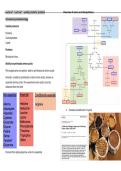
Lecture 1 - Lecture 1 – useful products: proteins Overview of amino acid biosynthesis
Introductory biotechnology
Useful products
Proteins
Carbohydrates
Lipids
Proteins
Biological roles…
Ability to synthesize amino acids
Microorganisms and plants: able to synthesize all amino acids
Animals: unable to synthesize certain amino acids, known as
essential amino acids. The essential amino acids must be
obtained from the diet
• Cereals are deficient in lysine
Formed from phenylalanine, which is essential
, - maize deficient in lysine and tryptophan
• Vegetables and legumes are deficient in S-containing
amino acids
- methionine and cysteine
Maize with improved nutritional quality
CIMMYT maize (Quality Protein Maize (QPM) was bred in the
1990’s
Contains increased amounts of the amino acids lysine and
tryptophan
Industrial enzymes
Proteins
Advantages:
Industrial enzymes
• Renewable, biodegradable
Pharmaceutical proteins • Catalytic
• Highly productive
• Highly specific
Industrial enzymes
,Industrial enzymes Rubber industry – Catalase
To generate oxygen from peroxide to convert latex into foam rubber
Temperature: 10°C - 95°C
Paper industry - Starch hydrolases (amylases), xylanases,
pH: 3 - 11
cellulases, lipases, lignin-reducing enzymes
Concentration range: flexible over several orders of magnitude
Photographic industry – Protease
Solvents: water, detergents, several organic solvents To dissolve gelatine in order to recover silver
Assays: specific substrates or substrate compositions Technical enzymes
Selectivity: monitoring of undesired side reactions Molecular biology
Stability: storage, oxidation, thermal, proteases, etc. Restriction enzymes
Ligases
Productivity: expression rate, codon usage, signal peptide,
Polymerases
regulatory elements, inclusion bodies, etc.
Phosphatases
Technical enzymes Etc.
Biological detergents
Proteases Customizing enzymes
Amylases
Lipases
Cellulases
Technical enzymes
, Food enzymes
Brewing
Barley malt enzymes
Amylase (α and β)
Glucanases
Proteases
β-glucanase
Amyloglucosidase
Food enzymes
Fruit juices
Cellulases
Pectinases
Food enzymes
Food enzymes Dairy industry
Baking enzymes Rennin (Protease from abomasum of calves)
Proteases Lipase
Amylases
Lactases
Baby food industry
Trypsin (predigest baby foods)
Introductory biotechnology
Useful products
Proteins
Carbohydrates
Lipids
Proteins
Biological roles…
Ability to synthesize amino acids
Microorganisms and plants: able to synthesize all amino acids
Animals: unable to synthesize certain amino acids, known as
essential amino acids. The essential amino acids must be
obtained from the diet
• Cereals are deficient in lysine
Formed from phenylalanine, which is essential
, - maize deficient in lysine and tryptophan
• Vegetables and legumes are deficient in S-containing
amino acids
- methionine and cysteine
Maize with improved nutritional quality
CIMMYT maize (Quality Protein Maize (QPM) was bred in the
1990’s
Contains increased amounts of the amino acids lysine and
tryptophan
Industrial enzymes
Proteins
Advantages:
Industrial enzymes
• Renewable, biodegradable
Pharmaceutical proteins • Catalytic
• Highly productive
• Highly specific
Industrial enzymes
,Industrial enzymes Rubber industry – Catalase
To generate oxygen from peroxide to convert latex into foam rubber
Temperature: 10°C - 95°C
Paper industry - Starch hydrolases (amylases), xylanases,
pH: 3 - 11
cellulases, lipases, lignin-reducing enzymes
Concentration range: flexible over several orders of magnitude
Photographic industry – Protease
Solvents: water, detergents, several organic solvents To dissolve gelatine in order to recover silver
Assays: specific substrates or substrate compositions Technical enzymes
Selectivity: monitoring of undesired side reactions Molecular biology
Stability: storage, oxidation, thermal, proteases, etc. Restriction enzymes
Ligases
Productivity: expression rate, codon usage, signal peptide,
Polymerases
regulatory elements, inclusion bodies, etc.
Phosphatases
Technical enzymes Etc.
Biological detergents
Proteases Customizing enzymes
Amylases
Lipases
Cellulases
Technical enzymes
, Food enzymes
Brewing
Barley malt enzymes
Amylase (α and β)
Glucanases
Proteases
β-glucanase
Amyloglucosidase
Food enzymes
Fruit juices
Cellulases
Pectinases
Food enzymes
Food enzymes Dairy industry
Baking enzymes Rennin (Protease from abomasum of calves)
Proteases Lipase
Amylases
Lactases
Baby food industry
Trypsin (predigest baby foods)