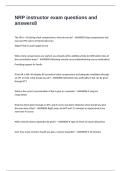
NRP instructor exam questions and
answers8
The HR is > 60 during chest compressions, what do you do? - ANSWERS-Stop compressions and
increase PPV rate to 40-60 breaths/min.
Adjust FiO2 to reach target O2 sat
When chest compressions are started, you should call for additional help to fulfill which roles of
the resuscitation team? - ANSWERS-Obtaining vascular access/administering rescue medications
Providing support for family
If the HR is still <60 despite 60 seconds of chest compressions and adequate ventilation through
an ETT or LMA, what should you do? - ANSWERS-Administer Epi, preferably IV but can be given
through ETT
What is the correct concentration of Epi to give to a neonate? - ANSWERS-0.1mg/mL
(1mg/10mL)
If Epi has been given through an ETT, and IV access has been obtained, when should you give
the next dose of Epi? - ANSWERS-Right away, do NOT wait 3-5 minutes to repeat dose if you
now have IV access
When should volume expanders be given? - ANSWERS-If signs of shock or known blood loss
Over how many minutes should you give a volume expander? - ANSWERS-5-10 minutes
, If giving a volume expander, why should you be cautious with neonates <32 weeks? - ANSWERS-
Increased risk of intracranial hemorrhage if given too fast or too much
If no improvement after Epi and volume expanders, what should you consider? - ANSWERS-STAT
CXR
When should you consider cessation of resuscitation efforts? - ANSWERS-If no HR after 20
minutes. These infants typically don't survive or have serious neurological deficits.
What are the 4 pre-birth questions? - ANSWERS-gestational age?
clear fluid?
additional risk factors?
umbilical cord management?
What are the 3 rapid evaluation questions? - ANSWERS-Term?
Tone?
Breathing?
What are the indications for PPV? - ANSWERS-Gasping
Apnea
HR <100
What is the ventilation rate for PPV? - ANSWERS-40-60 breaths per minute ("breath-two-
three"🔁)
An infant has labored breathing and persistent cyanosis, what steps do you take? - ANSWERS-
Open airway
Clear secretions
answers8
The HR is > 60 during chest compressions, what do you do? - ANSWERS-Stop compressions and
increase PPV rate to 40-60 breaths/min.
Adjust FiO2 to reach target O2 sat
When chest compressions are started, you should call for additional help to fulfill which roles of
the resuscitation team? - ANSWERS-Obtaining vascular access/administering rescue medications
Providing support for family
If the HR is still <60 despite 60 seconds of chest compressions and adequate ventilation through
an ETT or LMA, what should you do? - ANSWERS-Administer Epi, preferably IV but can be given
through ETT
What is the correct concentration of Epi to give to a neonate? - ANSWERS-0.1mg/mL
(1mg/10mL)
If Epi has been given through an ETT, and IV access has been obtained, when should you give
the next dose of Epi? - ANSWERS-Right away, do NOT wait 3-5 minutes to repeat dose if you
now have IV access
When should volume expanders be given? - ANSWERS-If signs of shock or known blood loss
Over how many minutes should you give a volume expander? - ANSWERS-5-10 minutes
, If giving a volume expander, why should you be cautious with neonates <32 weeks? - ANSWERS-
Increased risk of intracranial hemorrhage if given too fast or too much
If no improvement after Epi and volume expanders, what should you consider? - ANSWERS-STAT
CXR
When should you consider cessation of resuscitation efforts? - ANSWERS-If no HR after 20
minutes. These infants typically don't survive or have serious neurological deficits.
What are the 4 pre-birth questions? - ANSWERS-gestational age?
clear fluid?
additional risk factors?
umbilical cord management?
What are the 3 rapid evaluation questions? - ANSWERS-Term?
Tone?
Breathing?
What are the indications for PPV? - ANSWERS-Gasping
Apnea
HR <100
What is the ventilation rate for PPV? - ANSWERS-40-60 breaths per minute ("breath-two-
three"🔁)
An infant has labored breathing and persistent cyanosis, what steps do you take? - ANSWERS-
Open airway
Clear secretions