Summary: Jaap Hage – Introduction to Law – Chapter 3
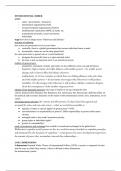
Chapter 3: Basic Concepts of Law
Law consists of many fields of law with large differences. Major divisions within law: Public vs Private
law and Substantive vs Procedural law
Private relations between citizens among each other, equal relationship where no government is
involved directly. Examples are property law, contract law, tort law, family law and law of commerce.
Public central role of the government, so this involves government to citizen relations. Examples
are criminal law, constitutional law and administrative law.
Trias Politica the division of government powers; part of constitutional law 1) functioning of
democracy, 2) creation of legislation, 3) relationship between central and local government agents.
Functional fields of law when bodies of law belong to both private and public law or substantive and
procedural law, meaning that these bodies of law do not fit well within the established divisions.
Substantive rules on behaviour, giving people rights, and how facts will be handled.
Procedural provision of means through which compliance with duties and respect for rights can be
enforced when rights or legal subjects are not respected. It provides rules for court procedures and for
how judicial orders can be enforced.
Natural persons human beings, protected by human rights, with privacy, freedom of expression /
religion and right to physical integrity
Legal persons organisations which have received the status of legal subjects.
Conditional Structure of Legal Rules rules have a condition part, which indicates what the
consequences are when the rule is applied.
Operative Facts facts of a case that match the conditions and which have legal consequences
attached to it.
Alienation moving ownership to somebody else.
When a legislator creates a statute, or written law, this has the legal consequence that new rules come
into existence.
Law is dynamic rules can change over time and legal positions of persons can be modified.
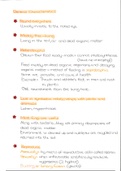
Performing Juridical Acts within certain limits (where competences are necessary), legal subjects
have the power to intentionally change legal positions or legal rules to bring about legal consequences
for the reason that they were intended. Examples are legislation and contracts, but not murder,
because law attaches the legal consequence independently of the intention.
Factual Acts not aimed at creating legal consequences (performed by administration).
Null and Void (invalid) if a legal person attempts to perform an act for which the relevant
competence lacks, the act will normally not have the intended legal consequences (but it is not illegal).
If the intention of an agent to create a legal consequence was brought about in the wrong way, the act
is typically still valid but the law gives such an agent the competence to avoid the act, meaning that the
act is treated as never having been valid (sometimes, judicial decisions are necessary).
Duty an addressed agent is obligated to perform a kind of action (content), meant to guide persons
in behaviour. Duties are imposed on agents by a rule which attaches it to a status of an agent.
Mandatory Rules rules which impose duties.
Permission juridical act through which an exception is created on a general prohibition, what one is
allowed or permitted to do (no permission can lead to a norm violation or unlawful act).
Competence precondition for intentional creation of a legal consequence by means of a juridical
act. A competence is exercised by performing the juridical act for which this competence is required.
Immune a (private) person whose legal position cannot be modified by another legal subject
because this person / subject lacks the required competences. Private citizens are generally not
immune to having their legal position changed by public officers.
Chapter 3: Basic Concepts of Law
Law consists of many fields of law with large differences. Major divisions within law: Public vs Private
law and Substantive vs Procedural law
Private relations between citizens among each other, equal relationship where no government is
involved directly. Examples are property law, contract law, tort law, family law and law of commerce.
Public central role of the government, so this involves government to citizen relations. Examples
are criminal law, constitutional law and administrative law.
Trias Politica the division of government powers; part of constitutional law 1) functioning of
democracy, 2) creation of legislation, 3) relationship between central and local government agents.
Functional fields of law when bodies of law belong to both private and public law or substantive and
procedural law, meaning that these bodies of law do not fit well within the established divisions.
Substantive rules on behaviour, giving people rights, and how facts will be handled.
Procedural provision of means through which compliance with duties and respect for rights can be
enforced when rights or legal subjects are not respected. It provides rules for court procedures and for
how judicial orders can be enforced.
Natural persons human beings, protected by human rights, with privacy, freedom of expression /
religion and right to physical integrity
Legal persons organisations which have received the status of legal subjects.
Conditional Structure of Legal Rules rules have a condition part, which indicates what the
consequences are when the rule is applied.
Operative Facts facts of a case that match the conditions and which have legal consequences
attached to it.
Alienation moving ownership to somebody else.
When a legislator creates a statute, or written law, this has the legal consequence that new rules come
into existence.
Law is dynamic rules can change over time and legal positions of persons can be modified.
Performing Juridical Acts within certain limits (where competences are necessary), legal subjects
have the power to intentionally change legal positions or legal rules to bring about legal consequences
for the reason that they were intended. Examples are legislation and contracts, but not murder,
because law attaches the legal consequence independently of the intention.
Factual Acts not aimed at creating legal consequences (performed by administration).
Null and Void (invalid) if a legal person attempts to perform an act for which the relevant
competence lacks, the act will normally not have the intended legal consequences (but it is not illegal).
If the intention of an agent to create a legal consequence was brought about in the wrong way, the act
is typically still valid but the law gives such an agent the competence to avoid the act, meaning that the
act is treated as never having been valid (sometimes, judicial decisions are necessary).
Duty an addressed agent is obligated to perform a kind of action (content), meant to guide persons
in behaviour. Duties are imposed on agents by a rule which attaches it to a status of an agent.
Mandatory Rules rules which impose duties.
Permission juridical act through which an exception is created on a general prohibition, what one is
allowed or permitted to do (no permission can lead to a norm violation or unlawful act).
Competence precondition for intentional creation of a legal consequence by means of a juridical
act. A competence is exercised by performing the juridical act for which this competence is required.
Immune a (private) person whose legal position cannot be modified by another legal subject
because this person / subject lacks the required competences. Private citizens are generally not
immune to having their legal position changed by public officers.