
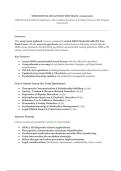
HESI MENTAL HEALTH RN TEST BANK | 2025/2026
HESI Mental Health Nursing Exam with Complete Questions & Verified Answers | RN Program
Assessment
Overview
This 2025/2026 updated resource contains the actual HESI Mental Health RN Test
Bank Exam with the exact 60 questions and verified answers, following current Elsevier
HESI testing standards, NCLEX-RN® psychiatric-mental health content guidelines, DSM-5-TR
criteria, and evidence-based therapeutic interventions.
Key Features
● Actual HESI mental health exam format with the official 60 questions
● Comprehensive coverage of psychiatric disorders, therapies, and legal/ethical
considerations
● NCLEX-style questions including therapeutic communication and crisis intervention
● Updated 2025/2026 DSM-5-TR criteria and treatment guidelines
● Psychopharmacalogy updates and medication management scenarios
Core Content Areas (60 Total Questions)
● Therapeutic Communication & Relationship Building (12 Qs)
● Anxiety, Trauma & Stressor-Related Disorders (10 Qs)
● Depressive & Bipolar Disorders (10 Qs)
● Schizophrenia Spectrum & Psychotic Disorders (8 Qs)
● Substance Use & Addictive Disorders (7 Qs)
● Personality & Eating Disorders (6 Qs)
● Psychopharmacology & Medication Management (5 Qs)
● Legal/Ethical Issues & Crisis Intervention (2 Qs)
Answer Format
Correct answers are marked in bold green and include:
● DSM-5-TR diagnostic criteria applications
● Therapeutic communication technique identification
● Psychotropic medication mechanisms and side effect monitoring
● Crisis intervention de-escalation strategies
● Milieu therapy and safety precaution implementations
● Legal considerations (involuntary commitment, confidentiality, duty to warn)
,Updates for 2025/2026
● Reflects 2025 HESI mental health content revisions
● Updated DSM-5-TR text revisions for specific disorders
● New FDA-approved psychotropic medications and treatment protocols
● Enhanced trauma-informed care approaches
● Revised suicide risk assessment and prevention strategies
● Updated telehealth applications in psychiatric care
● New guidelines for cultural competence in mental health assessment
● Revised substance use disorder treatments including MAT (Medication-Assisted
Treatment)
HESI Mental Health RN Test Bank (Questions 1–60)
1. A client says, “I can’t go on anymore.” What is the nurse’s best therapeutic
response?
A. “You have so much to live for.”
B. “Don’t say that—you’ll be fine.”
C. “Are you thinking about harming yourself?”
D. “Let’s talk about something happier.”
✓ Correct: C | Directly assess suicide risk; therapeutic communication | DSM-5-TR Suicide Risk Guidelines, 2025
2. Which behavior indicates transference in the therapeutic relationship?
A. The nurse shares personal stories
B. The client projects feelings about a parent onto the nurse
C. The client refuses all medications
D. The nurse feels angry toward the client
✓ Correct: B | Transference: client redirects emotions from past relationships | Psych Nursing Text, HESI 2025
3. A client with generalized anxiety disorder is prescribed escitalopram. What should
the nurse include in teaching?
A. “Take it only when you feel anxious.”
B. “It may take 2–4 weeks to see full benefit.”
, C. “Avoid all dairy products.”
D. “You’ll feel better in 24 hours.”
✓ Correct: B | SSRIs require 2–6 weeks for therapeutic effect; HESI Psychopharm, 2025
4. Which statement by a client with PTSD best indicates progress in therapy?
A. “I avoid all triggers.”
B. “I used grounding techniques when I had a flashback.”
C. “I don’t remember the event anymore.”
D. “I sleep 8 hours every night now.”
✓ Correct: B | Use of coping skills = therapeutic progress; DSM-5-TR PTSD, 2025
5. A client with major depressive disorder says, “I’m worthless.” What is the most
appropriate nursing response?
A. “That’s not true—you’re a good person.”
B. “You feel worthless right now. Can you tell me more?”
C. “Think of all your successes.”
D. “Everyone feels that way sometimes.”
✓ Correct: B | Validates feelings without arguing; therapeutic communication | HESI MH, 2025
6. Which side effect should the nurse monitor for in a client taking lithium?
A. Hyperglycemia
B. Fine hand tremors, polyuria, and thirst
C. Constipation
D. Photosensitivity
✓ Correct: B | Early signs of lithium toxicity or therapeutic effect; HESI Psychopharm, 2025
7. A client with schizophrenia hears voices telling them to “jump.” What is the priority
nursing action?
A. Administer PRN antipsychotic
B. Assess for suicidal intent and ensure safety
C. Distract with group activity
HESI Mental Health Nursing Exam with Complete Questions & Verified Answers | RN Program
Assessment
Overview
This 2025/2026 updated resource contains the actual HESI Mental Health RN Test
Bank Exam with the exact 60 questions and verified answers, following current Elsevier
HESI testing standards, NCLEX-RN® psychiatric-mental health content guidelines, DSM-5-TR
criteria, and evidence-based therapeutic interventions.
Key Features
● Actual HESI mental health exam format with the official 60 questions
● Comprehensive coverage of psychiatric disorders, therapies, and legal/ethical
considerations
● NCLEX-style questions including therapeutic communication and crisis intervention
● Updated 2025/2026 DSM-5-TR criteria and treatment guidelines
● Psychopharmacalogy updates and medication management scenarios
Core Content Areas (60 Total Questions)
● Therapeutic Communication & Relationship Building (12 Qs)
● Anxiety, Trauma & Stressor-Related Disorders (10 Qs)
● Depressive & Bipolar Disorders (10 Qs)
● Schizophrenia Spectrum & Psychotic Disorders (8 Qs)
● Substance Use & Addictive Disorders (7 Qs)
● Personality & Eating Disorders (6 Qs)
● Psychopharmacology & Medication Management (5 Qs)
● Legal/Ethical Issues & Crisis Intervention (2 Qs)
Answer Format
Correct answers are marked in bold green and include:
● DSM-5-TR diagnostic criteria applications
● Therapeutic communication technique identification
● Psychotropic medication mechanisms and side effect monitoring
● Crisis intervention de-escalation strategies
● Milieu therapy and safety precaution implementations
● Legal considerations (involuntary commitment, confidentiality, duty to warn)
,Updates for 2025/2026
● Reflects 2025 HESI mental health content revisions
● Updated DSM-5-TR text revisions for specific disorders
● New FDA-approved psychotropic medications and treatment protocols
● Enhanced trauma-informed care approaches
● Revised suicide risk assessment and prevention strategies
● Updated telehealth applications in psychiatric care
● New guidelines for cultural competence in mental health assessment
● Revised substance use disorder treatments including MAT (Medication-Assisted
Treatment)
HESI Mental Health RN Test Bank (Questions 1–60)
1. A client says, “I can’t go on anymore.” What is the nurse’s best therapeutic
response?
A. “You have so much to live for.”
B. “Don’t say that—you’ll be fine.”
C. “Are you thinking about harming yourself?”
D. “Let’s talk about something happier.”
✓ Correct: C | Directly assess suicide risk; therapeutic communication | DSM-5-TR Suicide Risk Guidelines, 2025
2. Which behavior indicates transference in the therapeutic relationship?
A. The nurse shares personal stories
B. The client projects feelings about a parent onto the nurse
C. The client refuses all medications
D. The nurse feels angry toward the client
✓ Correct: B | Transference: client redirects emotions from past relationships | Psych Nursing Text, HESI 2025
3. A client with generalized anxiety disorder is prescribed escitalopram. What should
the nurse include in teaching?
A. “Take it only when you feel anxious.”
B. “It may take 2–4 weeks to see full benefit.”
, C. “Avoid all dairy products.”
D. “You’ll feel better in 24 hours.”
✓ Correct: B | SSRIs require 2–6 weeks for therapeutic effect; HESI Psychopharm, 2025
4. Which statement by a client with PTSD best indicates progress in therapy?
A. “I avoid all triggers.”
B. “I used grounding techniques when I had a flashback.”
C. “I don’t remember the event anymore.”
D. “I sleep 8 hours every night now.”
✓ Correct: B | Use of coping skills = therapeutic progress; DSM-5-TR PTSD, 2025
5. A client with major depressive disorder says, “I’m worthless.” What is the most
appropriate nursing response?
A. “That’s not true—you’re a good person.”
B. “You feel worthless right now. Can you tell me more?”
C. “Think of all your successes.”
D. “Everyone feels that way sometimes.”
✓ Correct: B | Validates feelings without arguing; therapeutic communication | HESI MH, 2025
6. Which side effect should the nurse monitor for in a client taking lithium?
A. Hyperglycemia
B. Fine hand tremors, polyuria, and thirst
C. Constipation
D. Photosensitivity
✓ Correct: B | Early signs of lithium toxicity or therapeutic effect; HESI Psychopharm, 2025
7. A client with schizophrenia hears voices telling them to “jump.” What is the priority
nursing action?
A. Administer PRN antipsychotic
B. Assess for suicidal intent and ensure safety
C. Distract with group activity


