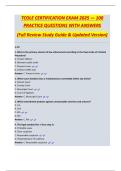
TCOLE CERTIFICATION EXAM 2025 — 100
PRACTICE QUESTIONS WITH ANSWERS
(Full Review Study Guide & Updated Version)
1–25
1. What is the primary mission of law enforcement according to the Texas Code of Criminal
Procedure?
A. Protect officers
B. Maintain public order
C. Prevent crime
D. Enforce traffic laws
Answer: C. Prevent crime
2. Which court handles Class C misdemeanors committed within city limits?
A. District Court
B. County Court
C. Municipal Court
D. Court of Appeals
Answer: C. Municipal Court
3. Which amendment protects against unreasonable searches and seizures?
A. 1st
B. 2nd
C. 4th
D. 6th
Answer: C. 4th
4. The legal standard for a Terry stop is:
A. Probable cause
B. Clear suspicion
C. Reasonable suspicion
D. Preponderance of evidence
Answer: C. Reasonable suspicion
,5. Which term describes verbal commands used to control a suspect?
A. Hard control
B. Deadly force
C. Soft empty-hand control
D. Verbal communication
Answer: D. Verbal communication
6. The purpose of the “Use of Force Continuum” is to:
A. Limit officer arrests
B. Ensure deadly force is primary
C. Guide officers in lawful force usage
D. Reduce paperwork
Answer: C. Guide officers in lawful force usage
7. Which is a duty of the Texas Commission on Law Enforcement (TCOLE)?
A. Prosecute officers
B. Manage city budgets
C. Set training standards
D. Write criminal laws
Answer: C. Set training standards
8. The “Reasonable Officer Standard” is defined in:
A. Graham v. Connor
B. Terry v. Ohio
C. Miranda v. Arizona
D. Mapp v. Ohio
Answer: A. Graham v. Connor
9. A peace officer must report racial profiling complaints to:
A. TABC
B. DHS
C. Their agency chief
D. The suspect
Answer: C. Their agency chief
10. An arrest warrant is issued by:
A. Sheriff
B. Victim
C. Magistrate
,D. Bail bondsman
Answer: C. Magistrate
11. Which offense occurs when a person knowingly causes bodily injury?
A. Theft
B. Criminal mischief
C. Assault
D. Harassment
Answer: C. Assault
12. Which term means “the body of the crime”?
A. Actus reus
B. Mens rea
C. Corpus delicti
D. Habeas corpus
Answer: C. Corpus delicti
13. The primary goal of patrol is:
A. Traffic stops
B. Community control
C. Crime prevention
D. Report writing
Answer: C. Crime prevention
14. A frisk is permitted when the officer believes:
A. The person is wanted
B. The person is late for court
C. The person is armed
D. The person looks nervous
Answer: C. The person is armed
15. The Miranda warnings are required when a suspect is:
A. Booked
B. Frisked
C. In custody and interrogated
D. Stopped in traffic
Answer: C. In custody and interrogated
16. Ethics in policing primarily requires officers to:
A. Make more arrests
, B. Follow personal beliefs
C. Make fair, lawful decisions
D. Avoid all force
Answer: C. Make fair, lawful decisions
17. A “Search Incident to Arrest” allows an officer to search:
A. The suspect and immediate area
B. The entire home
C. The suspect’s family
D. All electronic devices
Answer: A. The suspect and immediate area
18. The earliest form of policing in Texas came from:
A. U.S. Marshals
B. The Rangers
C. Texas Highway Patrol
D. Federal Bureau of Investigation
Answer: B. The Rangers
19. Which force option is considered deadly force?
A. OC spray
B. Baton to arm
C. Firearm discharge
D. Wrist lock
Answer: C. Firearm discharge
20. The crime triangle includes:
A. Victim, witness, officer
B. Tools, location, time
C. Offender, victim, opportunity
D. Crime, court, arrest
Answer: C. Offender, victim, opportunity
21. Which communication technique reduces conflict?
A. Command presence
B. Active listening
C. Loud repetition
D. Aggressive gestures
Answer: B. Active listening
PRACTICE QUESTIONS WITH ANSWERS
(Full Review Study Guide & Updated Version)
1–25
1. What is the primary mission of law enforcement according to the Texas Code of Criminal
Procedure?
A. Protect officers
B. Maintain public order
C. Prevent crime
D. Enforce traffic laws
Answer: C. Prevent crime
2. Which court handles Class C misdemeanors committed within city limits?
A. District Court
B. County Court
C. Municipal Court
D. Court of Appeals
Answer: C. Municipal Court
3. Which amendment protects against unreasonable searches and seizures?
A. 1st
B. 2nd
C. 4th
D. 6th
Answer: C. 4th
4. The legal standard for a Terry stop is:
A. Probable cause
B. Clear suspicion
C. Reasonable suspicion
D. Preponderance of evidence
Answer: C. Reasonable suspicion
,5. Which term describes verbal commands used to control a suspect?
A. Hard control
B. Deadly force
C. Soft empty-hand control
D. Verbal communication
Answer: D. Verbal communication
6. The purpose of the “Use of Force Continuum” is to:
A. Limit officer arrests
B. Ensure deadly force is primary
C. Guide officers in lawful force usage
D. Reduce paperwork
Answer: C. Guide officers in lawful force usage
7. Which is a duty of the Texas Commission on Law Enforcement (TCOLE)?
A. Prosecute officers
B. Manage city budgets
C. Set training standards
D. Write criminal laws
Answer: C. Set training standards
8. The “Reasonable Officer Standard” is defined in:
A. Graham v. Connor
B. Terry v. Ohio
C. Miranda v. Arizona
D. Mapp v. Ohio
Answer: A. Graham v. Connor
9. A peace officer must report racial profiling complaints to:
A. TABC
B. DHS
C. Their agency chief
D. The suspect
Answer: C. Their agency chief
10. An arrest warrant is issued by:
A. Sheriff
B. Victim
C. Magistrate
,D. Bail bondsman
Answer: C. Magistrate
11. Which offense occurs when a person knowingly causes bodily injury?
A. Theft
B. Criminal mischief
C. Assault
D. Harassment
Answer: C. Assault
12. Which term means “the body of the crime”?
A. Actus reus
B. Mens rea
C. Corpus delicti
D. Habeas corpus
Answer: C. Corpus delicti
13. The primary goal of patrol is:
A. Traffic stops
B. Community control
C. Crime prevention
D. Report writing
Answer: C. Crime prevention
14. A frisk is permitted when the officer believes:
A. The person is wanted
B. The person is late for court
C. The person is armed
D. The person looks nervous
Answer: C. The person is armed
15. The Miranda warnings are required when a suspect is:
A. Booked
B. Frisked
C. In custody and interrogated
D. Stopped in traffic
Answer: C. In custody and interrogated
16. Ethics in policing primarily requires officers to:
A. Make more arrests
, B. Follow personal beliefs
C. Make fair, lawful decisions
D. Avoid all force
Answer: C. Make fair, lawful decisions
17. A “Search Incident to Arrest” allows an officer to search:
A. The suspect and immediate area
B. The entire home
C. The suspect’s family
D. All electronic devices
Answer: A. The suspect and immediate area
18. The earliest form of policing in Texas came from:
A. U.S. Marshals
B. The Rangers
C. Texas Highway Patrol
D. Federal Bureau of Investigation
Answer: B. The Rangers
19. Which force option is considered deadly force?
A. OC spray
B. Baton to arm
C. Firearm discharge
D. Wrist lock
Answer: C. Firearm discharge
20. The crime triangle includes:
A. Victim, witness, officer
B. Tools, location, time
C. Offender, victim, opportunity
D. Crime, court, arrest
Answer: C. Offender, victim, opportunity
21. Which communication technique reduces conflict?
A. Command presence
B. Active listening
C. Loud repetition
D. Aggressive gestures
Answer: B. Active listening