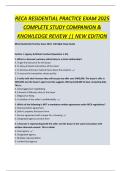
RECA RESIDENTIAL PRACTICE EXAM 2025
COMPLETE STUDY COMPANION &
KNOWLEDGE REVIEW || NEW EDITION
RECA Residential Practice Exam 2025- 100 Q&A Study Guide
Section 1: Agency & Ethical Conduct (Questions 1-25)
1. What is a licensee’s primary ethical duty in a client relationship?
A. To get the best price for the buyer
B. To obey all lawful instructions of the client
C. To disclose all known material facts about the property
D. To ensure the transaction closes quickly
2. A seller tells their licensee they will accept any offer over $400,000. The buyer’s offer is
$405,000, but the buyer’s agent secretly suggests offering $410,000 to beat competing bids.
This is:
A. Good aggressive negotiating
B. A breach of fiduciary duty to the buyer
C. Illegal price fixing
D. A violation of the seller’s confidentiality
3. Which of the following is NOT a mandatory written agreement under RECA regulations?
A. Representation agreement
B. Seller’s property disclosure form
C. Service agreement with a buyer for a showing
D. Designated agency consent form
4. A licensee is representing both the seller and the buyer in the same transaction with
written informed consent. This is called:
A. Dual agency
B. Designated agency
C. Multiple representation
D. Limited dual agency
,5. Material facts about a property include:
A. The seller’s reason for moving
B. Visible defects, latent defects, and any fact influencing a reasonable person’s decision
C. Neighbourhood demographic data from 10 years ago
D. The buyer’s maximum approved mortgage amount
Section 2: Real Estate Trading Act & Rules (Questions 26-40)
6. Under the Real Estate Act, who must a licensee report suspected mortgage fraud to?
A. The police only
B. RECA and the broker
C. The Financial Transactions and Reports Analysis Centre (FINTRAC)
D. The seller immediately
7. A licensee receives a $500 cash gift from a satisfied client after closing. The licensee should:
A. Accept it as a nice bonus
B. Report it to CRA as income
C. Decline the gift or disclose to their broker and get written consent
D. Split it with their brokerage
8. Trust money must be deposited into a trust account within:
A. 24 hours
B. 3 business days
C. 5 business days
D. As specified by brokerage policy, but RECA requires prompt deposit, typically by end of next
business day
9. Which document must be provided to a client before an offer is written?
A. Agency disclosure form
B. Property disclosure statement
C. Mortgage pre-approval
D. Title search
10. A licensee advertises a property as “20 minutes to downtown.” This is permitted only if:
A. It’s an obvious exaggeration
B. It is an objectively verifiable fact under normal conditions
C. The seller approves the wording
D. It’s in the listing description
,Section 3: Property Disclosure & Latent Defects (Questions 41-55)
11. A latent defect is best defined as:
A. A defect visible upon reasonable inspection
B. A defect that renders the property unfit for habitation
C. A material defect that is not discoverable through reasonable inspection
D. Any defect mentioned in the property disclosure statement
12. The seller’s property disclosure statement (SPDS) is:
A. A warranty of the property’s condition
B. A legal document where the seller discloses known material facts about the property
C. Completed by the licensee on behalf of the seller
D. Mandatory for all residential transactions in Alberta
13. If a seller fails to disclose a known latent defect, they may be liable for:
A. Only the cost to repair the defect
B. Misrepresentation and damages
C. Nothing if the buyer did not specifically ask
D. A fine from RECA only
Section 4: Contracts & Offers (Questions 56-80)
14. In a standard residential purchase contract, “title” is typically conveyed free of all
encumbrances except:
A. Mortgages
B. Restrictive covenants, easements, and municipal agreements registered on title
C. Unpaid utility bills
D. Existing tenancies
15. An offer becomes a binding contract when:
A. It is presented to the seller
B. It is signed by the buyer
C. It is accepted in writing and a copy delivered to the offeror
D. The seller’s lawyer reviews it
16. Which clause protects a buyer by making the offer conditional on things like financing or
inspection?
A. Completion date clause
, B. Condition precedent
C. Ingress/egress clause
D. Chattels clause
17. “Time is of the essence” in a contract means:
A. The closing date is flexible
B. All specified dates and deadlines are strictly binding
C. The licensee must work quickly
D. The buyer can extend deadlines unilaterally
18. A seller counter-offers on price only. The buyer accepts and signs. At this point:
A. The original offer is still valid
B. The counter-offer becomes the new offer, and acceptance forms a contract
C. The deal is void because the seller changed terms
D. The buyer must initial all changes
Section 5: Financing & Mortgages (Questions 81-95)
19. A conventional mortgage is one where the loan amount does NOT exceed:
A. 65% of the purchase price
B. 80% of the purchase price
C. 95% of the appraised value
D. 100% of the CMHC-insured amount
20. The mortgage clause in a purchase contract typically protects the buyer by allowing them
to terminate the contract if:
A. Interest rates go up
B. They cannot secure financing on specified terms by a certain date
C. The bank appraises the property at less than list price
D. They change jobs before closing
21. Which entity provides default insurance for high-ratio mortgages in Canada?
A. RECA
B. Bank of Canada
C. Canada Mortgage and Housing Corporation (CMHC) or other private insurers
D. Financial Consumer Agency of Canada
Section 6: Closing & Possession (Questions 96-110)
COMPLETE STUDY COMPANION &
KNOWLEDGE REVIEW || NEW EDITION
RECA Residential Practice Exam 2025- 100 Q&A Study Guide
Section 1: Agency & Ethical Conduct (Questions 1-25)
1. What is a licensee’s primary ethical duty in a client relationship?
A. To get the best price for the buyer
B. To obey all lawful instructions of the client
C. To disclose all known material facts about the property
D. To ensure the transaction closes quickly
2. A seller tells their licensee they will accept any offer over $400,000. The buyer’s offer is
$405,000, but the buyer’s agent secretly suggests offering $410,000 to beat competing bids.
This is:
A. Good aggressive negotiating
B. A breach of fiduciary duty to the buyer
C. Illegal price fixing
D. A violation of the seller’s confidentiality
3. Which of the following is NOT a mandatory written agreement under RECA regulations?
A. Representation agreement
B. Seller’s property disclosure form
C. Service agreement with a buyer for a showing
D. Designated agency consent form
4. A licensee is representing both the seller and the buyer in the same transaction with
written informed consent. This is called:
A. Dual agency
B. Designated agency
C. Multiple representation
D. Limited dual agency
,5. Material facts about a property include:
A. The seller’s reason for moving
B. Visible defects, latent defects, and any fact influencing a reasonable person’s decision
C. Neighbourhood demographic data from 10 years ago
D. The buyer’s maximum approved mortgage amount
Section 2: Real Estate Trading Act & Rules (Questions 26-40)
6. Under the Real Estate Act, who must a licensee report suspected mortgage fraud to?
A. The police only
B. RECA and the broker
C. The Financial Transactions and Reports Analysis Centre (FINTRAC)
D. The seller immediately
7. A licensee receives a $500 cash gift from a satisfied client after closing. The licensee should:
A. Accept it as a nice bonus
B. Report it to CRA as income
C. Decline the gift or disclose to their broker and get written consent
D. Split it with their brokerage
8. Trust money must be deposited into a trust account within:
A. 24 hours
B. 3 business days
C. 5 business days
D. As specified by brokerage policy, but RECA requires prompt deposit, typically by end of next
business day
9. Which document must be provided to a client before an offer is written?
A. Agency disclosure form
B. Property disclosure statement
C. Mortgage pre-approval
D. Title search
10. A licensee advertises a property as “20 minutes to downtown.” This is permitted only if:
A. It’s an obvious exaggeration
B. It is an objectively verifiable fact under normal conditions
C. The seller approves the wording
D. It’s in the listing description
,Section 3: Property Disclosure & Latent Defects (Questions 41-55)
11. A latent defect is best defined as:
A. A defect visible upon reasonable inspection
B. A defect that renders the property unfit for habitation
C. A material defect that is not discoverable through reasonable inspection
D. Any defect mentioned in the property disclosure statement
12. The seller’s property disclosure statement (SPDS) is:
A. A warranty of the property’s condition
B. A legal document where the seller discloses known material facts about the property
C. Completed by the licensee on behalf of the seller
D. Mandatory for all residential transactions in Alberta
13. If a seller fails to disclose a known latent defect, they may be liable for:
A. Only the cost to repair the defect
B. Misrepresentation and damages
C. Nothing if the buyer did not specifically ask
D. A fine from RECA only
Section 4: Contracts & Offers (Questions 56-80)
14. In a standard residential purchase contract, “title” is typically conveyed free of all
encumbrances except:
A. Mortgages
B. Restrictive covenants, easements, and municipal agreements registered on title
C. Unpaid utility bills
D. Existing tenancies
15. An offer becomes a binding contract when:
A. It is presented to the seller
B. It is signed by the buyer
C. It is accepted in writing and a copy delivered to the offeror
D. The seller’s lawyer reviews it
16. Which clause protects a buyer by making the offer conditional on things like financing or
inspection?
A. Completion date clause
, B. Condition precedent
C. Ingress/egress clause
D. Chattels clause
17. “Time is of the essence” in a contract means:
A. The closing date is flexible
B. All specified dates and deadlines are strictly binding
C. The licensee must work quickly
D. The buyer can extend deadlines unilaterally
18. A seller counter-offers on price only. The buyer accepts and signs. At this point:
A. The original offer is still valid
B. The counter-offer becomes the new offer, and acceptance forms a contract
C. The deal is void because the seller changed terms
D. The buyer must initial all changes
Section 5: Financing & Mortgages (Questions 81-95)
19. A conventional mortgage is one where the loan amount does NOT exceed:
A. 65% of the purchase price
B. 80% of the purchase price
C. 95% of the appraised value
D. 100% of the CMHC-insured amount
20. The mortgage clause in a purchase contract typically protects the buyer by allowing them
to terminate the contract if:
A. Interest rates go up
B. They cannot secure financing on specified terms by a certain date
C. The bank appraises the property at less than list price
D. They change jobs before closing
21. Which entity provides default insurance for high-ratio mortgages in Canada?
A. RECA
B. Bank of Canada
C. Canada Mortgage and Housing Corporation (CMHC) or other private insurers
D. Financial Consumer Agency of Canada
Section 6: Closing & Possession (Questions 96-110)