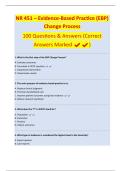
NR 451 – Evidence-Based Practice (EBP)
Change Process
100 Questions & Answers (Correct
Answers Marked ✔️✔️)
1. What is the first step of the EBP Change Process?
A. Evaluate outcomes
B. Formulate a PICOT question
C. Implement intervention
D. Disseminate results
2. The main purpose of evidence-based practice is to:
A. Replace clinical judgment
B. Promote standardized care
C. Improve patient outcomes using best evidence
D. Reduce research workload
3. What does the “P” in PICOT stand for?
A. Population
B. Parameter
C. Practice
D. Patient outcomes
4. What type of evidence is considered the highest level in the hierarchy?
A. Expert opinion
B. Case reports
,C. Randomized controlled trial
D. Systematic review & meta-analysis
5. The “I” in PICOT refers to:
A. Intervention
B. Integration
C. Inspection
D. Identification
6. Which component of PICOT identifies what the intervention is compared with?
A. Outcome
B. Population
C. Comparison
D. Time
7. What is the primary purpose of conducting a literature review in EBP?
A. To critique the hospital’s current practices
B. To judge researchers
C. To locate the best available evidence
D. To replace clinical expertise
8. Which of the following is a qualitative research method?
A. Randomized controlled trial
B. Phenomenology
C. Cohort study
D. Meta-analysis
9. The Iowa Model is an example of:
A. A research design
B. An EBP implementation framework
,C. A statistical tool
D. A literature search engine
10. Which step of the PICOT framework focuses on measurable results?
A. Comparison
B. Population
C. Outcome
D. Time
11. A nurse wants to compare the effectiveness of two wound treatments. The best study
design is:
A. Case study
B. Randomized controlled trial
C. Qualitative interview
D. Editorial opinion
12. Which database is most commonly used for nursing evidence?
A. Google Scholar
B. CINAHL
C. Yahoo Research
D. Facebook
13. In EBP, clinical expertise is combined with:
A. Policy guidelines only
B. Patient preferences and best evidence
C. Provider convenience
D. Hospital budgeting
14. The role of stakeholders in EBP change is to:
, A. Resist change when possible
B. Provide financial audits
C. Support, guide, and sustain the change
D. Serve as research subjects
15. Which is an example of a measurable outcome?
A. Better patient feelings
B. Increased patient satisfaction scores
C. Improved nurse morale
D. More teamwork
16. A barrier to EBP implementation includes:
A. Strong leadership
B. Adequate staffing
C. Lack of time
D. Access to evidence
17. An example of a facilitator of EBP change is:
A. Poor communication
B. Staff resistance
C. Supportive management
D. Lack of training
18. The “T” in PICOT can stand for:
A. Teamwork
B. Time
C. Treatment
D. Target
19. Which statistical measure indicates strength of evidence?
Change Process
100 Questions & Answers (Correct
Answers Marked ✔️✔️)
1. What is the first step of the EBP Change Process?
A. Evaluate outcomes
B. Formulate a PICOT question
C. Implement intervention
D. Disseminate results
2. The main purpose of evidence-based practice is to:
A. Replace clinical judgment
B. Promote standardized care
C. Improve patient outcomes using best evidence
D. Reduce research workload
3. What does the “P” in PICOT stand for?
A. Population
B. Parameter
C. Practice
D. Patient outcomes
4. What type of evidence is considered the highest level in the hierarchy?
A. Expert opinion
B. Case reports
,C. Randomized controlled trial
D. Systematic review & meta-analysis
5. The “I” in PICOT refers to:
A. Intervention
B. Integration
C. Inspection
D. Identification
6. Which component of PICOT identifies what the intervention is compared with?
A. Outcome
B. Population
C. Comparison
D. Time
7. What is the primary purpose of conducting a literature review in EBP?
A. To critique the hospital’s current practices
B. To judge researchers
C. To locate the best available evidence
D. To replace clinical expertise
8. Which of the following is a qualitative research method?
A. Randomized controlled trial
B. Phenomenology
C. Cohort study
D. Meta-analysis
9. The Iowa Model is an example of:
A. A research design
B. An EBP implementation framework
,C. A statistical tool
D. A literature search engine
10. Which step of the PICOT framework focuses on measurable results?
A. Comparison
B. Population
C. Outcome
D. Time
11. A nurse wants to compare the effectiveness of two wound treatments. The best study
design is:
A. Case study
B. Randomized controlled trial
C. Qualitative interview
D. Editorial opinion
12. Which database is most commonly used for nursing evidence?
A. Google Scholar
B. CINAHL
C. Yahoo Research
D. Facebook
13. In EBP, clinical expertise is combined with:
A. Policy guidelines only
B. Patient preferences and best evidence
C. Provider convenience
D. Hospital budgeting
14. The role of stakeholders in EBP change is to:
, A. Resist change when possible
B. Provide financial audits
C. Support, guide, and sustain the change
D. Serve as research subjects
15. Which is an example of a measurable outcome?
A. Better patient feelings
B. Increased patient satisfaction scores
C. Improved nurse morale
D. More teamwork
16. A barrier to EBP implementation includes:
A. Strong leadership
B. Adequate staffing
C. Lack of time
D. Access to evidence
17. An example of a facilitator of EBP change is:
A. Poor communication
B. Staff resistance
C. Supportive management
D. Lack of training
18. The “T” in PICOT can stand for:
A. Teamwork
B. Time
C. Treatment
D. Target
19. Which statistical measure indicates strength of evidence?