1
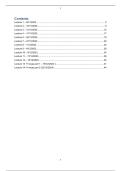
Contents
Lecture 1 – 6/11/2023 ............................................................................................................ 2
Lecture 2 – 10/11/2023 .......................................................................................................... 6
Lecture 3 – 13/11/2023 .........................................................................................................12
Lecture 4 – 17/11/2023 .........................................................................................................17
Lecture 5 – 20/11/2023 .........................................................................................................19
Lecture 7 – 27/11/2023 .........................................................................................................20
Lecture 8 – 1/12/2023...........................................................................................................24
Lecture 9 – 4/12/2023...........................................................................................................29
Lecture 10 – 8/12/2023.........................................................................................................34
Lecture 11 – 11/12/2023 .......................................................................................................36
Lecture 12 – 15/12/2023.......................................................................................................40
Lecture 13 → recap part 1 – 18/12/2023 :) ...........................................................................41
Lecture 14 → recap part 2 (22/12/2024) ...............................................................................44
1
, 2
Lecture 1 – 6/11/2023
Media content → representation & reality
Barbie: ironic.
Responses to content (what content means to someone is not fixed) dependent on the angle
with which you…
VI: negative frame. Bias. Depends on how you look at the content, what you see.
Stereotypes. Framing. Discrimination. There is no one way to look at this clip, it depends on
the angle.
It depends on the angle you take. Fundamental in this course.
• The role of the journalist/moderator (non-interference)
• All male (gender stereotyping)
• Moral standards – perspective on what is ‘normal when showering’
• Multicultural society framed as problematic
• Rhetorical strategy Fahrid Azarkan: First Azarkan identifies real problems with
Moroccans (criminal, unemployment statistics, Syria). Followed by twist: they perform
better than Dutch boys in soccer → makes his point based on logic: Derksen is
negatively biased towards Moroccans.
Listing things that are actually negative. Then saying positive things. By listing all the
negative things himself, and then saying ‘we have this really nice thing and derksen …’
His point: derksen is negatively biased towards Moroccans.
Rhetorical strategy. Doesn’t deny problems with Moroccans.
A rhetorical view will emphasize other elements of content than a cultural view (all male) or a
framing point of view (multiculturalism as a problem).
The point is: there is no such thing as THE content. Content is defined by the perspective
that is used. Different in scientific angle will lead to different ‘readings’ of ‘content’ (all types of
representations in media).
Central topic this course: different views on media content based on different (theoretical)
perspectives in Communication Science.
2
, 3
Three dominant outlooks in communication science:
- Persuasion: advertisements but also interventions that promote healthy lifestyles,
public relations…
- Culture: culture-specific outlooks on reality – morality, stereotypes, common sense,
values…
- Information: journalism, news…
➔ Different conceptions of ‘content’
They’re both very different, but both very persuasive. If you don’t get the joke in the first
video, you will think he is Trump. First is more satire. Both put family front in the centre, but in
very different ways.
They are positioned as candidates you can vote for (information).
They are both very american. The Dutch want more information. This wouldn’t work in the
Netherlands. You get to know about their character, but not about their politics.
Persuasion:
- Desantis never talks
- Gillum day in a life strategy. ELM: peripheral route
Cultural:
- Desantis: traditional family roles
- Business before pleasure
- Successful wife
- Gillum: American dream, honor your mother (bible), family first
Information:
- Running for governor, both
Persuasion perspective:
Cultural perspective:
Information perspective :
DeSantis:
• Confirmation of beliefs by being implicit (intended information must be inferred by
viewer)
• Prevent counter-arguing by using irony
• Rhetoric: underpin argument by using examples (ironic)
• Direct address (wife) vs indirect address (DeSantis)
• Male (career)-female (mother) role pattern (irony?)
• Wife has to back up her husband in his career
• Business before pleasure (private life drenched with politics) (ironic)
• Being successful means having a ‘beautiful’ wife
• Running for governor
• Endorsed by president (“Trumpist”)
• Conservative warrior
• Source of ad revealed (paid for by …)
Gillum:
3
, 4
• Day in a life strategy (bus ride, dresses kids)
• Prevent counter-arguing by addressing the negative (criminal brothers) explicitly
• ELM: peripheral route
• Family is most important thing in life
• American dream
• Honor your mother (bible)
• Elected black mayor of Tallahassee
• Born in Miami, poor family
• Criminal brothers
There is not such thing as THE content. You are producing the meaning, as viewers.
Producer: intent. Reader: bringing their own frame of reference to the table. Different per
reader.
All media content: re-presentation of reality. Something that was present in reality, was re-
presented again in for example in this clip. Representing makes specific knowledge about
the reality more prominent than other things (encoded in the text).
Difference in point of view will lead you to see and know different things about the piece of
media content. You will focus on different elements. It is very dependent on the angle which
you take to look at certain things.
Dafne Schippers
- Persuasion: brands. Main supporter. Nobody remembers the brands. You weren’t
looking at this angle. You were watching the sports. But you need familiarity with the
logos, if you are unfamiliar with brands, you will not see it. You have to have specific
knowledge.
- Information: sports commentator is providing information. Another information
perspective is more directorial, you could look at slow-motion, cinematography etc.
- Cultural: from the Netherlands, Dutch woman, Low Countries, etc. Dutchness of it all
was very much at the heart of reporting.
Meaning is added to content based on a perspective.
Sifan Hassan:
- She is a refugee. Claiming as dutch when she is winning. Framing her as refugee
when we talk about other things
Talkshow: information.
Sports report: very much cultural focus, less information focus. We are not doing anything,
but she is dutch so she is there for us.
Political campaign: persuasion
Representation: making something that was present, present again.
We gain knowledge about reality by re-presentation by using signs and sign systems
(semiotics). We learn about reality, so we produce knowledge and we do that by using signs
and sign systems. Colors are also signs: orange stands for the Netherlands. But if you don’t
know, you will not interpret it as such.
You need signs, you need language, you need knowledge to understand what is going on
around you.
4
Contents
Lecture 1 – 6/11/2023 ............................................................................................................ 2
Lecture 2 – 10/11/2023 .......................................................................................................... 6
Lecture 3 – 13/11/2023 .........................................................................................................12
Lecture 4 – 17/11/2023 .........................................................................................................17
Lecture 5 – 20/11/2023 .........................................................................................................19
Lecture 7 – 27/11/2023 .........................................................................................................20
Lecture 8 – 1/12/2023...........................................................................................................24
Lecture 9 – 4/12/2023...........................................................................................................29
Lecture 10 – 8/12/2023.........................................................................................................34
Lecture 11 – 11/12/2023 .......................................................................................................36
Lecture 12 – 15/12/2023.......................................................................................................40
Lecture 13 → recap part 1 – 18/12/2023 :) ...........................................................................41
Lecture 14 → recap part 2 (22/12/2024) ...............................................................................44
1
, 2
Lecture 1 – 6/11/2023
Media content → representation & reality
Barbie: ironic.
Responses to content (what content means to someone is not fixed) dependent on the angle
with which you…
VI: negative frame. Bias. Depends on how you look at the content, what you see.
Stereotypes. Framing. Discrimination. There is no one way to look at this clip, it depends on
the angle.
It depends on the angle you take. Fundamental in this course.
• The role of the journalist/moderator (non-interference)
• All male (gender stereotyping)
• Moral standards – perspective on what is ‘normal when showering’
• Multicultural society framed as problematic
• Rhetorical strategy Fahrid Azarkan: First Azarkan identifies real problems with
Moroccans (criminal, unemployment statistics, Syria). Followed by twist: they perform
better than Dutch boys in soccer → makes his point based on logic: Derksen is
negatively biased towards Moroccans.
Listing things that are actually negative. Then saying positive things. By listing all the
negative things himself, and then saying ‘we have this really nice thing and derksen …’
His point: derksen is negatively biased towards Moroccans.
Rhetorical strategy. Doesn’t deny problems with Moroccans.
A rhetorical view will emphasize other elements of content than a cultural view (all male) or a
framing point of view (multiculturalism as a problem).
The point is: there is no such thing as THE content. Content is defined by the perspective
that is used. Different in scientific angle will lead to different ‘readings’ of ‘content’ (all types of
representations in media).
Central topic this course: different views on media content based on different (theoretical)
perspectives in Communication Science.
2
, 3
Three dominant outlooks in communication science:
- Persuasion: advertisements but also interventions that promote healthy lifestyles,
public relations…
- Culture: culture-specific outlooks on reality – morality, stereotypes, common sense,
values…
- Information: journalism, news…
➔ Different conceptions of ‘content’
They’re both very different, but both very persuasive. If you don’t get the joke in the first
video, you will think he is Trump. First is more satire. Both put family front in the centre, but in
very different ways.
They are positioned as candidates you can vote for (information).
They are both very american. The Dutch want more information. This wouldn’t work in the
Netherlands. You get to know about their character, but not about their politics.
Persuasion:
- Desantis never talks
- Gillum day in a life strategy. ELM: peripheral route
Cultural:
- Desantis: traditional family roles
- Business before pleasure
- Successful wife
- Gillum: American dream, honor your mother (bible), family first
Information:
- Running for governor, both
Persuasion perspective:
Cultural perspective:
Information perspective :
DeSantis:
• Confirmation of beliefs by being implicit (intended information must be inferred by
viewer)
• Prevent counter-arguing by using irony
• Rhetoric: underpin argument by using examples (ironic)
• Direct address (wife) vs indirect address (DeSantis)
• Male (career)-female (mother) role pattern (irony?)
• Wife has to back up her husband in his career
• Business before pleasure (private life drenched with politics) (ironic)
• Being successful means having a ‘beautiful’ wife
• Running for governor
• Endorsed by president (“Trumpist”)
• Conservative warrior
• Source of ad revealed (paid for by …)
Gillum:
3
, 4
• Day in a life strategy (bus ride, dresses kids)
• Prevent counter-arguing by addressing the negative (criminal brothers) explicitly
• ELM: peripheral route
• Family is most important thing in life
• American dream
• Honor your mother (bible)
• Elected black mayor of Tallahassee
• Born in Miami, poor family
• Criminal brothers
There is not such thing as THE content. You are producing the meaning, as viewers.
Producer: intent. Reader: bringing their own frame of reference to the table. Different per
reader.
All media content: re-presentation of reality. Something that was present in reality, was re-
presented again in for example in this clip. Representing makes specific knowledge about
the reality more prominent than other things (encoded in the text).
Difference in point of view will lead you to see and know different things about the piece of
media content. You will focus on different elements. It is very dependent on the angle which
you take to look at certain things.
Dafne Schippers
- Persuasion: brands. Main supporter. Nobody remembers the brands. You weren’t
looking at this angle. You were watching the sports. But you need familiarity with the
logos, if you are unfamiliar with brands, you will not see it. You have to have specific
knowledge.
- Information: sports commentator is providing information. Another information
perspective is more directorial, you could look at slow-motion, cinematography etc.
- Cultural: from the Netherlands, Dutch woman, Low Countries, etc. Dutchness of it all
was very much at the heart of reporting.
Meaning is added to content based on a perspective.
Sifan Hassan:
- She is a refugee. Claiming as dutch when she is winning. Framing her as refugee
when we talk about other things
Talkshow: information.
Sports report: very much cultural focus, less information focus. We are not doing anything,
but she is dutch so she is there for us.
Political campaign: persuasion
Representation: making something that was present, present again.
We gain knowledge about reality by re-presentation by using signs and sign systems
(semiotics). We learn about reality, so we produce knowledge and we do that by using signs
and sign systems. Colors are also signs: orange stands for the Netherlands. But if you don’t
know, you will not interpret it as such.
You need signs, you need language, you need knowledge to understand what is going on
around you.
4