Chapter 2
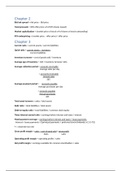
Bid/ask spread = Ask price – Bid price
Total proceeds = (IPO offer price x # of IPO shares Issued)
Market capitalization = (market price of stock x # of shares of stock outstanding)
IPO underpricing = (market price – offer price) / offer price
Chapter 3
Current ratio = current assets / current liabilities
Quick ratio = current assets – inventory
Current liabilities
Inventory turnover = cost of goods sold / inventory
Average age of inventory = 365 / inventory turnover ratio
Average collection period = accounts receivable
Average sales per day
= accounts receivable
Annual sales
365
Average payment period = accounts payable
Average purchases per day
= accounts payable
Annual purchases
365
Total asset turnover = sales / total assets
Debt ratio = total liabilities / total assets
Debt-to-equity ratio = total liabilities / common stock equity
Times interest earned ratio = earnings before interest and taxes / interest
Fixed-payment coverage = earnings before interest and taxes + lease payments
Interest + lease payments + {(principal payments + preferred stock dividends) x [1/1-T)]}
T = corporate tax rate
Gross profit margin = sales – cost of good sold = gross profit
Sales sales
Operating profit margin = operating profits / sales
Net profit margin = earnings available for common stockholders / sales
, Earnings per share = earnings available for common stockholders
Number of shares of common stock outstanding
ROA = Earnings available for common stockholders / total assets
ROE = earning available for common stockholders / common stock equity
P/E ratio = market price per share of common stock / earnings per share
Book value per share = total common stock equity
Of Common stock number of shares of common stock outstanding
Market/book (M/B) ratio = market price per share of common stock
Book value per share of common stock
Chapter 15
Inventory
AAI = * 365
Cost of goods sold
Accounts receivable
ACP = * 365
Annual sales
Accounts payable
APP = * 365
COGS∨ Annual purc h ases
OC = AAI + ACP
CCC = OC – APP
CCC = AAI + ACP – APP
Order cost = O x (S / Q)
Carrying cost = C x (Q / 2)
Total cost of inventory =[O X (S / Q)] + [C X (Q / 2)]
2X SXO
EOQ =
√ C
S = usage in units per period
O = cost per order
Q = order quantity in units
C = carrying cost per unit per period
Reorder point = days of lead time x daily usage
total variable cost of annual sales
Average investment in accounts receivable =
turnover of accounts receivable
365
Turnover of accounts receivable =
average collection period
Bid/ask spread = Ask price – Bid price
Total proceeds = (IPO offer price x # of IPO shares Issued)
Market capitalization = (market price of stock x # of shares of stock outstanding)
IPO underpricing = (market price – offer price) / offer price
Chapter 3
Current ratio = current assets / current liabilities
Quick ratio = current assets – inventory
Current liabilities
Inventory turnover = cost of goods sold / inventory
Average age of inventory = 365 / inventory turnover ratio
Average collection period = accounts receivable
Average sales per day
= accounts receivable
Annual sales
365
Average payment period = accounts payable
Average purchases per day
= accounts payable
Annual purchases
365
Total asset turnover = sales / total assets
Debt ratio = total liabilities / total assets
Debt-to-equity ratio = total liabilities / common stock equity
Times interest earned ratio = earnings before interest and taxes / interest
Fixed-payment coverage = earnings before interest and taxes + lease payments
Interest + lease payments + {(principal payments + preferred stock dividends) x [1/1-T)]}
T = corporate tax rate
Gross profit margin = sales – cost of good sold = gross profit
Sales sales
Operating profit margin = operating profits / sales
Net profit margin = earnings available for common stockholders / sales
, Earnings per share = earnings available for common stockholders
Number of shares of common stock outstanding
ROA = Earnings available for common stockholders / total assets
ROE = earning available for common stockholders / common stock equity
P/E ratio = market price per share of common stock / earnings per share
Book value per share = total common stock equity
Of Common stock number of shares of common stock outstanding
Market/book (M/B) ratio = market price per share of common stock
Book value per share of common stock
Chapter 15
Inventory
AAI = * 365
Cost of goods sold
Accounts receivable
ACP = * 365
Annual sales
Accounts payable
APP = * 365
COGS∨ Annual purc h ases
OC = AAI + ACP
CCC = OC – APP
CCC = AAI + ACP – APP
Order cost = O x (S / Q)
Carrying cost = C x (Q / 2)
Total cost of inventory =[O X (S / Q)] + [C X (Q / 2)]
2X SXO
EOQ =
√ C
S = usage in units per period
O = cost per order
Q = order quantity in units
C = carrying cost per unit per period
Reorder point = days of lead time x daily usage
total variable cost of annual sales
Average investment in accounts receivable =
turnover of accounts receivable
365
Turnover of accounts receivable =
average collection period