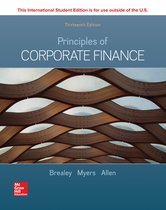
nN SOLUTIONMANUALFOR
N N
PrinciplesOfCorporateFinance
N N N
N 14thEditionByRichardBrealey,StewartMyers,
N N N N N N
ALLChapters(1-34)
N N N N
, TABLE OF CONTENTS D D
Chapter 1: Introduction to Corporate Finance
n n n n n
Chapter 2: How to Calculate Present Values
n n n n n n n
Chapter3:ValuingBonds
n
Chapter4:ValuingStocks
n n n
Chapter5:NetPresentValueandOtherInvestmentCriteria
n n n n n n n n
Chapter6:MakingInvestmentDecisionswiththeNetPresentValueRule
n n n n n n n n n n
Chapter7:IntroductiontoRisk,Diversification,andPortfolioSelectionChapter8: n n n
TheCapitalAssetPricingModel
n
Chapter9:RiskandtheCostofCapital
n n n n n n n
Chapter10:ProjectAnalysis
n n n
Chapter11:HowtoEnsureThatProjectsTrulyHavePositiveNPVs
n n n n n n n n n
Chapter12:EfficientMarketsandBehavioralFinance n
Chapter13:AnOverviewofCorporateFinancingChapter
n n n
14:HowCorporationsIssueSecurities
n
Chapter15:PayoutPolicy
n n n
Chapter16:DoesDebtPolicyMatter?
n n n n n
Chapter17:HowMuchShouldaCorporationBorrow? n n
Chapter18:FinancingandValuation
n
Chapter19:AgencyProblemsandCorporateGovernanceChapter n n n
20:StakeholderCapitalismandResponsibleBusiness
n n
Chapter21:UnderstandingOptions
Chapter22:ValuingOptionsChapter
n
23:RealOptions
n
Chapter24:Credit RiskandtheValueofCorporateDebtChapter N n n
25:TheManyDifferentKindsofDebt
n n n
Chapter26:Leasing
n n
Chapter27:ManagingRisk
n n n
Chapter28:InternationalFinancialManagement
n n n n
Chapter29:FinancialAnalysis
Chapter30:FinancialPlanning
n
Chapter31:WorkingCapitalManagement
n n n n
Chapter32:Mergers
n n
Chapter33:CorporateRestructuring
n n n
,Chapter34:Conclusion:WhatWeDoandDoNotKnowaboutFinance
n n n n n n n n n n n
CHAPTER1 n
IntroductiontoCorporateFinance n n n
Thevalues shown in thesolutions may be rounded forDdisplay purposes. However, the answers were derived
n n n n n n n n n n n n n
nusing aspreadsheet withoutany intermediate rounding.
n n n n n
Answers to Problem Sets n n n
1. a. real
b. executive airplanes n
c. brand names n
d. financial
e. bonds
*f. investment or capital expenditure n n n
*g. capital budgeting or investment n n n
h. financing
*Note that f and g are interchangeable in the question.
n n n n n n n n n
Est time: 01-05
n n
2. A trademark, a factory, undeveloped land, and your work force (c, d, e, and g) are all real a ssets. Real
n n n n n n n n n n n n n n n n n n n n
assets are identifiable as items with intrinsic value. The others in the list are fina ncial assets,that is,
n n n n n n n n n n n n n n n n n n
these assets derive value because of a contractual claim.
n n n n n n n n n
Est time: 01-05
n n
3. a.
Financial assets, such as stocks or bank loans, are claims held by investors. n n n n n n n n n n n n
Corporations sell financial assets to raise the cash to invest in real assets such
n n n n n n n n n n n n n n
as plantand equipment. Some real assets are intangible.
n n N n n n n n n
b. Capital expenditure means investment in real assets. Financing means raising the cash
n n n n n n n n n n n
for this investment.
n n n
, c. The shares of public corporations are traded on stock exchanges and can be purch
n n n n n n n n n n n n n
asedby a wide range of investors. The shares of closely held corporations are not
n n n n n n n n n n n n n n
publicly traded and are held by a small group of private investors.
n n n n n n n n n n n n
d. Unlimited liability: Investors are responsible for all the firm‘s debts. A sole proprieto
n n n n n n n n n n n n
r has unlimited liability. Investors in corporations have limited liability. They can lose their
n n n n n n n n n n n n n n
investment, but no more.
n n n n
Est time: 01-05
n n
N N
PrinciplesOfCorporateFinance
N N N
N 14thEditionByRichardBrealey,StewartMyers,
N N N N N N
ALLChapters(1-34)
N N N N
, TABLE OF CONTENTS D D
Chapter 1: Introduction to Corporate Finance
n n n n n
Chapter 2: How to Calculate Present Values
n n n n n n n
Chapter3:ValuingBonds
n
Chapter4:ValuingStocks
n n n
Chapter5:NetPresentValueandOtherInvestmentCriteria
n n n n n n n n
Chapter6:MakingInvestmentDecisionswiththeNetPresentValueRule
n n n n n n n n n n
Chapter7:IntroductiontoRisk,Diversification,andPortfolioSelectionChapter8: n n n
TheCapitalAssetPricingModel
n
Chapter9:RiskandtheCostofCapital
n n n n n n n
Chapter10:ProjectAnalysis
n n n
Chapter11:HowtoEnsureThatProjectsTrulyHavePositiveNPVs
n n n n n n n n n
Chapter12:EfficientMarketsandBehavioralFinance n
Chapter13:AnOverviewofCorporateFinancingChapter
n n n
14:HowCorporationsIssueSecurities
n
Chapter15:PayoutPolicy
n n n
Chapter16:DoesDebtPolicyMatter?
n n n n n
Chapter17:HowMuchShouldaCorporationBorrow? n n
Chapter18:FinancingandValuation
n
Chapter19:AgencyProblemsandCorporateGovernanceChapter n n n
20:StakeholderCapitalismandResponsibleBusiness
n n
Chapter21:UnderstandingOptions
Chapter22:ValuingOptionsChapter
n
23:RealOptions
n
Chapter24:Credit RiskandtheValueofCorporateDebtChapter N n n
25:TheManyDifferentKindsofDebt
n n n
Chapter26:Leasing
n n
Chapter27:ManagingRisk
n n n
Chapter28:InternationalFinancialManagement
n n n n
Chapter29:FinancialAnalysis
Chapter30:FinancialPlanning
n
Chapter31:WorkingCapitalManagement
n n n n
Chapter32:Mergers
n n
Chapter33:CorporateRestructuring
n n n
,Chapter34:Conclusion:WhatWeDoandDoNotKnowaboutFinance
n n n n n n n n n n n
CHAPTER1 n
IntroductiontoCorporateFinance n n n
Thevalues shown in thesolutions may be rounded forDdisplay purposes. However, the answers were derived
n n n n n n n n n n n n n
nusing aspreadsheet withoutany intermediate rounding.
n n n n n
Answers to Problem Sets n n n
1. a. real
b. executive airplanes n
c. brand names n
d. financial
e. bonds
*f. investment or capital expenditure n n n
*g. capital budgeting or investment n n n
h. financing
*Note that f and g are interchangeable in the question.
n n n n n n n n n
Est time: 01-05
n n
2. A trademark, a factory, undeveloped land, and your work force (c, d, e, and g) are all real a ssets. Real
n n n n n n n n n n n n n n n n n n n n
assets are identifiable as items with intrinsic value. The others in the list are fina ncial assets,that is,
n n n n n n n n n n n n n n n n n n
these assets derive value because of a contractual claim.
n n n n n n n n n
Est time: 01-05
n n
3. a.
Financial assets, such as stocks or bank loans, are claims held by investors. n n n n n n n n n n n n
Corporations sell financial assets to raise the cash to invest in real assets such
n n n n n n n n n n n n n n
as plantand equipment. Some real assets are intangible.
n n N n n n n n n
b. Capital expenditure means investment in real assets. Financing means raising the cash
n n n n n n n n n n n
for this investment.
n n n
, c. The shares of public corporations are traded on stock exchanges and can be purch
n n n n n n n n n n n n n
asedby a wide range of investors. The shares of closely held corporations are not
n n n n n n n n n n n n n n
publicly traded and are held by a small group of private investors.
n n n n n n n n n n n n
d. Unlimited liability: Investors are responsible for all the firm‘s debts. A sole proprieto
n n n n n n n n n n n n
r has unlimited liability. Investors in corporations have limited liability. They can lose their
n n n n n n n n n n n n n n
investment, but no more.
n n n n
Est time: 01-05
n n