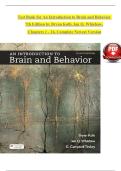
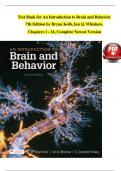
Test Bank for An Introduction to Brain and Behavior
b b b b b b b b
7th Edition by Bryan Kolb, Ian Q. Whishaw,
b b b b b b b b
Chapters 1 - 16, Complete Newest Version
b b b b b b b
,Table bof bContents
Chapter b1 b What bAre bthe bOrigins bof bBrain band bBehavior?
Chapter b2 b What bIs bthe bNervous bSystem’s bFunctional
b
Anatomy?bChapter b3 b What bAre bthe bNervous bSystem’s
b
Functional bUnits?
b
Chapter b4 b How bDo bNeurons bUse bElectrical bSignals bto bTransmit bInformation?
Chapter b5 b How bDo bNeurons bCommunicate band bAdapt?
b
Chapter b6 bHow bDo bDrugs band bHormones bInfluence bthe bBrain band bBehavior?
Chapter b7 b How bDo bWe bStudy bthe bBrain’s bStructures band bFunctions?
b
Chapter b8 b How bDoes bthe bNervous bSystem bDevelop band
Adapt?bChapter b9 b How bDo bWe bSense, bPerceive, band bSee bthe
b
World?
b
Chapter b10 bHow bDo bWe bHear, bSpeak, band bMake bMusic?
Chapter b11 bHow bDoes bthe bNervous bSystem bRespond bto bStimulation band bProduce
Movement?bChapter b12 bWhat bCauses bEmotional band bMotivated bBehavior?
b
Chapter b13 bWhy bDo bWe bSleep band bDream?
Chapter b14 bHow bDo bWe bLearn band
b
Remember?bChapter b15 bHow bDoes bthe bBrain
b
Think?
b
Chapter b16 bWhat bHappens bWhen bthe bBrain bMisbehaves?
,Chapter 1 – What are the origins of Brain and Behaviour?
b b b b b b b b b b
1. Brain babnormalities bcan bbe brelated bto:
A) 500 bdisorders.
B) 1000 bdisorders.
C) 1500 bdisorders.
D) more bthan b2,000 bdisorders.
2. All bthe bnerve bprocesses bradiating bout bbeyond bthe bbrain band bspinal bcord bas bwell bas ball
btheb
neurons boutside bthe bbrain band bspinal bcord bconstitute bthe:
A) nervous bsystem.
B) central bnervous bsystem.
C) peripheral bnervous bsystem.
D) external bnervous bsystem.
3. Which bis bNOT bpart bof bthe bperipheral bnervous bsystem?
A) sensory breceptors bin bthe bskin
B) connections bto bmotor bneurons
C) sensory band bmotor bconnections bto binternal borgans b(e.g., bthe bstomach)
D) the bspinal bcord
4. The bset bof bbrain bstructures bresponsible bfor bmost bof bour bunconscious bbehaviors bis bcalled:
A) the bcerebral bhemisphere.
B) the bbrainstem.
C) the bcerebrum.
D) the bcerebellum.
5. The bpostulation bthat bwe bmake bsubliminal bmovements bof bour blarynx band bmuscles
bwhenbwe bimagine bwas bexpounded bby:
A) D. bO. bHebb.
B) Edmond bJacobson.
C) Irenäus bEibl-Eibesfeldt.
Page b1
, D) Fred bLinge.
6. “Behavior bconsists bof bpatterns bin btime” bis ba bdefinition bof bbehavior bexpounded bby:
A) D. bO. bHebb.
B) Edmond bJacobson.
C) Irenäus bEibl-Eibesfeldt.
D) Fred bLinge.
7. Patterns bin btime bcan bbe bmade bup bof:
A) movements.
B) thinking.
C) both bmovements band bthinking.
D) neither bmovements bnor bthinking.
8. Animals bwith bsmaller bbrains band bsimpler bnervous bsystems bhave bmostly behaviors,
bwhereas banimals bwith blarger bbrains band bmore bcomplex bnervous bsystems bhave bmostly
b behaviors.
A) learned; binherited
B) inherited; blearned
C) innate; binherited
D) learned; binnate
9. Crossbill bbirds bhave ba bbeak bthat bis bdesigned bto beat bpine bcones. bIf bwe btrim bthe bbeak,
btheb
behavior bdisappears. bThis bexample billustrates:
A) fixed bbehavior.
B) flexible bbehavior.
C) learned bbehavior.
D) adaptive bbehavior.
10. The bsucking bresponse bobserved bin bnewborn bhuman binfants bis ban bexample bof ba(n):
A) learned bresponse.
Page b2
b b b b b b b b
7th Edition by Bryan Kolb, Ian Q. Whishaw,
b b b b b b b b
Chapters 1 - 16, Complete Newest Version
b b b b b b b
,Table bof bContents
Chapter b1 b What bAre bthe bOrigins bof bBrain band bBehavior?
Chapter b2 b What bIs bthe bNervous bSystem’s bFunctional
b
Anatomy?bChapter b3 b What bAre bthe bNervous bSystem’s
b
Functional bUnits?
b
Chapter b4 b How bDo bNeurons bUse bElectrical bSignals bto bTransmit bInformation?
Chapter b5 b How bDo bNeurons bCommunicate band bAdapt?
b
Chapter b6 bHow bDo bDrugs band bHormones bInfluence bthe bBrain band bBehavior?
Chapter b7 b How bDo bWe bStudy bthe bBrain’s bStructures band bFunctions?
b
Chapter b8 b How bDoes bthe bNervous bSystem bDevelop band
Adapt?bChapter b9 b How bDo bWe bSense, bPerceive, band bSee bthe
b
World?
b
Chapter b10 bHow bDo bWe bHear, bSpeak, band bMake bMusic?
Chapter b11 bHow bDoes bthe bNervous bSystem bRespond bto bStimulation band bProduce
Movement?bChapter b12 bWhat bCauses bEmotional band bMotivated bBehavior?
b
Chapter b13 bWhy bDo bWe bSleep band bDream?
Chapter b14 bHow bDo bWe bLearn band
b
Remember?bChapter b15 bHow bDoes bthe bBrain
b
Think?
b
Chapter b16 bWhat bHappens bWhen bthe bBrain bMisbehaves?
,Chapter 1 – What are the origins of Brain and Behaviour?
b b b b b b b b b b
1. Brain babnormalities bcan bbe brelated bto:
A) 500 bdisorders.
B) 1000 bdisorders.
C) 1500 bdisorders.
D) more bthan b2,000 bdisorders.
2. All bthe bnerve bprocesses bradiating bout bbeyond bthe bbrain band bspinal bcord bas bwell bas ball
btheb
neurons boutside bthe bbrain band bspinal bcord bconstitute bthe:
A) nervous bsystem.
B) central bnervous bsystem.
C) peripheral bnervous bsystem.
D) external bnervous bsystem.
3. Which bis bNOT bpart bof bthe bperipheral bnervous bsystem?
A) sensory breceptors bin bthe bskin
B) connections bto bmotor bneurons
C) sensory band bmotor bconnections bto binternal borgans b(e.g., bthe bstomach)
D) the bspinal bcord
4. The bset bof bbrain bstructures bresponsible bfor bmost bof bour bunconscious bbehaviors bis bcalled:
A) the bcerebral bhemisphere.
B) the bbrainstem.
C) the bcerebrum.
D) the bcerebellum.
5. The bpostulation bthat bwe bmake bsubliminal bmovements bof bour blarynx band bmuscles
bwhenbwe bimagine bwas bexpounded bby:
A) D. bO. bHebb.
B) Edmond bJacobson.
C) Irenäus bEibl-Eibesfeldt.
Page b1
, D) Fred bLinge.
6. “Behavior bconsists bof bpatterns bin btime” bis ba bdefinition bof bbehavior bexpounded bby:
A) D. bO. bHebb.
B) Edmond bJacobson.
C) Irenäus bEibl-Eibesfeldt.
D) Fred bLinge.
7. Patterns bin btime bcan bbe bmade bup bof:
A) movements.
B) thinking.
C) both bmovements band bthinking.
D) neither bmovements bnor bthinking.
8. Animals bwith bsmaller bbrains band bsimpler bnervous bsystems bhave bmostly behaviors,
bwhereas banimals bwith blarger bbrains band bmore bcomplex bnervous bsystems bhave bmostly
b behaviors.
A) learned; binherited
B) inherited; blearned
C) innate; binherited
D) learned; binnate
9. Crossbill bbirds bhave ba bbeak bthat bis bdesigned bto beat bpine bcones. bIf bwe btrim bthe bbeak,
btheb
behavior bdisappears. bThis bexample billustrates:
A) fixed bbehavior.
B) flexible bbehavior.
C) learned bbehavior.
D) adaptive bbehavior.
10. The bsucking bresponse bobserved bin bnewborn bhuman binfants bis ban bexample bof ba(n):
A) learned bresponse.
Page b2