Module 1
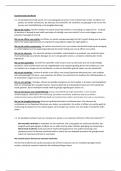
Chapter 1: Why philosophy of science?
Philosophy of science = a discipline of questioning the pretences of the natural
and the social sciences.
Why is scientific knowledge more trustworthy than mundane, everyday
knowledge?
Difference between scientific and everyday knowledge:
Science aims at knowledge of patterns, structures, regularities, and laws.
o In management studies we aim to gain knowledge about certain
kinds of businesses and certain types of successful logistics
management. The claims in the management sciences should be
generalisable.
o Goal of science: it wants to explain and understand phenomena
Five features of scientific knowledge (sufficient reasons to trust the validity of
scientific claims and results):
Generalisability (because we would like to explain and understand
phenomena)
Controllability (therefore, research has to be transparent and repeatable)
Objectivity (independence)
Scientific studies use methods of research which are accepted as valid
among the scholars within a particular discipline (justified true belief)
Scientific research aims at clear and simple models of explanation (clarity
and simplicity parsimony = the simplest explanation that explains the
greatest number of observations is prefer to more complex explanations)
Wat is wetenschapsfilosofie?
Twee denk systemen
System 1: snel maar slordig
System 2: trage maar accuraat
Filosofie als langzaam nadenken: Rigoreus skepticisme
Over wat wetenschap is en wanneer het goed gedaan wordt.
,Misconceptions with regard to the methods in the management sciences: only
empirical research counts as scientific
a. Empirical social scientific research = research of phenomena using
surveys, interviews, field studies etc.
b. Based on another misunderstanding: social-scientific research
should be describe facts and calculate data as adequately as
possible. Not right without thorough conceptual analysis, there is
no thorough scientific research. Understanding the research
objective (entity of a phenomenon needs discussion)
c. Organisation, company, management, market all theoretical
concepts, which require thorough philosophical thought, in order to
understand their exact meaning and the reality they refer to.
d. These assumptions are in the same way object of scientific
discussion as are the data of empirical research.
e. Hanson describes science as ‘is not just a systematic exposure to
the world; it is also a way of thinking about the world a way of
forming conceptions’.
f. Every form of observation is shaped by conceptual presuppositions
and a whole body of background knowledge (concepts). Careful
reasoning is as important as adequate observation.
g. Conclusion in the social sciences as well as in the natural
sciences, our framework of studying reality is built of theoretical
concepts that we need to analyse in order to know what we are
talking about. Empirical data (experimental data only analysis)
cannot have meaning outside such a conceptual framework. Those
who hold that in science, only empirical observations count, are
wrong.
Misconceptions with regard to the nature of management sciences: scientific
research is only descriptive, never prescriptive or normative
a. Science should not meddle in the muddy waters of valuation and
normative standardisation. Science can only describe. It cannot
prescribe. Science is about how things are, not about how they
should be. How things should be I a matter of individual opinions
and personal tase. We cannot say anything objectively about how
things should be. Therefore, the management sciences should limit
themselves to the facts, and not pretend to be able to say
something about what is right or good. not right
b. Example based on thorough research, scholars may conclude
that the most effective way of issues management requires the
willingness and ability to have an open line of communication with
stakeholder in society (best way).
c. Normative disagreements are not disagreements of taste. De
gustibus non est disputandem, but about normative issues, we can
have a dispute.
d. Reason-giving considerations has only one purpose: to show that
one’s own position is well founded and to convince the other party.
The truth wins. They want to convince, and they are prepared to be
, convinced. That is also the difference between a scientific debate
and a public debate / political debate.
e. Conclusion the management studies aim at offering well-founded
answers to questions about what are the best strategies to deal
with certain problems or what are the most effective forms of
steering complex managerial processes. Scientist want to know the
truth, both in a factual sense and in a normative sense.
The good reason model of truth
which claim is true, if it is supported by the balance of reasons. A claim is
supported by the balance of reasons if the reasons in favour of the claim
decisively outweigh the reasons against the claim.
Statistics = the art of careful reasoning about the relation between different
(sub)sets of data.
Argumentum ad ignorentiam = one claims that something is true because there
is no proof for the opposite of what one claim (fallacious reasoning).
Petitio principii = the claim that one has to prove is secretly taken for granted in
one of the premises (circular argument).
False dilemma fallacy = occurs when an argument offers a false range of choices
and requires that you pick one of them. Fallacies are defects in an argument
which cause an argument to be invalid, unsound, or weak.
What is reasonable? In the philosophy of science understood in three ways:
One may understand the question about what is reasonable as a question
about the correct methods of research and argumentation. It is then a
methodological question.
One may understand the question about what is reasonable as a question
about the status of acquired scientific knowledge. It is then an
epistemological question. ‘Epistemological’ means that it is about
episteme, which is Greek for knowledge.
One may understand the question about what is reasonable as a question
about the nature of (social) reality. It is then an ontological question,
because it is a question about the ontos (Greek for ‘that what is’).
What is reasonable? as a methodological question
Quantitative methodology = predominantly uses statistical analysis and data
about the behaviour and opinions of people. But must enter into discussions
about how to argue with numbers and with probabilities.
Most people reason according to a so called representativity heuristic: they
take in that the more a person or situation seems to represent the features of a
particular type, the higher the chance that the person of situation indeed is of
such a type, without looking at the statistical distribution of chances. where it
is very difficult to get some idea about how the base rate is built up, stereotype
reasoning may be a rational second best (intuition).
, The idea of good reason in science is closely connected to what can be regarded
as valid methods of research.
What is reasonable? as an epistemological question
What is the status of knowledge we have acquired? When do we speak of
knowledge distinguished from opinion, faith, conjecture of suspicion?
Scientists hope that the explanation of a phenomenon (coming to understand its
nature and origin) will provide for possibilities to come up with reliable
prediction. Unfortunately, such hope is false.
Homo economicus = economical human, seeks a maximum of preference
satisfaction, his preferences are fully ordered and he is able to calculate exactly
which choice in the market will result in maximal preference satisfaction.
argument against this concept.
What is reasonable? as an ontological question
Every scientific theory works with a set of ontological assumptions, assumptions
about the nature of the reality which studies. In what way do entities and
phenomena exists in reality? Are the presuppositions about their nature
warranted?
The philosophy of the management sciences question the ontological
presuppositions in organisational theory.
Difference between social realities and natural realities.
Idealism versus realism
Idealism is the position that ontologically speaking all natural phenomena are
nothing more than mental representations. Trees, rocks, planets, and snow
showers are just ideas of us, not objects or phenomena that exist in reality.
Realism is what people see is real but it is only real for them. This form
acknowledges that reality is always observed by us in a pre-shaped way.
Kant father of the modernity, proved that the time-space ordering is fundamental
to our observation of reality. Our mind orders the phenomena we observe along
the coordinates of time and space amounts to an epistemological position. It is
connected to a particular ontological position.
Kantian idealism: reality not in our mind but pre-shaped by our mind
Natural science is not the passive registration of what is outside of us. Objective
knowledge is only possible because our mind moulds and orders our
observations in a certain way. We order our sensory experiences by giving them
Chapter 1: Why philosophy of science?
Philosophy of science = a discipline of questioning the pretences of the natural
and the social sciences.
Why is scientific knowledge more trustworthy than mundane, everyday
knowledge?
Difference between scientific and everyday knowledge:
Science aims at knowledge of patterns, structures, regularities, and laws.
o In management studies we aim to gain knowledge about certain
kinds of businesses and certain types of successful logistics
management. The claims in the management sciences should be
generalisable.
o Goal of science: it wants to explain and understand phenomena
Five features of scientific knowledge (sufficient reasons to trust the validity of
scientific claims and results):
Generalisability (because we would like to explain and understand
phenomena)
Controllability (therefore, research has to be transparent and repeatable)
Objectivity (independence)
Scientific studies use methods of research which are accepted as valid
among the scholars within a particular discipline (justified true belief)
Scientific research aims at clear and simple models of explanation (clarity
and simplicity parsimony = the simplest explanation that explains the
greatest number of observations is prefer to more complex explanations)
Wat is wetenschapsfilosofie?
Twee denk systemen
System 1: snel maar slordig
System 2: trage maar accuraat
Filosofie als langzaam nadenken: Rigoreus skepticisme
Over wat wetenschap is en wanneer het goed gedaan wordt.
,Misconceptions with regard to the methods in the management sciences: only
empirical research counts as scientific
a. Empirical social scientific research = research of phenomena using
surveys, interviews, field studies etc.
b. Based on another misunderstanding: social-scientific research
should be describe facts and calculate data as adequately as
possible. Not right without thorough conceptual analysis, there is
no thorough scientific research. Understanding the research
objective (entity of a phenomenon needs discussion)
c. Organisation, company, management, market all theoretical
concepts, which require thorough philosophical thought, in order to
understand their exact meaning and the reality they refer to.
d. These assumptions are in the same way object of scientific
discussion as are the data of empirical research.
e. Hanson describes science as ‘is not just a systematic exposure to
the world; it is also a way of thinking about the world a way of
forming conceptions’.
f. Every form of observation is shaped by conceptual presuppositions
and a whole body of background knowledge (concepts). Careful
reasoning is as important as adequate observation.
g. Conclusion in the social sciences as well as in the natural
sciences, our framework of studying reality is built of theoretical
concepts that we need to analyse in order to know what we are
talking about. Empirical data (experimental data only analysis)
cannot have meaning outside such a conceptual framework. Those
who hold that in science, only empirical observations count, are
wrong.
Misconceptions with regard to the nature of management sciences: scientific
research is only descriptive, never prescriptive or normative
a. Science should not meddle in the muddy waters of valuation and
normative standardisation. Science can only describe. It cannot
prescribe. Science is about how things are, not about how they
should be. How things should be I a matter of individual opinions
and personal tase. We cannot say anything objectively about how
things should be. Therefore, the management sciences should limit
themselves to the facts, and not pretend to be able to say
something about what is right or good. not right
b. Example based on thorough research, scholars may conclude
that the most effective way of issues management requires the
willingness and ability to have an open line of communication with
stakeholder in society (best way).
c. Normative disagreements are not disagreements of taste. De
gustibus non est disputandem, but about normative issues, we can
have a dispute.
d. Reason-giving considerations has only one purpose: to show that
one’s own position is well founded and to convince the other party.
The truth wins. They want to convince, and they are prepared to be
, convinced. That is also the difference between a scientific debate
and a public debate / political debate.
e. Conclusion the management studies aim at offering well-founded
answers to questions about what are the best strategies to deal
with certain problems or what are the most effective forms of
steering complex managerial processes. Scientist want to know the
truth, both in a factual sense and in a normative sense.
The good reason model of truth
which claim is true, if it is supported by the balance of reasons. A claim is
supported by the balance of reasons if the reasons in favour of the claim
decisively outweigh the reasons against the claim.
Statistics = the art of careful reasoning about the relation between different
(sub)sets of data.
Argumentum ad ignorentiam = one claims that something is true because there
is no proof for the opposite of what one claim (fallacious reasoning).
Petitio principii = the claim that one has to prove is secretly taken for granted in
one of the premises (circular argument).
False dilemma fallacy = occurs when an argument offers a false range of choices
and requires that you pick one of them. Fallacies are defects in an argument
which cause an argument to be invalid, unsound, or weak.
What is reasonable? In the philosophy of science understood in three ways:
One may understand the question about what is reasonable as a question
about the correct methods of research and argumentation. It is then a
methodological question.
One may understand the question about what is reasonable as a question
about the status of acquired scientific knowledge. It is then an
epistemological question. ‘Epistemological’ means that it is about
episteme, which is Greek for knowledge.
One may understand the question about what is reasonable as a question
about the nature of (social) reality. It is then an ontological question,
because it is a question about the ontos (Greek for ‘that what is’).
What is reasonable? as a methodological question
Quantitative methodology = predominantly uses statistical analysis and data
about the behaviour and opinions of people. But must enter into discussions
about how to argue with numbers and with probabilities.
Most people reason according to a so called representativity heuristic: they
take in that the more a person or situation seems to represent the features of a
particular type, the higher the chance that the person of situation indeed is of
such a type, without looking at the statistical distribution of chances. where it
is very difficult to get some idea about how the base rate is built up, stereotype
reasoning may be a rational second best (intuition).
, The idea of good reason in science is closely connected to what can be regarded
as valid methods of research.
What is reasonable? as an epistemological question
What is the status of knowledge we have acquired? When do we speak of
knowledge distinguished from opinion, faith, conjecture of suspicion?
Scientists hope that the explanation of a phenomenon (coming to understand its
nature and origin) will provide for possibilities to come up with reliable
prediction. Unfortunately, such hope is false.
Homo economicus = economical human, seeks a maximum of preference
satisfaction, his preferences are fully ordered and he is able to calculate exactly
which choice in the market will result in maximal preference satisfaction.
argument against this concept.
What is reasonable? as an ontological question
Every scientific theory works with a set of ontological assumptions, assumptions
about the nature of the reality which studies. In what way do entities and
phenomena exists in reality? Are the presuppositions about their nature
warranted?
The philosophy of the management sciences question the ontological
presuppositions in organisational theory.
Difference between social realities and natural realities.
Idealism versus realism
Idealism is the position that ontologically speaking all natural phenomena are
nothing more than mental representations. Trees, rocks, planets, and snow
showers are just ideas of us, not objects or phenomena that exist in reality.
Realism is what people see is real but it is only real for them. This form
acknowledges that reality is always observed by us in a pre-shaped way.
Kant father of the modernity, proved that the time-space ordering is fundamental
to our observation of reality. Our mind orders the phenomena we observe along
the coordinates of time and space amounts to an epistemological position. It is
connected to a particular ontological position.
Kantian idealism: reality not in our mind but pre-shaped by our mind
Natural science is not the passive registration of what is outside of us. Objective
knowledge is only possible because our mind moulds and orders our
observations in a certain way. We order our sensory experiences by giving them