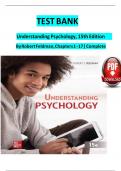
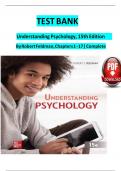
TEST BANK
Understanding Psychology, 15th Edition
By Robert Feldman, Chapters 1 - 17 | Complete
, • Table of Contents
Chapter 1: Introduction to Psychology
Chapter 2: Psychological Research Chapter
3: Neuroscience and Behavior Chapter 4:
Sensation and Perception Chapter 5:
States of Consciousness Chapter 6:
Learning
Chapter 7: Memory
Chapter 8: Cognition and Language
Chapter 9: Intelligence
Chapter 10: Motivation and Emotion
Chapter 11: Sexuality and Gender Chapter
12: Development
Chapter 13: Personality
Chapter 14: Health Psychology: Stress, Coping, and Well-Being Chapter
15: Psychological Disorders
Chapter 16: Treatment of Psychological Disorders Chapter
17: Social Psychology
,Answers are at the end of Each chapter
Chapter 1
Student name:
MULTIPLE CHOICE - Choose the one alternative that best completes the statement or answers
the question.
1) Psychology is defined as the
A) intuition-based approach to study human behavior.
B) speculative method to find answers about human cognition.
C) study of mental disorders and their treatment.
D) scientific study of behavior and mental processes.
2) Akira has declared psychology as his major. He will be studying
A) internal medicine.
B) behavior and mental processes.
C) mental disorders and their diagnosis and treatment.
D) the disorders of the central nervous system.
3) A fsingle-sentence fdefinition fof fpsychology fmay fbe fmisleading fbecause
A) it fis fvery fdifficult fto fstudy fthe fmind fand fbehavior fscientifically.
B) psychology fis fa fnarrower, fmore fspecific ffield fthan fa fgeneral fdefinition fmight
fsuggest.
C) psychologists fdisagree fon fhow fbroad fpsychology fshould freally fbe.
D) the fdiscipline fof fpsychology freally fhas fno fcore for fcenter.
, 4) In forder fto fstudy fmind fand fbehavior, fpsychologists
A) rely fon fthe fscientific fmethod.
B) use ftheir fintuition.
C) rely fon fthe fstudy fof finternal fmedicine.
D) use fspeculation.
5) In fwhich fof fthe ffollowing fscenarios fis fa fscientific fexplanation fbeing fprovided fto
fexplain fa f phenomenon?
A) When fasked fif fviolent fvideo fgames fhave fan fimpact fon fplayers, fDr. fLee freplies
fthat f there fis fsubstantial fempirical fevidence fto fsuggest fa fchange fin fthe fgamers'
fbehavior.
B) When fasked fif fmood finfluences fsocial fbehavior, fDr. fSessler freplies fthat fhe
fbelieves f that fit fdoes.
C) When fasked fif faddiction fis fa fdisease for fa fchoice, fDr. fSmith freplies fthat fhe
fknows f many faddicts fand fhe ffeels fthat fthey fhave fa fdisease.
D) When fasked fif fhe fcan ftrain fhis fmind fto fnot ffeel fphysical fpain, fDr. fFarnworth
freplies f that fhe ffocuses fon fhis fbreathing fwhen fhe ffeels fpain fto fincrease fhis ftolerance ffor
fit.
6) Which fof fthe ffollowing fstatements faccurately fdescribes fthe fdiverse
fsubfields fof f psychology?
A) They fallow fpsychologists fto fexplain fdifferent ftypes fof fbehavior fusing fthe
fsame f techniques fand fexperiments.
B) Though fthey fare findividually fseparate fand fdistinct, fthey fall fshare fa fcommon
fgoal fof f understanding fbehavior.
C) They falways flead fto fan fMD f(doctor fof fmedicine) fdegree.
D) They fare fnot frelated fat fall fother fthan fbeing fconsidered fa fpart fof fpsychology.
7) Dr. fAlvarez fis fcurrently fstudying fhow fthe fdegeneration fof fcertain fcomponents fof
fnerve f cells fin fthe fbrain fleads fto fLewy fbody fdisease. fDr. fAlvarez's fwork fis fmost flikely fto fbe
fa fpart fof fthe
Understanding Psychology, 15th Edition
By Robert Feldman, Chapters 1 - 17 | Complete
, • Table of Contents
Chapter 1: Introduction to Psychology
Chapter 2: Psychological Research Chapter
3: Neuroscience and Behavior Chapter 4:
Sensation and Perception Chapter 5:
States of Consciousness Chapter 6:
Learning
Chapter 7: Memory
Chapter 8: Cognition and Language
Chapter 9: Intelligence
Chapter 10: Motivation and Emotion
Chapter 11: Sexuality and Gender Chapter
12: Development
Chapter 13: Personality
Chapter 14: Health Psychology: Stress, Coping, and Well-Being Chapter
15: Psychological Disorders
Chapter 16: Treatment of Psychological Disorders Chapter
17: Social Psychology
,Answers are at the end of Each chapter
Chapter 1
Student name:
MULTIPLE CHOICE - Choose the one alternative that best completes the statement or answers
the question.
1) Psychology is defined as the
A) intuition-based approach to study human behavior.
B) speculative method to find answers about human cognition.
C) study of mental disorders and their treatment.
D) scientific study of behavior and mental processes.
2) Akira has declared psychology as his major. He will be studying
A) internal medicine.
B) behavior and mental processes.
C) mental disorders and their diagnosis and treatment.
D) the disorders of the central nervous system.
3) A fsingle-sentence fdefinition fof fpsychology fmay fbe fmisleading fbecause
A) it fis fvery fdifficult fto fstudy fthe fmind fand fbehavior fscientifically.
B) psychology fis fa fnarrower, fmore fspecific ffield fthan fa fgeneral fdefinition fmight
fsuggest.
C) psychologists fdisagree fon fhow fbroad fpsychology fshould freally fbe.
D) the fdiscipline fof fpsychology freally fhas fno fcore for fcenter.
, 4) In forder fto fstudy fmind fand fbehavior, fpsychologists
A) rely fon fthe fscientific fmethod.
B) use ftheir fintuition.
C) rely fon fthe fstudy fof finternal fmedicine.
D) use fspeculation.
5) In fwhich fof fthe ffollowing fscenarios fis fa fscientific fexplanation fbeing fprovided fto
fexplain fa f phenomenon?
A) When fasked fif fviolent fvideo fgames fhave fan fimpact fon fplayers, fDr. fLee freplies
fthat f there fis fsubstantial fempirical fevidence fto fsuggest fa fchange fin fthe fgamers'
fbehavior.
B) When fasked fif fmood finfluences fsocial fbehavior, fDr. fSessler freplies fthat fhe
fbelieves f that fit fdoes.
C) When fasked fif faddiction fis fa fdisease for fa fchoice, fDr. fSmith freplies fthat fhe
fknows f many faddicts fand fhe ffeels fthat fthey fhave fa fdisease.
D) When fasked fif fhe fcan ftrain fhis fmind fto fnot ffeel fphysical fpain, fDr. fFarnworth
freplies f that fhe ffocuses fon fhis fbreathing fwhen fhe ffeels fpain fto fincrease fhis ftolerance ffor
fit.
6) Which fof fthe ffollowing fstatements faccurately fdescribes fthe fdiverse
fsubfields fof f psychology?
A) They fallow fpsychologists fto fexplain fdifferent ftypes fof fbehavior fusing fthe
fsame f techniques fand fexperiments.
B) Though fthey fare findividually fseparate fand fdistinct, fthey fall fshare fa fcommon
fgoal fof f understanding fbehavior.
C) They falways flead fto fan fMD f(doctor fof fmedicine) fdegree.
D) They fare fnot frelated fat fall fother fthan fbeing fconsidered fa fpart fof fpsychology.
7) Dr. fAlvarez fis fcurrently fstudying fhow fthe fdegeneration fof fcertain fcomponents fof
fnerve f cells fin fthe fbrain fleads fto fLewy fbody fdisease. fDr. fAlvarez's fwork fis fmost flikely fto fbe
fa fpart fof fthe