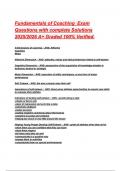
Fundamentals of Coaching Exam
Questions with complete Solutions
2025/2026 A+ Graded 100% Verified.
3 Dimensions of Learning - ANS- Affective
Cognitive
Motor
Affective Dimension - ANS- attitudes, values and ethical behaviour linked to self-esteem
Cognitive Dimension - ANS- perspective of the acquisition of knowledge whether is
technical, tactical or strategic
Motor Dimension - ANS- execution of skills, techniques, or any form of motor
performance
Self- Esteem - ANS- the way a person sees their self
Importance of self-esteem - ANS- Sport gives athletes opportunities to acquire new skills
to evaluate their abilities
Indicators of lacking self-esteem - ANS- -avoids doing a task
-cheats or lies to win
-signs of regression and acts like a baby
-extremely stubborn
-makes excuses
-making negative comments about themselves
-sensitive to praise and criticism
-helping too much or too little around the house
Helping Young People Develop Self-Esteem - ANS- -greet all athletes when they arrive
-show them you are confident that they can learn
-show them respect
-tell them what they do well
-communicate in a positive way
-engage them in activities
-congratulate them on special achievements
, -acknowledge their efforts
Preferred Learning Styles - ANS- Visual
Auditory
Kinesthetic
Visual Learner - ANS- need a demonstration, diagrams or to follow along on paper
Auditory Learner - ANS- learn by listening and like long explanations
Kinesthetic Learner - ANS- need key points and physical manipulation when performing
the task
Key Elements of Teaching - ANS- 1. Organization and Set-up
2. Explanations and Demonstrations
3. Observation
4. Intervention and Feedback
5. Effects of the Feedback
Step 1: Organization and Set-up - ANS- -safety measures
-how the activity starts and finishes
-requires 50% motor involvement
-coach is able to supervise
Step 2: Explanations and Demonstrations - ANS- - describe the aim of the exercise
-outline what is to be done and how
-criteria for successful performance
Step 3: Observation - ANS- -athletes are actively engaged
-move around without interfering with athletes
-observe the group and individuals
Step 4: Intervention and Feedback - ANS- -identify the cause of failure
- adapt the activity as needed
- explain and demonstrate again if needed
-recognize successful performance
Step 5: Effects of the Feedback - ANS- -give athletes time to practice again to see if they
have taken your feedback
5 Types of Intervention from the Coach - ANS- 1. Inhibiting
2. Repeating
3. Explaining
4. Helping
Questions with complete Solutions
2025/2026 A+ Graded 100% Verified.
3 Dimensions of Learning - ANS- Affective
Cognitive
Motor
Affective Dimension - ANS- attitudes, values and ethical behaviour linked to self-esteem
Cognitive Dimension - ANS- perspective of the acquisition of knowledge whether is
technical, tactical or strategic
Motor Dimension - ANS- execution of skills, techniques, or any form of motor
performance
Self- Esteem - ANS- the way a person sees their self
Importance of self-esteem - ANS- Sport gives athletes opportunities to acquire new skills
to evaluate their abilities
Indicators of lacking self-esteem - ANS- -avoids doing a task
-cheats or lies to win
-signs of regression and acts like a baby
-extremely stubborn
-makes excuses
-making negative comments about themselves
-sensitive to praise and criticism
-helping too much or too little around the house
Helping Young People Develop Self-Esteem - ANS- -greet all athletes when they arrive
-show them you are confident that they can learn
-show them respect
-tell them what they do well
-communicate in a positive way
-engage them in activities
-congratulate them on special achievements
, -acknowledge their efforts
Preferred Learning Styles - ANS- Visual
Auditory
Kinesthetic
Visual Learner - ANS- need a demonstration, diagrams or to follow along on paper
Auditory Learner - ANS- learn by listening and like long explanations
Kinesthetic Learner - ANS- need key points and physical manipulation when performing
the task
Key Elements of Teaching - ANS- 1. Organization and Set-up
2. Explanations and Demonstrations
3. Observation
4. Intervention and Feedback
5. Effects of the Feedback
Step 1: Organization and Set-up - ANS- -safety measures
-how the activity starts and finishes
-requires 50% motor involvement
-coach is able to supervise
Step 2: Explanations and Demonstrations - ANS- - describe the aim of the exercise
-outline what is to be done and how
-criteria for successful performance
Step 3: Observation - ANS- -athletes are actively engaged
-move around without interfering with athletes
-observe the group and individuals
Step 4: Intervention and Feedback - ANS- -identify the cause of failure
- adapt the activity as needed
- explain and demonstrate again if needed
-recognize successful performance
Step 5: Effects of the Feedback - ANS- -give athletes time to practice again to see if they
have taken your feedback
5 Types of Intervention from the Coach - ANS- 1. Inhibiting
2. Repeating
3. Explaining
4. Helping