ATI PN MEDICAL SURGICAL (ADULT MEDICAL SURGICAL) 2025 20 Q & A
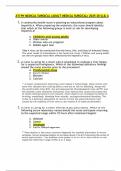
1. A community health nurse is planning an educational program about hepatitis A. When preparing the materials, the nurse should identify that which of the following groups is most at risk for developing hepatitis A? A. Children and young adults B. Older Adults C. Woman who are pregnant D. Middle-aged men *Hep A virus can be contracted from the feces, bile, and blood of infected clients. The usual mode of transmission is the fecal-oral route. Children and young adults are the two groups most often affected by the hepatitis A virus. 2. A nurse is caring for a client who is scheduled to undergo a liver biopsy for a suspected malignancy. Which of the following laboratory findings should the nurse monitor prior to the procedure? A. Prothrombin time B. Serum lipase C. Bilirubin D. Calcium ** A major complication following a liver biopsy is hemorrhage. Many clients who have liver disease have clotting defects and are at risk for bleeding. Along with the prothrombin time (PT), the activated partial thromboplastin time (aPTT) and the platelet count should be monitored. Liver dysfunction causes the production of blood clotting factors to be reduced, which leads to an increased incidence of bruising, nosebleeds, bleeding from wounds, and gastrointestinal bleeding. This is due to a deficient absorption of vitamin K from the gastrointestinal tract caused by the inability of liver cells to use vitamin K to make prothrombin. 3. A nurse is caring for a client who has acute pancreatitis. Which of the following serum laboratory values should the nurse anticipate returning to the expected range within 72 hours after treatment begins? A. Aldolase B. Lipase C. Amylase D. Lactic Dehydrogenase ** Pancreatitis is the most common diagnosis for marked elevations in serum amylase. Serum amylase begins to increase about 3 to 6 hr following the onset of acute pancreatitis. The amylase level peaks in 20 to 30 hr and returns to the expected reference range within 2 to 3 days. 4. A nurse is collecting data from a client who has chronic pancreatitis. Which of the following findings should the nurse identify as a likely cause of the client’s condition? A. High-calorie diet B. Prior gastrointestinal illness C. Tobacco use D. Alcohol use ** Alcohol consumption is one of the major causes of chronic pancreatitis in the U.S. Long-term alcohol use disorder produces hypersecretion of protein in pancreatic secretions. Alcohol has a direct toxic effect on the cells of the pancreas. 5. A nurse is assisting with the care of a client who has a history of cirrhosis and is admitted with manifestations of hepatic encephalopathy. The nurse should anticipate a prescription use for which of the following laboratory tests to determine the possibility of recent excessive alcohol use? A. Gamma-glutamyl transferase (GGT) B. Alkaline phosphatase (ALP) C. Serum bilirubin D. Alanine aminotransferase (ALT) ** The GGT laboratory test is specific to the hepatobiliary system in which levels can be raised by alcohol and hepatotoxic drugs. Therefore, it is useful for monitoring for drug toxicity and excessive alcohol use.
Document information
- Uploaded on
- June 12, 2025
- Number of pages
- 7
- Written in
- 2024/2025
- Type
- Exam (elaborations)
- Contains
- Questions & answers