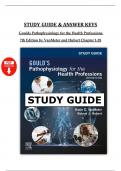
STUDY GUIDE & ANSWER KEYS
Goulds Pathophysiology for the Health Professions
7th Edition by VanMeter and Hubert Chapter 1-28
STUDY GUIDE
, N/B ANSWER KEYS
AT PAGE 175 FOR ALL 28 CHAPTERS INCLUDED
TABLE OF CONTENTS
Section I: Pathophysiology: Background and Overview
1. Introduction to Pathophysiology
2. Fluid, Electrolyte, and Acid-Base Imbalances
3. Introduction to Basic Pharmacology and Other Common Therapies
4. Pain
Section II: Defense/Protective
5. Inflammation and Healing
6. Infection
7. Immunity
Section III: Pathophysiology of Body Systems
8. Skin Disorders
9. Musculoskeletal Disorders
10. Blood and the Circulatory System
11. Lymphatic System Disorders
12. Cardiovascular System Disorders
13. Respiratory System Disorders
14. Neurological Disorders
15. Eyes, Ears and Other Sensory Organs
16. Endocrine Disorders
17. Digestive System Disorders
18. Urinary System Disorders
19. Reproductive System Disorders
20. Neoplasms and Cancer
Section IV: Factors Contributing to Pathophysiology
21. Congenital and Genetic Disorders
22. Complications Due to Pregnancy
23. Complications Due to Adolescence
24. Complications Due to Aging
Section V: Environmental Factors and Pathophysiology
25. Immobility and Associated Problems
26. Stress and Associated Problems
27. Substance Abuse and Associated Problems
28. Environmental Hazards and Associated Problems
,SECTION I
Pathophysiology: Background and Overview
OUTLINE
1 Introduction to Pathophysiology
2 Fluid, Electrolyte, and Acid-Base Imbalances
3 Introduction to Basic Pharmacology and Other Common
Therapies
4 Pain
, 1
Introduction to Pathophysiology
1. Differentiate between an acute disease and a chronic disease.
2. What is the difference between an epidemic and a pandemic?
3. Cells adapt to environmental changes by changing their size, number,
and type. For each of the following scenarios, identify the appropriate
adaptive cellular change or changes that occur, using the following
terms:
atrophy metaplasia
hypertrophy dysplasia
hyperplasia neoplasia
i. a decrease in size of a leg after being in a cast for 6 weeks:
ii. breast enlargement at puberty:
iii. a dramatic increase in muscle mass in an Olympic weight lifter:
iv. a very aggressively growing cancer mass:
v. a benign tumor growing along the spine:
vi.the changes that occur in the lower extremities of someone paralyzed
below the waist:
vii. a pressure area under a poorly fitting denture:
viii. the changes that often occur over years in the respiratory tract of a
smoker:
ix. the changes responsible for an abnormal Pap smear:
x. the response of the skeletal system to excessive growth hormone:
xi. the thyroid gland's response to hypersecretion of thyroid-stimulating
hormone:
xii. the liver's response to prolonged drug intoxication (e.g., chronic
alcohol abuse):
xiii. the changes that occur in the gallbladder with the development of
gallstones:
xiv. the thyroid gland's response to decreased iodine intake:
Goulds Pathophysiology for the Health Professions
7th Edition by VanMeter and Hubert Chapter 1-28
STUDY GUIDE
, N/B ANSWER KEYS
AT PAGE 175 FOR ALL 28 CHAPTERS INCLUDED
TABLE OF CONTENTS
Section I: Pathophysiology: Background and Overview
1. Introduction to Pathophysiology
2. Fluid, Electrolyte, and Acid-Base Imbalances
3. Introduction to Basic Pharmacology and Other Common Therapies
4. Pain
Section II: Defense/Protective
5. Inflammation and Healing
6. Infection
7. Immunity
Section III: Pathophysiology of Body Systems
8. Skin Disorders
9. Musculoskeletal Disorders
10. Blood and the Circulatory System
11. Lymphatic System Disorders
12. Cardiovascular System Disorders
13. Respiratory System Disorders
14. Neurological Disorders
15. Eyes, Ears and Other Sensory Organs
16. Endocrine Disorders
17. Digestive System Disorders
18. Urinary System Disorders
19. Reproductive System Disorders
20. Neoplasms and Cancer
Section IV: Factors Contributing to Pathophysiology
21. Congenital and Genetic Disorders
22. Complications Due to Pregnancy
23. Complications Due to Adolescence
24. Complications Due to Aging
Section V: Environmental Factors and Pathophysiology
25. Immobility and Associated Problems
26. Stress and Associated Problems
27. Substance Abuse and Associated Problems
28. Environmental Hazards and Associated Problems
,SECTION I
Pathophysiology: Background and Overview
OUTLINE
1 Introduction to Pathophysiology
2 Fluid, Electrolyte, and Acid-Base Imbalances
3 Introduction to Basic Pharmacology and Other Common
Therapies
4 Pain
, 1
Introduction to Pathophysiology
1. Differentiate between an acute disease and a chronic disease.
2. What is the difference between an epidemic and a pandemic?
3. Cells adapt to environmental changes by changing their size, number,
and type. For each of the following scenarios, identify the appropriate
adaptive cellular change or changes that occur, using the following
terms:
atrophy metaplasia
hypertrophy dysplasia
hyperplasia neoplasia
i. a decrease in size of a leg after being in a cast for 6 weeks:
ii. breast enlargement at puberty:
iii. a dramatic increase in muscle mass in an Olympic weight lifter:
iv. a very aggressively growing cancer mass:
v. a benign tumor growing along the spine:
vi.the changes that occur in the lower extremities of someone paralyzed
below the waist:
vii. a pressure area under a poorly fitting denture:
viii. the changes that often occur over years in the respiratory tract of a
smoker:
ix. the changes responsible for an abnormal Pap smear:
x. the response of the skeletal system to excessive growth hormone:
xi. the thyroid gland's response to hypersecretion of thyroid-stimulating
hormone:
xii. the liver's response to prolonged drug intoxication (e.g., chronic
alcohol abuse):
xiii. the changes that occur in the gallbladder with the development of
gallstones:
xiv. the thyroid gland's response to decreased iodine intake: