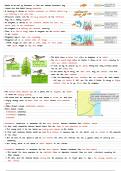
Case Study: Palm Jumeirah
General facts:
- It is one of the largest artificial/man-made islands in the world.
- Location: Jumeirah Coastal Area, Dubai, UAE
- Project area: 2,209 square miles
- Construction: began in 2001 & the first residential units handed
over in 2006.
What is it? Why was it built?
- It is in the shape of a palm tree, with many (22) luxury - Dubai is the perfect place for the idea, as it has sunny days throughou
hotels, exclusive residential beach side villas (1,800), houses - 5 million tourists visited Dubai each year, which the Sheikh wanted t
& apartments (4,500), marinas, water theme parks, million.
restaurants, shopping malls etc. - Dubai is 2x the size of London & is built on the profits of its oil reserve
- It has a 1.5km long main trunk & 17 fronds, providing a 1960s (one of the richest places in the Arab world) > famous for gold,
large residential & commercial space. - Recently sought to diversify its income > expanded info tech, finance,
- Has a breakwater that acts as a barrier to the sea (protects - The coastline of Dubai was only 72km, which isn’t enough space for 1
the inner palm). tourists (by early 1990s hotels & ports had occupied Dubai’s entire coa
- The Palm ‘trunk’ has 8,000 villas & apartment complexes, - The island was supposed to be 5.5km in diameter, increasing the coa
220 shopping malls & restaurants & 450 apartments. 78.6km.
- The palm shape would maximize beachfront space.
- First envisioned in 1990s as a luxury residential & commercial area.
- Shape culturally relevant & significantly symbolic to the region.
General facts:
- It is one of the largest artificial/man-made islands in the world.
- Location: Jumeirah Coastal Area, Dubai, UAE
- Project area: 2,209 square miles
- Construction: began in 2001 & the first residential units handed
over in 2006.
What is it? Why was it built?
- It is in the shape of a palm tree, with many (22) luxury - Dubai is the perfect place for the idea, as it has sunny days throughou
hotels, exclusive residential beach side villas (1,800), houses - 5 million tourists visited Dubai each year, which the Sheikh wanted t
& apartments (4,500), marinas, water theme parks, million.
restaurants, shopping malls etc. - Dubai is 2x the size of London & is built on the profits of its oil reserve
- It has a 1.5km long main trunk & 17 fronds, providing a 1960s (one of the richest places in the Arab world) > famous for gold,
large residential & commercial space. - Recently sought to diversify its income > expanded info tech, finance,
- Has a breakwater that acts as a barrier to the sea (protects - The coastline of Dubai was only 72km, which isn’t enough space for 1
the inner palm). tourists (by early 1990s hotels & ports had occupied Dubai’s entire coa
- The Palm ‘trunk’ has 8,000 villas & apartment complexes, - The island was supposed to be 5.5km in diameter, increasing the coa
220 shopping malls & restaurants & 450 apartments. 78.6km.
- The palm shape would maximize beachfront space.
- First envisioned in 1990s as a luxury residential & commercial area.
- Shape culturally relevant & significantly symbolic to the region.