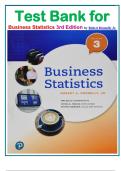
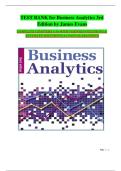
Complete Test Bank Business Analytics 3rd
ds ds ds ds ds ds
Edition Evans Questions & Answers with
ds ds ds ds ds ds ds
rationales ds
, BusinessAnalytics3rdEditionEvansTestBank
ds ds ds ds sd ds
Test Bank - Table of Contents
ds d s ds d s d s
Chapter Introduction to Business Analytics ds ds d s 1
1:
d s
Chapter 1: Appendix A1 Basic Excel Skills
ds ds ds ds d s 16
Chapter Database Analytics ds 24
2:
d s
Chapter 3: Data Visualization
ds ds 37
Chapter Descriptive Statistics ds 50
4:
d s
Chapter Probability Distributions and Data Modeling ds d s ds d s 92
5:
d s
Chapter Sampling and Estimation d s d s 108
6:
d s
Chapter Statistical Inference ds 127
7:
d s
Chapter Trendlines and Regression Analysis ds ds ds 145
8:
d s
Chapter Forecasting Techniques ds 163
9:
d s
Chapter Introduction to Data Mining ds ds ds 184
10:
d s
Chapter Spreadsheet Modeling and Analysis ds ds ds 198
11:
d s
Chapter Simulation and Risk Analysis ds d s d s 223
12:
d s
Chapter Linear Optimization ds 237
13:
d s
Chapter Integer and Nonlinear Optimization Models
ds d s d s d s 260
14:
d s
Chapter Optimization Analytics ds 295
15:
d s
Chapter 16: Decision Analysis
ds ds 313
,Chapter 1: ds d s d s Introduction to Business Analytics d s d s d s
1) Descriptive analytics: ds
A) can predict risk and find relationships in data not readily apparent with traditional
ds d s d s d s d s d s d s d s d s ds d s ds
analyses.
d s
B) helps companies classify their customers into segments to develop specific
ds ds ds ds ds ds ds ds ds
marketing campaigns.
ds ds
C) helps detect hidden patterns in large quantities of data to group data into
d s d s ds d s d s ds d s ds d s d s ds ds
sets to predict behavior.
ds d s ds ds
D) can use mathematical techniques with optimization to make decisions that take into
ds ds ds ds ds ds ds ds ds ds ds
account the uncertainty in the data.
d s ds ds ds ds ds
Answer: B ds
Diff: 1
ds ds
Blooms: Remember
Topic: Descriptive, Predictive, and Prescriptive Analytics
d s d s ds d s ds ds
LO1: Illustrate examples of descriptive, predictive, and prescriptive analytics.
ds ds d s d s ds d s d s d s
2) A manager at Gampco Inc. wishes to know the company's revenue and profit
ds ds d s d s d s ds ds ds ds d s ds ds
in its previous quarter. Which of the following business analytics will
d s ds ds d s d s d s d s d s d s d s d s
d shelp the manager? d s d s
A) prescriptive analytics ds
B) normative analytics d s
C) descriptive analytics ds
D) predictive analytics ds
Answer: C
ds d s
Diff: 1 ds
Blooms: Apply
AACSB:
ds
Analytic Skills
d s ds
Topic: Descriptive, Predictive, and Prescriptive Analytics
d s d s ds d s ds ds
LO1: Explain the difference between descriptive, predictive, and prescriptive analytics.
d s d s d s ds d s d s d s ds d s ds
3) Predictive analytics: ds
A) summarizes data into meaningful charts and reports that can be standardized or
ds d s d s d s ds d s d s d s ds d s d s
customized.
d s
B) identifies the best alternatives to minimize or maximize an objective.
d s d s d s d s ds d s ds d s d s
C) uses data to determine a course of action to be executed in a given situation.
d s d s d s d s d s d s d s d s d s d s d s ds d s d s
D) detects patterns in historical data and extrapolates them forward in
ds ds ds ds ds ds ds ds ds
time. Answer: D
ds ds d s
Diff: 2 ds
Blooms: Remember
Topic: Descriptive, Predictive, and Prescriptive Analytics
d s d s ds d s ds ds
LO1: Illustrate examples of descriptive, predictive, and prescriptive analytics.
ds ds d s d s ds d s d s d s
, 1
ds ds ds ds ds ds
Edition Evans Questions & Answers with
ds ds ds ds ds ds ds
rationales ds
, BusinessAnalytics3rdEditionEvansTestBank
ds ds ds ds sd ds
Test Bank - Table of Contents
ds d s ds d s d s
Chapter Introduction to Business Analytics ds ds d s 1
1:
d s
Chapter 1: Appendix A1 Basic Excel Skills
ds ds ds ds d s 16
Chapter Database Analytics ds 24
2:
d s
Chapter 3: Data Visualization
ds ds 37
Chapter Descriptive Statistics ds 50
4:
d s
Chapter Probability Distributions and Data Modeling ds d s ds d s 92
5:
d s
Chapter Sampling and Estimation d s d s 108
6:
d s
Chapter Statistical Inference ds 127
7:
d s
Chapter Trendlines and Regression Analysis ds ds ds 145
8:
d s
Chapter Forecasting Techniques ds 163
9:
d s
Chapter Introduction to Data Mining ds ds ds 184
10:
d s
Chapter Spreadsheet Modeling and Analysis ds ds ds 198
11:
d s
Chapter Simulation and Risk Analysis ds d s d s 223
12:
d s
Chapter Linear Optimization ds 237
13:
d s
Chapter Integer and Nonlinear Optimization Models
ds d s d s d s 260
14:
d s
Chapter Optimization Analytics ds 295
15:
d s
Chapter 16: Decision Analysis
ds ds 313
,Chapter 1: ds d s d s Introduction to Business Analytics d s d s d s
1) Descriptive analytics: ds
A) can predict risk and find relationships in data not readily apparent with traditional
ds d s d s d s d s d s d s d s d s ds d s ds
analyses.
d s
B) helps companies classify their customers into segments to develop specific
ds ds ds ds ds ds ds ds ds
marketing campaigns.
ds ds
C) helps detect hidden patterns in large quantities of data to group data into
d s d s ds d s d s ds d s ds d s d s ds ds
sets to predict behavior.
ds d s ds ds
D) can use mathematical techniques with optimization to make decisions that take into
ds ds ds ds ds ds ds ds ds ds ds
account the uncertainty in the data.
d s ds ds ds ds ds
Answer: B ds
Diff: 1
ds ds
Blooms: Remember
Topic: Descriptive, Predictive, and Prescriptive Analytics
d s d s ds d s ds ds
LO1: Illustrate examples of descriptive, predictive, and prescriptive analytics.
ds ds d s d s ds d s d s d s
2) A manager at Gampco Inc. wishes to know the company's revenue and profit
ds ds d s d s d s ds ds ds ds d s ds ds
in its previous quarter. Which of the following business analytics will
d s ds ds d s d s d s d s d s d s d s d s
d shelp the manager? d s d s
A) prescriptive analytics ds
B) normative analytics d s
C) descriptive analytics ds
D) predictive analytics ds
Answer: C
ds d s
Diff: 1 ds
Blooms: Apply
AACSB:
ds
Analytic Skills
d s ds
Topic: Descriptive, Predictive, and Prescriptive Analytics
d s d s ds d s ds ds
LO1: Explain the difference between descriptive, predictive, and prescriptive analytics.
d s d s d s ds d s d s d s ds d s ds
3) Predictive analytics: ds
A) summarizes data into meaningful charts and reports that can be standardized or
ds d s d s d s ds d s d s d s ds d s d s
customized.
d s
B) identifies the best alternatives to minimize or maximize an objective.
d s d s d s d s ds d s ds d s d s
C) uses data to determine a course of action to be executed in a given situation.
d s d s d s d s d s d s d s d s d s d s d s ds d s d s
D) detects patterns in historical data and extrapolates them forward in
ds ds ds ds ds ds ds ds ds
time. Answer: D
ds ds d s
Diff: 2 ds
Blooms: Remember
Topic: Descriptive, Predictive, and Prescriptive Analytics
d s d s ds d s ds ds
LO1: Illustrate examples of descriptive, predictive, and prescriptive analytics.
ds ds d s d s ds d s d s d s
, 1