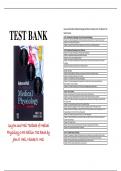
Guyton and Hall Textbook of Medical Physiology 14th Edition Test Bank by John E. Hall, Michael E. Hall
TEST BANK Table of Contents
Unit I. Introduction to Physiology: The Cell and General Physiology
Chapter 1. Functional Organization of the Human Body and Control of the “Internal Environment”
Chapter 2. The Cell and Its Functions
Chapter 3. Genetic Control of Protein Synthesis, Cell Function, and Cell Reproduction
Unit II. Membrane Physiology, Nerve, and Muscle
Chapter 4. Transport of Substances Through Cell Membranes
Chapter 5. Membrane Potentials and Action Potentials
Chapter 6. Contraction of Skeletal Muscle
Chapter 7. Excitation of Skeletal Muscle: Neuromuscular Transmission and Excitation-Contraction
Coupling
Chapter 8. Excitation and Contraction of Smooth Muscle
Unit III. The Heart
Chapter 9. Cardiac Muscle; The Heart as a Pump and Function of the Heart Valves
Chapter 10. Rhythmical Excitation of the Heart
Chapter 11. Fundamentals of Electrocardiography
Chapter 12. Electrocardiographic Interpretation of Cardiac Muscle and Coronary Blood Flow
Abnormalities: Vectorial Analysis
Chapter 13. Cardiac Arrhythmias and Their Electrocardiographic Interpretation
Unit IV. The Circulation
Chapter 14. Overview of the Circulation: Pressure, Flow, and Resistance
Chapter 15. Vascular Distensibility and Functions of the Arterial and Venous Systems
Chapter 16. The Microcirculation and Lymphatic System: Capillary Fluid Exchange, Interstitial Fluid,
and Lymph Flow
Chapter 17. Local and Humoral Control of Tissue Blood Flow
Chapter 18. Nervous Regulation of the Circulation and Rapid Control of Arterial Pressure
Chapter 19. Role of the Kidneys in Long-Term Control of Arterial Pressure and in Hypertension: The
Integrated System for Arterial Pressure Regulation
Chapter 20. Cardiac Output, Venous Return, and Their Regulation
Chapter 21. Muscle Blood Flow and Cardiac Output During Exercise; the Coronary Circulation and
Ischemic Heart Disease
Chapter 22. Cardiac Failure
Guyton and Hall Textbook of Medical Chapter 23. Heart Valves and Heart Sounds; Valvular and Congenital Heart Defects
Chapter 24. Circulatory Shock and Its Treatment
Physiology 14th Edition Test Bank by Unit V. The Body Fluids and Kidneys
Chapter 25. Regulation of Body Fluid Compartments: Extracellular and Intracellular Fluids; Edema
John E. Hall, Michael E. Hall Chapter 26. The Urinary System: Functional Anatomy and Urine Formation by the Kidneys
Chapter 27. Glomerular Filtration, Renal Blood Flow, and Their Control
Chapter 28. Renal Tubular Reabsorption and Secretion
,Chapter 29. Urine Concentration and Dilution; Regulation of Extracellular Fluid Osmolarity and Chapter 59. The Limbic System and the Hypothalamus—Behavioral and Motivational Mechanisms of
Sodium Concentration the Brain
Chapter 30. Renal Regulation of Potassium, Calcium, Phosphate, and Magnesium; Integration of Renal Chapter 60. States of Brain Activity—Sleep, Brain Waves, Epilepsy, Psychoses, and Dementia
Mechanisms for Control of Blood Volume and Extracellular Fluid Volume Chapter 61. The Autonomic Nervous System and the Adrenal Medulla
Chapter 31. Acid–Base Regulation Chapter 62. Cerebral Blood Flow, Cerebrospinal Fluid, and Brain Metabolism
Chapter 32. Diuretics and Kidney Diseases
Unit XII. Gastrointestinal Physiology
Unit VI. Blood Cells, Immunity, and Blood Coagulation Chapter 63. General Principles of Gastrointestinal Function—Motility, Nervous Control, and Blood
Chapter 33. Red Blood Cells, Anemia, and Polycythemia Circulation
Chapter 34. Resistance of the Body to Infection: I. Leukocytes, Granulocytes, the Monocyte- Chapter 64. Propulsion and Mixing of Food in the Alimentary Tract
Macrophage System, and Inflammation Chapter 65. Secretory Functions of the Alimentary Tract
Chapter 35. Resistance of the Body to Infection: II. Immunity and Allergy Chapter 66. Digestion and Absorption in the Gastrointestinal Tract
Chapter 36. Blood Types; Transfusion; and Tissue and Organ Transplantation Chapter 67. Physiology of Gastrointestinal Disorders
Chapter 37. Hemostasis and Blood Coagulation
Unit XIII. Metabolism and Temperature Regulation
Unit VII. Respiration Chapter 68. Metabolism of Carbohydrates and Formation of Adenosine Triphosphate
Chapter 38. Pulmonary Ventilation Chapter 69. Lipid Metabolism
Chapter 39. Pulmonary Circulation, Pulmonary Edema, and Pleural Fluid Chapter 70. Protein Metabolism
Chapter 40. Principles of Gas Exchange; Diffusion of Oxygen and Carbon Dioxide Through the Chapter 71. The Liver
Respiratory Membrane Chapter 72. Dietary Balances; Regulation of Feeding; Obesity and Starvation; Vitamins and Minerals
Chapter 41. Transport of Oxygen and Carbon Dioxide in Blood and Tissue Fluids Chapter 73. Energetics and Metabolic Rate
Chapter 42. Regulation of Respiration Chapter 74. Body Temperature Regulation and Fever
Chapter 43. Respiratory Insufficiency—Pathophysiology, Diagnosis, Oxygen Therapy
Unit XIV. Endocrinology and Reproduction
Unit VIII. Aviation, Space, and Deep-Sea Diving Physiology Chapter 75. Introduction to Endocrinology
Chapter 44. Aviation, High Altitude, and Space Physiology Chapter 76. Pituitary Hormones and Their Control by the Hypothalamus
Chapter 45. Physiology of Deep-Sea Diving and Other Hyperbaric Conditions Chapter 77. Thyroid Metabolic Hormones
Chapter 78. Adrenocortical Hormones
Unit IX. The Nervous System: A. General Principles and Sensory Physiology Chapter 79. Insulin, Glucagon, and Diabetes Mellitus
Chapter 46. Organization of the Nervous System, Basic Functions of Synapses, and Neurotransmitters Chapter 80. Parathyroid Hormone, Calcitonin, Calcium and Phosphate Metabolism, Vitamin D, Bone,
Chapter 47. Sensory Receptors, Neuronal Circuits for Processing Information and Teeth
Chapter 48. Somatic Sensations: I. General Organization, Tactile and Position Senses Chapter 81. Reproductive and Hormonal Functions of the Male (and Function of the Pineal Gland)
Chapter 49. Somatic Sensations: II. Pain, Headache, and Thermal Sensations Chapter 82. Female Physiology Before Pregnancy and Female Hormones
Chapter 83. Pregnancy and Lactation
Unit X. The Nervous System: B. The Special Senses Chapter 84. Fetal and Neonatal Physiology
Chapter 50. The Eye: I. Optics of Vision
Chapter 51. The Eye: II. Receptor and Neural Function of the Retina Unit XV. Sports Physiology
Chapter 52. The Eye: III. Central Neurophysiology of Vision Chapter 85. Sports Physiology
Chapter 53. The Sense of Hearing
Chapter 54. The Chemical Senses—Taste and Smell
Unit XI. The Nervous System: C. Motor and Integrative Neurophysiology
Chapter 55. Spinal Cord Motor Functions; the Cord Reflexes
Chapter 56. Cortical and Brain Stem Control of Motor Function
Chapter 57. Cerebellum and Basal Ganglia Contributions to Overall Motor Control
Chapter 58. Cerebral Cortex, Intellectual Functions of the Brain, Learning, and Memory
, E. +1
Guyton and Hall Textbook of Medical Physiology 14th F. +2
G. +3
Edition Hall Test Bank
ANS: B
4. Which of the following substances has the highest extracellular fluid to intracellular
fluid concentration ratio for most mammalian cells?
Chapter 1. Functional Organization of the Human Body and Control of the A. Sodium ions
“Internal Environment” B. Potassium ions
C. Carbon dioxide
D. Glucose
E. Protein
Test Bank ANS: A
1. The most abundant type of cell in the human body is which of the following? 5. Exchange of substances between the cardiovascular system and the interstitial fluid
A. Neuron occurs mainly in which of the following?
B. Epithelial cell A. Arteries
C. Red blood cell B. Arterioles
D. White blood cell C. Capillaries
E. Vascular smooth muscle cell D. Venules
F. Skeletal muscle cell E. Veins
ANS: C ANS: C
2. The most abundant substance in the human body and the approximate percentage ofthat 6. Which of the following is the approximate distance from the capillaries to most cellsof
substance in the body is which of the following? the body?
A. Protein, 30% A. Less than 50 angstroms
B. Protein, 60% B. Less than 50 microns
C. Water, 30% C. Less than 50 millimeters
D. Water, 60% D. Less than 100 angstroms
E. Carbohydrate, 30% E. Less than 100 microns
F. Carbohydrate, 60% F. Less than 100 millimeters
ANS: D ANS: A
3. A large volume of blood is transfused to a person whose baroreceptor blood pressure 7. When a person is at rest, how much time is required for the blood in the circulation to
control system is not functioning and arterial blood pressure rises from the normal level traverse the entire circulatory circuit?
of 100 to 160 mm Hg. If the same volume of blood is infused into the same person when A. 1 second
the baroreceptor system is functioning and this time the arterial pressure increases from B. 1 minute
the normal level from 100 mm Hg up to 120 mm Hg, calculate the gain of the C. 3 minutes
baroreceptor system in this person. D. 4 minutes
A. -3 E. 5 minutes
B. -2
C. -1 ANS: B
D. 0
WWW.THENURSINGMASTERY.COM WWW.THENURSINGMASTERY.COM
www.nursylab.com www.nursylab.com
, 8. feedback is often referred to as a "vicious cycle" because it leads to Protein sorting and packaging.
instability and sometimes death.
A. Postitive, progressive ANS: E
B. Positive, diminished
C. Negative, progressive Gene transcription.
D. Negative, diminished
E. Adaptive, progressive ANS: B
ANS: A 4. Which of the following is true for both pinocytosis and phagocytosis?
A. Involves the recruitment of actin filaments
9. Which of the following is an example of positive feedback in the body? B. Occurs spontaneously and non-selectively
A. Clotting of blood C. Permits the uptake of bacterium into the cytosol
B. Return of blood pressure toward normal after a hemorrhage D. Is only observed in macrophages and neutrophils
C. Increased respiration rate caused by accumulation of carbon dioxide in the blood E. Does not require ATP
D. Decreased sympathetic nervous system activity that occurs in response to increased
blood pressure ANS: A
ANS: A 5. The cell membrane is LEAST permeable to which of the following?
A. Sodium
B. Oxygen
C. Ethanol
Chapter 2. The Cell and Its Functions D. Carbon Dioxide
E. Water
ANS: A
Test Bank
6. The term “glycocalyx” refers to:
A. The negatively charged carbohydrate chains that protrude into the cytosol from
Refer to the following list to answer questions 1-3:
glycolipids and integral glycoproteins
B. The negatively charged carbohydrate layer on the outer cell surface
A. Nucleolus
C. The layer of anions aligned on the cytosolic surface of the plasma membrane
B. Nucleus
D. The large glycogen stores found in “fast” muscles
C. Agranular endoplasmic reticulum
E. A mechanism of cell-cell attachment
D. Granular endoplasmic reticulum
E. Golgi apparatus
ANS: B
F. Endosomes
G. Peroxisomes
7. Proteins are sorted for their delivery to lysosomes, secretory vesicles and the plasma
H. Lysosomes
membrane in the:
I. Cytosol
A. Golgi apparatus
B. smooth endoplasmic reticulum
Identify the cellular location for each of the following steps involved in the synthesis and
C. nucleus
packaging of a secreted protein.
D. endocytotic vesicle
Initiation of translation.
ANS: A
ANS: I
8. Ubiquinone, an electron acceptor in the electron transport chain (oxidative
phosphorylation), is found in the:
WWW.THENURSINGMASTERY.COM WWW.THENURSINGMASTERY.COM
www.nursylab.com www.nursylab.com
TEST BANK Table of Contents
Unit I. Introduction to Physiology: The Cell and General Physiology
Chapter 1. Functional Organization of the Human Body and Control of the “Internal Environment”
Chapter 2. The Cell and Its Functions
Chapter 3. Genetic Control of Protein Synthesis, Cell Function, and Cell Reproduction
Unit II. Membrane Physiology, Nerve, and Muscle
Chapter 4. Transport of Substances Through Cell Membranes
Chapter 5. Membrane Potentials and Action Potentials
Chapter 6. Contraction of Skeletal Muscle
Chapter 7. Excitation of Skeletal Muscle: Neuromuscular Transmission and Excitation-Contraction
Coupling
Chapter 8. Excitation and Contraction of Smooth Muscle
Unit III. The Heart
Chapter 9. Cardiac Muscle; The Heart as a Pump and Function of the Heart Valves
Chapter 10. Rhythmical Excitation of the Heart
Chapter 11. Fundamentals of Electrocardiography
Chapter 12. Electrocardiographic Interpretation of Cardiac Muscle and Coronary Blood Flow
Abnormalities: Vectorial Analysis
Chapter 13. Cardiac Arrhythmias and Their Electrocardiographic Interpretation
Unit IV. The Circulation
Chapter 14. Overview of the Circulation: Pressure, Flow, and Resistance
Chapter 15. Vascular Distensibility and Functions of the Arterial and Venous Systems
Chapter 16. The Microcirculation and Lymphatic System: Capillary Fluid Exchange, Interstitial Fluid,
and Lymph Flow
Chapter 17. Local and Humoral Control of Tissue Blood Flow
Chapter 18. Nervous Regulation of the Circulation and Rapid Control of Arterial Pressure
Chapter 19. Role of the Kidneys in Long-Term Control of Arterial Pressure and in Hypertension: The
Integrated System for Arterial Pressure Regulation
Chapter 20. Cardiac Output, Venous Return, and Their Regulation
Chapter 21. Muscle Blood Flow and Cardiac Output During Exercise; the Coronary Circulation and
Ischemic Heart Disease
Chapter 22. Cardiac Failure
Guyton and Hall Textbook of Medical Chapter 23. Heart Valves and Heart Sounds; Valvular and Congenital Heart Defects
Chapter 24. Circulatory Shock and Its Treatment
Physiology 14th Edition Test Bank by Unit V. The Body Fluids and Kidneys
Chapter 25. Regulation of Body Fluid Compartments: Extracellular and Intracellular Fluids; Edema
John E. Hall, Michael E. Hall Chapter 26. The Urinary System: Functional Anatomy and Urine Formation by the Kidneys
Chapter 27. Glomerular Filtration, Renal Blood Flow, and Their Control
Chapter 28. Renal Tubular Reabsorption and Secretion
,Chapter 29. Urine Concentration and Dilution; Regulation of Extracellular Fluid Osmolarity and Chapter 59. The Limbic System and the Hypothalamus—Behavioral and Motivational Mechanisms of
Sodium Concentration the Brain
Chapter 30. Renal Regulation of Potassium, Calcium, Phosphate, and Magnesium; Integration of Renal Chapter 60. States of Brain Activity—Sleep, Brain Waves, Epilepsy, Psychoses, and Dementia
Mechanisms for Control of Blood Volume and Extracellular Fluid Volume Chapter 61. The Autonomic Nervous System and the Adrenal Medulla
Chapter 31. Acid–Base Regulation Chapter 62. Cerebral Blood Flow, Cerebrospinal Fluid, and Brain Metabolism
Chapter 32. Diuretics and Kidney Diseases
Unit XII. Gastrointestinal Physiology
Unit VI. Blood Cells, Immunity, and Blood Coagulation Chapter 63. General Principles of Gastrointestinal Function—Motility, Nervous Control, and Blood
Chapter 33. Red Blood Cells, Anemia, and Polycythemia Circulation
Chapter 34. Resistance of the Body to Infection: I. Leukocytes, Granulocytes, the Monocyte- Chapter 64. Propulsion and Mixing of Food in the Alimentary Tract
Macrophage System, and Inflammation Chapter 65. Secretory Functions of the Alimentary Tract
Chapter 35. Resistance of the Body to Infection: II. Immunity and Allergy Chapter 66. Digestion and Absorption in the Gastrointestinal Tract
Chapter 36. Blood Types; Transfusion; and Tissue and Organ Transplantation Chapter 67. Physiology of Gastrointestinal Disorders
Chapter 37. Hemostasis and Blood Coagulation
Unit XIII. Metabolism and Temperature Regulation
Unit VII. Respiration Chapter 68. Metabolism of Carbohydrates and Formation of Adenosine Triphosphate
Chapter 38. Pulmonary Ventilation Chapter 69. Lipid Metabolism
Chapter 39. Pulmonary Circulation, Pulmonary Edema, and Pleural Fluid Chapter 70. Protein Metabolism
Chapter 40. Principles of Gas Exchange; Diffusion of Oxygen and Carbon Dioxide Through the Chapter 71. The Liver
Respiratory Membrane Chapter 72. Dietary Balances; Regulation of Feeding; Obesity and Starvation; Vitamins and Minerals
Chapter 41. Transport of Oxygen and Carbon Dioxide in Blood and Tissue Fluids Chapter 73. Energetics and Metabolic Rate
Chapter 42. Regulation of Respiration Chapter 74. Body Temperature Regulation and Fever
Chapter 43. Respiratory Insufficiency—Pathophysiology, Diagnosis, Oxygen Therapy
Unit XIV. Endocrinology and Reproduction
Unit VIII. Aviation, Space, and Deep-Sea Diving Physiology Chapter 75. Introduction to Endocrinology
Chapter 44. Aviation, High Altitude, and Space Physiology Chapter 76. Pituitary Hormones and Their Control by the Hypothalamus
Chapter 45. Physiology of Deep-Sea Diving and Other Hyperbaric Conditions Chapter 77. Thyroid Metabolic Hormones
Chapter 78. Adrenocortical Hormones
Unit IX. The Nervous System: A. General Principles and Sensory Physiology Chapter 79. Insulin, Glucagon, and Diabetes Mellitus
Chapter 46. Organization of the Nervous System, Basic Functions of Synapses, and Neurotransmitters Chapter 80. Parathyroid Hormone, Calcitonin, Calcium and Phosphate Metabolism, Vitamin D, Bone,
Chapter 47. Sensory Receptors, Neuronal Circuits for Processing Information and Teeth
Chapter 48. Somatic Sensations: I. General Organization, Tactile and Position Senses Chapter 81. Reproductive and Hormonal Functions of the Male (and Function of the Pineal Gland)
Chapter 49. Somatic Sensations: II. Pain, Headache, and Thermal Sensations Chapter 82. Female Physiology Before Pregnancy and Female Hormones
Chapter 83. Pregnancy and Lactation
Unit X. The Nervous System: B. The Special Senses Chapter 84. Fetal and Neonatal Physiology
Chapter 50. The Eye: I. Optics of Vision
Chapter 51. The Eye: II. Receptor and Neural Function of the Retina Unit XV. Sports Physiology
Chapter 52. The Eye: III. Central Neurophysiology of Vision Chapter 85. Sports Physiology
Chapter 53. The Sense of Hearing
Chapter 54. The Chemical Senses—Taste and Smell
Unit XI. The Nervous System: C. Motor and Integrative Neurophysiology
Chapter 55. Spinal Cord Motor Functions; the Cord Reflexes
Chapter 56. Cortical and Brain Stem Control of Motor Function
Chapter 57. Cerebellum and Basal Ganglia Contributions to Overall Motor Control
Chapter 58. Cerebral Cortex, Intellectual Functions of the Brain, Learning, and Memory
, E. +1
Guyton and Hall Textbook of Medical Physiology 14th F. +2
G. +3
Edition Hall Test Bank
ANS: B
4. Which of the following substances has the highest extracellular fluid to intracellular
fluid concentration ratio for most mammalian cells?
Chapter 1. Functional Organization of the Human Body and Control of the A. Sodium ions
“Internal Environment” B. Potassium ions
C. Carbon dioxide
D. Glucose
E. Protein
Test Bank ANS: A
1. The most abundant type of cell in the human body is which of the following? 5. Exchange of substances between the cardiovascular system and the interstitial fluid
A. Neuron occurs mainly in which of the following?
B. Epithelial cell A. Arteries
C. Red blood cell B. Arterioles
D. White blood cell C. Capillaries
E. Vascular smooth muscle cell D. Venules
F. Skeletal muscle cell E. Veins
ANS: C ANS: C
2. The most abundant substance in the human body and the approximate percentage ofthat 6. Which of the following is the approximate distance from the capillaries to most cellsof
substance in the body is which of the following? the body?
A. Protein, 30% A. Less than 50 angstroms
B. Protein, 60% B. Less than 50 microns
C. Water, 30% C. Less than 50 millimeters
D. Water, 60% D. Less than 100 angstroms
E. Carbohydrate, 30% E. Less than 100 microns
F. Carbohydrate, 60% F. Less than 100 millimeters
ANS: D ANS: A
3. A large volume of blood is transfused to a person whose baroreceptor blood pressure 7. When a person is at rest, how much time is required for the blood in the circulation to
control system is not functioning and arterial blood pressure rises from the normal level traverse the entire circulatory circuit?
of 100 to 160 mm Hg. If the same volume of blood is infused into the same person when A. 1 second
the baroreceptor system is functioning and this time the arterial pressure increases from B. 1 minute
the normal level from 100 mm Hg up to 120 mm Hg, calculate the gain of the C. 3 minutes
baroreceptor system in this person. D. 4 minutes
A. -3 E. 5 minutes
B. -2
C. -1 ANS: B
D. 0
WWW.THENURSINGMASTERY.COM WWW.THENURSINGMASTERY.COM
www.nursylab.com www.nursylab.com
, 8. feedback is often referred to as a "vicious cycle" because it leads to Protein sorting and packaging.
instability and sometimes death.
A. Postitive, progressive ANS: E
B. Positive, diminished
C. Negative, progressive Gene transcription.
D. Negative, diminished
E. Adaptive, progressive ANS: B
ANS: A 4. Which of the following is true for both pinocytosis and phagocytosis?
A. Involves the recruitment of actin filaments
9. Which of the following is an example of positive feedback in the body? B. Occurs spontaneously and non-selectively
A. Clotting of blood C. Permits the uptake of bacterium into the cytosol
B. Return of blood pressure toward normal after a hemorrhage D. Is only observed in macrophages and neutrophils
C. Increased respiration rate caused by accumulation of carbon dioxide in the blood E. Does not require ATP
D. Decreased sympathetic nervous system activity that occurs in response to increased
blood pressure ANS: A
ANS: A 5. The cell membrane is LEAST permeable to which of the following?
A. Sodium
B. Oxygen
C. Ethanol
Chapter 2. The Cell and Its Functions D. Carbon Dioxide
E. Water
ANS: A
Test Bank
6. The term “glycocalyx” refers to:
A. The negatively charged carbohydrate chains that protrude into the cytosol from
Refer to the following list to answer questions 1-3:
glycolipids and integral glycoproteins
B. The negatively charged carbohydrate layer on the outer cell surface
A. Nucleolus
C. The layer of anions aligned on the cytosolic surface of the plasma membrane
B. Nucleus
D. The large glycogen stores found in “fast” muscles
C. Agranular endoplasmic reticulum
E. A mechanism of cell-cell attachment
D. Granular endoplasmic reticulum
E. Golgi apparatus
ANS: B
F. Endosomes
G. Peroxisomes
7. Proteins are sorted for their delivery to lysosomes, secretory vesicles and the plasma
H. Lysosomes
membrane in the:
I. Cytosol
A. Golgi apparatus
B. smooth endoplasmic reticulum
Identify the cellular location for each of the following steps involved in the synthesis and
C. nucleus
packaging of a secreted protein.
D. endocytotic vesicle
Initiation of translation.
ANS: A
ANS: I
8. Ubiquinone, an electron acceptor in the electron transport chain (oxidative
phosphorylation), is found in the:
WWW.THENURSINGMASTERY.COM WWW.THENURSINGMASTERY.COM
www.nursylab.com www.nursylab.com