Culture and diversity at work
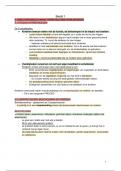
week 1- Kanter (1976) and
Roberge and van Dick (2010)
Kanter (1976)- The impact of hierarchical structures on
the work behaviour of women and men
1. The 3 structural variables that shape the behaviour of people in organisations include
the opportunity structure, power structure and sex ratio.
Work orientations, aspirations, and location in an opportunity structure:
2. People in low-mobility or blocked-mobility situations tend to limit their aspirations,
seek satisfaction in activities outside of work, dream of escape, and create sociable
peer groups in which interpersonal relationships take precedence over other aspects
of work.
3. People at upper levels tend to be more motivated, involved and interested in their
jobs than those at lower levels.
Opportunity and limited aspirations:
4. Several studies conclude that women more than men tend to be more concerned
with relationships and remaining loyal to the local work group, rather than
identifying with the field and aspiring to promotions.
5. Studies have found a correlation in male professionals between professionalism and
a cosmopolitan rather than a local orientation. An exception to this was a study on
nurses where professionally oriented nurses did not differ from others in their loyalty
to the hospital, and they were more apt than others, not less, to express loyalty to
local work groups.
6. A study on hourly (non-exempt) employees found that men showed greater
motivation to be promoted than women, and perceived themselves to be more
competent in basic managerial skills than woman did. However, newer employees
were more likely than older to show high motivation for a promotion, just like the
better educated were more motivated than poorer educated, showing that there are
other factors, not just sex.
7. There is evidence that the jobs held by most women workers tend to have shorter
chains of opportunity associated with them, to contain fewer advancement
opportunities.
1. It was found that as the amount of progression possible in non-supervisory jobs
increased, the proportion of women declined markedly.
2. Women represented 46% of all non-supervisory workers, 64% of workers in the
flattest (least advancement opportunities) and 5% of workers in the highest
opportunity jobs.
3. Where work is boring or repetitive and chances for mobility low, people tend to
develop little attachment to work and seek their major satisfactions in the family
realm. They also want to leave whenever possible.
Concern with peer group relationships:
,4. Women are said to be more concerned than men with interpersonal relationships on
the job, more involved with other people than with the intrinsic nature of the task.
5. For women, peer relationships were a motivational factor, whereas for men they
were only a hygiene factor (preventing dissatisfaction) that were not pushing them to
perform.
6. It was found that women were more likely to indicate that having friendly co-workers
was an important reason for them to like their jobs than men.
7. High mobility situations foster rivalry, instability in group composition, upward
comparisons and overall concerns. Low-mobility situations foster camaraderie, stably
composed groups and more concern with extrinsic rewards.
8. There is evidence that men as well as women turn to relationships with work peers
as an alternative interest when mobility opportunities are limited or blocked.
9. Members of no-mobility organisations tend not to be interested in instrumental
relationships, since they offer very little possibility of changing the individual’s status
in any way; once a member is satisfactorily adapted to a clique, he is under no
pressure to look for other relationships. This tends to create cliques which are closed.
Leadership attitudes, behaviour and the power structure:
10. There is no evidence yet that proves a sex difference in either leadership aptitude or
style.
11. There is a considerable evidence for a general cultural attitude that men make better
leaders.
12. The nature of the power structure as a total system can account for (a) which leaders
are preferred and considered effective by subordinates; and (b) which leaders are
likely to use and be perceived as using overly directive, interfering styles.
Leadership effectiveness and power position:
13. The combination of good human relations and power was associated with high
morale.
14. Subordinates are more likely to inhibit aggression and negativity toward a demanding
person of higher than lower status. People who come into a group with higher
external status tend to be liked more, talk more often and receive more
communications.
15. Organisational power comes from factors including (a) close contact and good
relations with other power holders; (b) advantageous location in the opportunity
structure and favourable mobility prospects.
Power, powerlessness and leadership style:
16. Leaders with favourable mobility prospects are likely to please their subordinates
more than those who appear stuck.
17. Promotable supervisors are more likely to adopt a participatory style in which they
share information, delegate, train and allow autonomy in order to show that they are
not indispensable in their current jobs and to fill the vacancy created by their
promotion with someone they have trained.
18. People who find themselves powerless, because they lack confidence in their abilities
tend to use more coercive rather than persuasive power.
19. People who feel vulnerable and insecure are most likely to be authoritarian-
controlling leaders.
,Roberge and van Dick (2010)- Recognising the benefits
of diversity: when and how does diversity increase
group performance?
What does being a diversity work group mean?:
20. General definition of diversity refers to differences between individuals on any
attributes that may lead to the perception that another person is different from the
self.
21. The other two definitions include (i) a mixture of people with different group
identities within the same social system, and (ii) the collective amount of differences
among members within a social unit.
Classifying types of indicators of diversity:
22. Surface-level diversity is the difference among group members in overt, biological
characteristics that are typically reflected in physical features, such as gender and
race.
23. Deep-level diversity refers to more subtle attributes that cannot necessarily be
directly and immediately observed, such as personality and beliefs.
Does diversity lead to increased performance?:
24. Diverse workforce leads to improved decision-making processes by increasing
creativity and innovation.
25. When compared to similar individuals, people who are different have less attraction
and trust in peers, less frequent communication, lower group commitment, lower
task contributions, lower perceptions of organizational fairness and inclusiveness.
26. Heterogenous groups have reduced cohesiveness, more conflicts and increased
turnovers as compared to homogenous groups.
27. Over time, deep-level differences have stronger impact on the social-categorization
process compared to surface-level indicators of diversity.
When does diversity lead to increased group performance?:
28. There are a number of moderating factors that promote positive attitudes toward
out-group members which include frequency and duration of intergroup interaction,
presence of intergroup anxiety, the structure of cooperative tasks, outcome of
cooperation, status equalisation and goal level and task interdependence.
29. Positive effects of diversity and intergroup contact are facilitated by four key
conditions: equal group status within the situation, common goals, intergroup
cooperation, and the support of authorities, law, or custom.
How does diversity lead to increase group performance?:
30. Research has suggested that social interaction and communication are negatively
related to diversity, whereas task conflict is positively related to diversity.
31. Team reflexivity is the extent to which teams reflect and modify their functioning. It
affects the influence of outcome interdependence and group longevity on the
relationship between diversity and team outcomes.
32. 3 types of conflict may occur in diverse groups such as task, socio-emotional and
value conflict (difference in terms of expectations about what constitutes a
satisfactory outcome).
1. When functional/informational diversity is salient (noticeable), task conflicts are
more likely to occur. Salient demographic diversity leads to socio-emotional conflicts.
Salient cultural diversity leads to value conflicts.
, The conceptual model and development of propositions:
Outcome variable: group performance:
2. Group performance can refer to organisational performance or smaller nit
performance such as cross-functional team performance.
3. Job performance can be divided into two behavioural performance categories: in-role
behaviour (related to task performance) and extra-role behaviour (contextual
behaviours that contribute to the overall group effectiveness).
Multi-level mechanisms: explaining how diversity increases group performance:
4. Empathy is a process through which people identify with and understand another’s
situation and feelings. Empathy may increase helping behaviours through self-other
merger, which is when people define themselves and the other as an entity or as a
unit.
5. Self-other merger occurs (1) when the other's welfare promotes one's own welfare,
(2) when self and other are linked by similarity, and (3) when self and other share a
common relationship in a social category or group.
6. Perspective taking involves adopting another's viewpoint and requires empathy for
an accurate understanding. It decreases stereotypes and promotes prosocial
behaviour.
7. Self-disclosure signals a willingness to be vulnerable to the other person by sharing
personal information with them. Deep-level diversity becomes more surface-level
through self-disclosure.
8. With communication, research has shown that functional diversity increased the
frequency of communication, especially with outsiders.
1. However, a negative relationship was found between communication frequency and
performance, due to more frequency being linked to conflict.
1. Positive correlation found between team learning behaviour and intra-team conflict.
2. Group involvement relates to an individual's involvement in task-related processes
such as information exchange and collaborative decision making.
week 1- Kanter (1976) and
Roberge and van Dick (2010)
Kanter (1976)- The impact of hierarchical structures on
the work behaviour of women and men
1. The 3 structural variables that shape the behaviour of people in organisations include
the opportunity structure, power structure and sex ratio.
Work orientations, aspirations, and location in an opportunity structure:
2. People in low-mobility or blocked-mobility situations tend to limit their aspirations,
seek satisfaction in activities outside of work, dream of escape, and create sociable
peer groups in which interpersonal relationships take precedence over other aspects
of work.
3. People at upper levels tend to be more motivated, involved and interested in their
jobs than those at lower levels.
Opportunity and limited aspirations:
4. Several studies conclude that women more than men tend to be more concerned
with relationships and remaining loyal to the local work group, rather than
identifying with the field and aspiring to promotions.
5. Studies have found a correlation in male professionals between professionalism and
a cosmopolitan rather than a local orientation. An exception to this was a study on
nurses where professionally oriented nurses did not differ from others in their loyalty
to the hospital, and they were more apt than others, not less, to express loyalty to
local work groups.
6. A study on hourly (non-exempt) employees found that men showed greater
motivation to be promoted than women, and perceived themselves to be more
competent in basic managerial skills than woman did. However, newer employees
were more likely than older to show high motivation for a promotion, just like the
better educated were more motivated than poorer educated, showing that there are
other factors, not just sex.
7. There is evidence that the jobs held by most women workers tend to have shorter
chains of opportunity associated with them, to contain fewer advancement
opportunities.
1. It was found that as the amount of progression possible in non-supervisory jobs
increased, the proportion of women declined markedly.
2. Women represented 46% of all non-supervisory workers, 64% of workers in the
flattest (least advancement opportunities) and 5% of workers in the highest
opportunity jobs.
3. Where work is boring or repetitive and chances for mobility low, people tend to
develop little attachment to work and seek their major satisfactions in the family
realm. They also want to leave whenever possible.
Concern with peer group relationships:
,4. Women are said to be more concerned than men with interpersonal relationships on
the job, more involved with other people than with the intrinsic nature of the task.
5. For women, peer relationships were a motivational factor, whereas for men they
were only a hygiene factor (preventing dissatisfaction) that were not pushing them to
perform.
6. It was found that women were more likely to indicate that having friendly co-workers
was an important reason for them to like their jobs than men.
7. High mobility situations foster rivalry, instability in group composition, upward
comparisons and overall concerns. Low-mobility situations foster camaraderie, stably
composed groups and more concern with extrinsic rewards.
8. There is evidence that men as well as women turn to relationships with work peers
as an alternative interest when mobility opportunities are limited or blocked.
9. Members of no-mobility organisations tend not to be interested in instrumental
relationships, since they offer very little possibility of changing the individual’s status
in any way; once a member is satisfactorily adapted to a clique, he is under no
pressure to look for other relationships. This tends to create cliques which are closed.
Leadership attitudes, behaviour and the power structure:
10. There is no evidence yet that proves a sex difference in either leadership aptitude or
style.
11. There is a considerable evidence for a general cultural attitude that men make better
leaders.
12. The nature of the power structure as a total system can account for (a) which leaders
are preferred and considered effective by subordinates; and (b) which leaders are
likely to use and be perceived as using overly directive, interfering styles.
Leadership effectiveness and power position:
13. The combination of good human relations and power was associated with high
morale.
14. Subordinates are more likely to inhibit aggression and negativity toward a demanding
person of higher than lower status. People who come into a group with higher
external status tend to be liked more, talk more often and receive more
communications.
15. Organisational power comes from factors including (a) close contact and good
relations with other power holders; (b) advantageous location in the opportunity
structure and favourable mobility prospects.
Power, powerlessness and leadership style:
16. Leaders with favourable mobility prospects are likely to please their subordinates
more than those who appear stuck.
17. Promotable supervisors are more likely to adopt a participatory style in which they
share information, delegate, train and allow autonomy in order to show that they are
not indispensable in their current jobs and to fill the vacancy created by their
promotion with someone they have trained.
18. People who find themselves powerless, because they lack confidence in their abilities
tend to use more coercive rather than persuasive power.
19. People who feel vulnerable and insecure are most likely to be authoritarian-
controlling leaders.
,Roberge and van Dick (2010)- Recognising the benefits
of diversity: when and how does diversity increase
group performance?
What does being a diversity work group mean?:
20. General definition of diversity refers to differences between individuals on any
attributes that may lead to the perception that another person is different from the
self.
21. The other two definitions include (i) a mixture of people with different group
identities within the same social system, and (ii) the collective amount of differences
among members within a social unit.
Classifying types of indicators of diversity:
22. Surface-level diversity is the difference among group members in overt, biological
characteristics that are typically reflected in physical features, such as gender and
race.
23. Deep-level diversity refers to more subtle attributes that cannot necessarily be
directly and immediately observed, such as personality and beliefs.
Does diversity lead to increased performance?:
24. Diverse workforce leads to improved decision-making processes by increasing
creativity and innovation.
25. When compared to similar individuals, people who are different have less attraction
and trust in peers, less frequent communication, lower group commitment, lower
task contributions, lower perceptions of organizational fairness and inclusiveness.
26. Heterogenous groups have reduced cohesiveness, more conflicts and increased
turnovers as compared to homogenous groups.
27. Over time, deep-level differences have stronger impact on the social-categorization
process compared to surface-level indicators of diversity.
When does diversity lead to increased group performance?:
28. There are a number of moderating factors that promote positive attitudes toward
out-group members which include frequency and duration of intergroup interaction,
presence of intergroup anxiety, the structure of cooperative tasks, outcome of
cooperation, status equalisation and goal level and task interdependence.
29. Positive effects of diversity and intergroup contact are facilitated by four key
conditions: equal group status within the situation, common goals, intergroup
cooperation, and the support of authorities, law, or custom.
How does diversity lead to increase group performance?:
30. Research has suggested that social interaction and communication are negatively
related to diversity, whereas task conflict is positively related to diversity.
31. Team reflexivity is the extent to which teams reflect and modify their functioning. It
affects the influence of outcome interdependence and group longevity on the
relationship between diversity and team outcomes.
32. 3 types of conflict may occur in diverse groups such as task, socio-emotional and
value conflict (difference in terms of expectations about what constitutes a
satisfactory outcome).
1. When functional/informational diversity is salient (noticeable), task conflicts are
more likely to occur. Salient demographic diversity leads to socio-emotional conflicts.
Salient cultural diversity leads to value conflicts.
, The conceptual model and development of propositions:
Outcome variable: group performance:
2. Group performance can refer to organisational performance or smaller nit
performance such as cross-functional team performance.
3. Job performance can be divided into two behavioural performance categories: in-role
behaviour (related to task performance) and extra-role behaviour (contextual
behaviours that contribute to the overall group effectiveness).
Multi-level mechanisms: explaining how diversity increases group performance:
4. Empathy is a process through which people identify with and understand another’s
situation and feelings. Empathy may increase helping behaviours through self-other
merger, which is when people define themselves and the other as an entity or as a
unit.
5. Self-other merger occurs (1) when the other's welfare promotes one's own welfare,
(2) when self and other are linked by similarity, and (3) when self and other share a
common relationship in a social category or group.
6. Perspective taking involves adopting another's viewpoint and requires empathy for
an accurate understanding. It decreases stereotypes and promotes prosocial
behaviour.
7. Self-disclosure signals a willingness to be vulnerable to the other person by sharing
personal information with them. Deep-level diversity becomes more surface-level
through self-disclosure.
8. With communication, research has shown that functional diversity increased the
frequency of communication, especially with outsiders.
1. However, a negative relationship was found between communication frequency and
performance, due to more frequency being linked to conflict.
1. Positive correlation found between team learning behaviour and intra-team conflict.
2. Group involvement relates to an individual's involvement in task-related processes
such as information exchange and collaborative decision making.