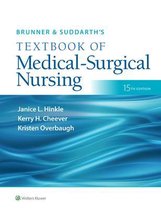
Test Bank For Brunner & Suddarth's
. . . . .
Textbook of Medical-
. . .
Surgical Nursing 15th Edition By Jan
. . . . . .
ice L Hinkle, Kerry H. Cheever, Et al. |
. . . . . . . . .
Complete |Chapters 1-68
. .
,Table.of.Contents
Chapter.01.Professional.Nursing.Practice 2
Chapter.02.Medical-Surgical.Nursing 17
Chapter.03.Health.Education.and.Health.Promotion 30
Chapter.04.Adult.Health.and.Physical,.Nutritional,.and.Cultural.Assessment 45
Chapter.05.Stress.and.Inflammatory.Responses 60
Chapter.06.Genetics.and.Genomics.in.Nursing 76
Chapter.07.Disability.and.Chronic.Illness 92
Chapter.08.Management.of.the.Older.Adult.Patient 107
Chapter.09.Pain.Management 121
Chapter.10.Fluid.and.Electrolytes 137
Chapter.11.Shock,.Sepsis,.and.Multiple.Organ.Dysfunction.Syndrome 153
Chapter.12.Management.of.Patients.with.Oncologic.Disorders 169
Chapter.13.Palliative.and.End-of-Life.Care 183
Chapter.14.Preoperative.Nursing.Management 199
Chapter.15.Intraoperative.Nursing.Management 214
Chapter.16.Postoperative.Nursing.Management 228
Chapter.17.Assessment.of.Respiratory.Function 243
Chapter.18.Management.of.Patients.with.Upper.Respiratory.Tract.Disorders 258
Chapter.19.Management.of.Patients.with.Chest.and.Lower.Respiratory.Tract.Disorders 272
Chapter.20.Management.of.Patients.with.Chronic.Pulmonary.Disease 288
Chapter.21.Assessment.of.Cardiovascular.Function 304
Chapter.22.Management.of.Patients.with.Arrhythmias.and.Conduction.Problems 318
Chapter.23.Management.of.Patients.with.Coronary.Vascular.Disorders 331
Chapter.24.Management.of.Patients.with.Structural,.Infectious,.and.Inflammatory.Cardiac
Disorders 347
Chapter.25.Management.of.Patients.with.Complications.from.Heart.Disease 361
Chapter.26.Assessment.and.Management.of.Patients.with.Vascular.Disorders.and.Problems
of.Peripheral.Circulation 375
Chapter.27.Assessment.and.Management.of.Patients.with.Hypertension 391
Chapter.28.Assessment.of.Hematologic.Function.and.Treatment.Modalities 405
Chapter.29.Management.of.Patients.with.Nonmalignant.Hematologic.Disorders 420
Chapter.30.Management.of.Patients.with.Hematologic.Neoplasms 433
Chapter.31.Assessment.of.Immune.Function 448
Chapter.32.Management.of.Patients.with.Immune.Deficiency.Disorders 462
Chapter.33.Assessment.and.Management.of.Patients.with.Allergic.Disorders 477
Chapter.34.Assessment.and.Management.of.Patients.with.Inflammatory.Rheumatic.Disorders 492
Chapter.35.Assessment.of.Musculoskeletal.Function 506
Chapter.36.Management.of.Patients.with.Musculoskeletal.Disorders 520
,Chapter.37.Management.of.Patients.with.Musculoskeletal.Trauma 535
Chapter.38.Assessment.of.Digestive.and.Gastrointestinal.Function 550
Chapter.39.Management.of.Patients.with.Oral.and.Esophageal.Disorders 564
Chapter.40.Management.of.Patients.with.Gastric.and.Duodenal.Disorders 578
Chapter.41.Management.of.Patients.with.Intestinal.and.Rectal.Disorders 591
Chapter.42.Assessment.and.Management.of.Patients.with.Obesity 606
Chapter.43.Assessment.and.Management.of.Patients.with.Hepatic.Disorders 621
Chapter.44.Management.of.Patients.with.Biliary.Disorders 635
Chapter.45.Assessment.and.Management.of.Patients.with.Endocrine.Disorders 650
Chapter.46.Management.of.Patients.with.Diabetes 665
Chapter.47.Assessment.of.Kidney.and.Urinary.Function 680
Chapter.48.Management.of.Patients.with.Kidney.Disorders 695
Chapter.49.Management.of.Patients.with.Urinary.Disorders 710
Chapter.50.Assessment.and.Management.of.Patients.with.Female.Physiologic.Processes 725
Chapter.51.Management.of.Patients.with.Female.Reproductive.Disorders 741
Chapter.52.Assessment.and.Management.of.Patients.with.Breast.Disorders 757
Chapter.53.Assessment.and.Management.of.Patients.with.Male.Reproductive.Disorders 771
Chapter.54.Assessment.and.Management.of.Patients.Who.Are.LGBTQ 786
Chapter.55.Assessment.of.Integumentary.Function 794
Chapter.56.Management.of.Patients.with.Dermatologic.Disorders 808
Chapter.57.Management.of.Patients.with.Burn.Injury 822
Chapter.58.Assessment.and.Management.of.Patients.with.Eye.and.Vision.Disorders 837
Chapter.59.Assessment.and.Management.of.Patients.with.Hearing.and.Balance.Disorders 851
Chapter.60.Assessment.of.Neurologic.Function 866
Chapter.61.Management.of.Patients.With.Neurologic.Dysfunction 881
Chapter.62.Management.of.Patients.With.Cerebrovascular.Disorders 895
Chapter.63.Management.of.Patients.with.Neurologic.Trauma 911
Chapter.64.Management.of.Patients.with.Neurologic.Infections,.Autoimmune.Disorders,.and
Neuropathies 926
Chapter.65.Management.of.Patients.with.Oncologic.or.Degenerative.Neurologic.Disorders 940
Chapter.66.Management.of.Patients.with.Infectious.Diseases 955
Chapter.67.Emergency.Nursing 968
Chapter.68.Disaster.Nursing 977
, Chapter.1:.Professional.Nursing.Practice
Hinkle:.Brunner.&.Suddarth's.Textbook.of.Medical-Surgical.Nursing,.15th.Edition
MULTIPLE.CHOICE
1. A.nurse.has.been.offered.a.position.on.an.obstetric.unit.and.has.learned.that.the.unit.offers.therapeutic.ab
ortions,.a.procedure.that.contradicts.the.nurse's.personal.beliefs..What.is.the.nurse's.ethical.obligation.to.t
hese.clients?
A. The.nurse.should.adhere.to.professional.standards.of.practice.and.offer.service.to.these.cl
ients.
B. The.nurse.should.make.the.choice.to.decline.this.position.and.pursue.a.different.nursing.ro
le.
C. The.nurse.should.decline.to.care.for.the.client’s.considering.abortion.
D. The.nurse.should.express.alternatives.to.women.considering.terminating.their.pregnancy.
ANS:. B
Rationale:.To.avoid.facing.the.ethical.dilemma.of.providing.care.that.contradicts.the.nurse’s.personal.beli
efs,.the.nurse.should.consider.working.in.an.area.of.nursing.that.would.not.pose.this.dilemma..The.nurse.s
hould.not.provide.care.to.the.client.because.it.is.a.conflict.of.personal.values..The.nurse.should.not.deny.c
are.to.these.clients.as.this.would.be.a.breach.in.the.Code.of.Ethics.for.nurses..If.the.client.is.not.requesting.
information.for.alternatives.to.abortions,.then.the.nurse.should.not.be.providing.this.information.
PTS:. . 1 REF:. . p..27
NAT:. Client.Needs:.Safe,.Effective.Care.Environment:.Management.of.Care
TOP:. Chapter.1:.Professional.Nursing.Practice
KEY:. Integrated.Process:.Caring.
BLM:. Cognitive.Level:.Apply
2. An.80-year-old.client.is.admitted.with.a.diagnosis.of.community-
acquired.pneumonia..During.admission.the.client.states,."I.have.a.living.will.".What.implication.of.this.s
hould.the.nurse.recognize?
A. This.document.is.always.honored,.regardless.of.circumstances.
B. This.document.specifies.the.client's.wishes.before.hospitalization.
C. This.document.is.binding.for.the.duration.of.the.client's.life.
D. This.document.has.been.drawn.up.by.the.client's.family.to.determine.DNR.status.
ANS:. B
Rationale:.A.living.will.is.one.type.of.advance.directive..In.most.situations,.living.wills.are.limited.to.situ
ations.in.which.the.client's.medical.condition.is.deemed.terminal..The.other.answers.are.incorrect.becaus
e.living.wills.are.not.always.honored.in.every.circumstance,.they.are.not.binding.for.the.duration.of.the.cl
ient's.life,.and.they.are.not.drawn.up.by.the.client's.family.
PTS:. . 1 REF:. . p..29
NAT:. Client.Needs:.Safe,.Effective.Care.Environment:.Management.of.Care.T
OP:. Chapter.1:.Professional.Nursing.Practice
KEY:. Integrated.Process:.Communication.and.Documentation
BLM:. Cognitive.Level:.Analyze.
NOT:. Multiple.Choice
3. A.nurse.has.been.providing.ethical.care.for.many.years.and.is.aware.of.the.need.to.maintain.the.ethical.pri
nciple.of.nonmaleficence..Which.of.the.following.actions.would.be.considered.a.violation.of.this.principl
e?
A. Discussing.a.DNR.order.with.a.terminally.ill.client
B. Assisting.a.semi-independent.client.with.ADLs
C. Refusing.to.administer.pain.medication.as.prescribed
1.|.P.a.g.e
. . . . .
Textbook of Medical-
. . .
Surgical Nursing 15th Edition By Jan
. . . . . .
ice L Hinkle, Kerry H. Cheever, Et al. |
. . . . . . . . .
Complete |Chapters 1-68
. .
,Table.of.Contents
Chapter.01.Professional.Nursing.Practice 2
Chapter.02.Medical-Surgical.Nursing 17
Chapter.03.Health.Education.and.Health.Promotion 30
Chapter.04.Adult.Health.and.Physical,.Nutritional,.and.Cultural.Assessment 45
Chapter.05.Stress.and.Inflammatory.Responses 60
Chapter.06.Genetics.and.Genomics.in.Nursing 76
Chapter.07.Disability.and.Chronic.Illness 92
Chapter.08.Management.of.the.Older.Adult.Patient 107
Chapter.09.Pain.Management 121
Chapter.10.Fluid.and.Electrolytes 137
Chapter.11.Shock,.Sepsis,.and.Multiple.Organ.Dysfunction.Syndrome 153
Chapter.12.Management.of.Patients.with.Oncologic.Disorders 169
Chapter.13.Palliative.and.End-of-Life.Care 183
Chapter.14.Preoperative.Nursing.Management 199
Chapter.15.Intraoperative.Nursing.Management 214
Chapter.16.Postoperative.Nursing.Management 228
Chapter.17.Assessment.of.Respiratory.Function 243
Chapter.18.Management.of.Patients.with.Upper.Respiratory.Tract.Disorders 258
Chapter.19.Management.of.Patients.with.Chest.and.Lower.Respiratory.Tract.Disorders 272
Chapter.20.Management.of.Patients.with.Chronic.Pulmonary.Disease 288
Chapter.21.Assessment.of.Cardiovascular.Function 304
Chapter.22.Management.of.Patients.with.Arrhythmias.and.Conduction.Problems 318
Chapter.23.Management.of.Patients.with.Coronary.Vascular.Disorders 331
Chapter.24.Management.of.Patients.with.Structural,.Infectious,.and.Inflammatory.Cardiac
Disorders 347
Chapter.25.Management.of.Patients.with.Complications.from.Heart.Disease 361
Chapter.26.Assessment.and.Management.of.Patients.with.Vascular.Disorders.and.Problems
of.Peripheral.Circulation 375
Chapter.27.Assessment.and.Management.of.Patients.with.Hypertension 391
Chapter.28.Assessment.of.Hematologic.Function.and.Treatment.Modalities 405
Chapter.29.Management.of.Patients.with.Nonmalignant.Hematologic.Disorders 420
Chapter.30.Management.of.Patients.with.Hematologic.Neoplasms 433
Chapter.31.Assessment.of.Immune.Function 448
Chapter.32.Management.of.Patients.with.Immune.Deficiency.Disorders 462
Chapter.33.Assessment.and.Management.of.Patients.with.Allergic.Disorders 477
Chapter.34.Assessment.and.Management.of.Patients.with.Inflammatory.Rheumatic.Disorders 492
Chapter.35.Assessment.of.Musculoskeletal.Function 506
Chapter.36.Management.of.Patients.with.Musculoskeletal.Disorders 520
,Chapter.37.Management.of.Patients.with.Musculoskeletal.Trauma 535
Chapter.38.Assessment.of.Digestive.and.Gastrointestinal.Function 550
Chapter.39.Management.of.Patients.with.Oral.and.Esophageal.Disorders 564
Chapter.40.Management.of.Patients.with.Gastric.and.Duodenal.Disorders 578
Chapter.41.Management.of.Patients.with.Intestinal.and.Rectal.Disorders 591
Chapter.42.Assessment.and.Management.of.Patients.with.Obesity 606
Chapter.43.Assessment.and.Management.of.Patients.with.Hepatic.Disorders 621
Chapter.44.Management.of.Patients.with.Biliary.Disorders 635
Chapter.45.Assessment.and.Management.of.Patients.with.Endocrine.Disorders 650
Chapter.46.Management.of.Patients.with.Diabetes 665
Chapter.47.Assessment.of.Kidney.and.Urinary.Function 680
Chapter.48.Management.of.Patients.with.Kidney.Disorders 695
Chapter.49.Management.of.Patients.with.Urinary.Disorders 710
Chapter.50.Assessment.and.Management.of.Patients.with.Female.Physiologic.Processes 725
Chapter.51.Management.of.Patients.with.Female.Reproductive.Disorders 741
Chapter.52.Assessment.and.Management.of.Patients.with.Breast.Disorders 757
Chapter.53.Assessment.and.Management.of.Patients.with.Male.Reproductive.Disorders 771
Chapter.54.Assessment.and.Management.of.Patients.Who.Are.LGBTQ 786
Chapter.55.Assessment.of.Integumentary.Function 794
Chapter.56.Management.of.Patients.with.Dermatologic.Disorders 808
Chapter.57.Management.of.Patients.with.Burn.Injury 822
Chapter.58.Assessment.and.Management.of.Patients.with.Eye.and.Vision.Disorders 837
Chapter.59.Assessment.and.Management.of.Patients.with.Hearing.and.Balance.Disorders 851
Chapter.60.Assessment.of.Neurologic.Function 866
Chapter.61.Management.of.Patients.With.Neurologic.Dysfunction 881
Chapter.62.Management.of.Patients.With.Cerebrovascular.Disorders 895
Chapter.63.Management.of.Patients.with.Neurologic.Trauma 911
Chapter.64.Management.of.Patients.with.Neurologic.Infections,.Autoimmune.Disorders,.and
Neuropathies 926
Chapter.65.Management.of.Patients.with.Oncologic.or.Degenerative.Neurologic.Disorders 940
Chapter.66.Management.of.Patients.with.Infectious.Diseases 955
Chapter.67.Emergency.Nursing 968
Chapter.68.Disaster.Nursing 977
, Chapter.1:.Professional.Nursing.Practice
Hinkle:.Brunner.&.Suddarth's.Textbook.of.Medical-Surgical.Nursing,.15th.Edition
MULTIPLE.CHOICE
1. A.nurse.has.been.offered.a.position.on.an.obstetric.unit.and.has.learned.that.the.unit.offers.therapeutic.ab
ortions,.a.procedure.that.contradicts.the.nurse's.personal.beliefs..What.is.the.nurse's.ethical.obligation.to.t
hese.clients?
A. The.nurse.should.adhere.to.professional.standards.of.practice.and.offer.service.to.these.cl
ients.
B. The.nurse.should.make.the.choice.to.decline.this.position.and.pursue.a.different.nursing.ro
le.
C. The.nurse.should.decline.to.care.for.the.client’s.considering.abortion.
D. The.nurse.should.express.alternatives.to.women.considering.terminating.their.pregnancy.
ANS:. B
Rationale:.To.avoid.facing.the.ethical.dilemma.of.providing.care.that.contradicts.the.nurse’s.personal.beli
efs,.the.nurse.should.consider.working.in.an.area.of.nursing.that.would.not.pose.this.dilemma..The.nurse.s
hould.not.provide.care.to.the.client.because.it.is.a.conflict.of.personal.values..The.nurse.should.not.deny.c
are.to.these.clients.as.this.would.be.a.breach.in.the.Code.of.Ethics.for.nurses..If.the.client.is.not.requesting.
information.for.alternatives.to.abortions,.then.the.nurse.should.not.be.providing.this.information.
PTS:. . 1 REF:. . p..27
NAT:. Client.Needs:.Safe,.Effective.Care.Environment:.Management.of.Care
TOP:. Chapter.1:.Professional.Nursing.Practice
KEY:. Integrated.Process:.Caring.
BLM:. Cognitive.Level:.Apply
2. An.80-year-old.client.is.admitted.with.a.diagnosis.of.community-
acquired.pneumonia..During.admission.the.client.states,."I.have.a.living.will.".What.implication.of.this.s
hould.the.nurse.recognize?
A. This.document.is.always.honored,.regardless.of.circumstances.
B. This.document.specifies.the.client's.wishes.before.hospitalization.
C. This.document.is.binding.for.the.duration.of.the.client's.life.
D. This.document.has.been.drawn.up.by.the.client's.family.to.determine.DNR.status.
ANS:. B
Rationale:.A.living.will.is.one.type.of.advance.directive..In.most.situations,.living.wills.are.limited.to.situ
ations.in.which.the.client's.medical.condition.is.deemed.terminal..The.other.answers.are.incorrect.becaus
e.living.wills.are.not.always.honored.in.every.circumstance,.they.are.not.binding.for.the.duration.of.the.cl
ient's.life,.and.they.are.not.drawn.up.by.the.client's.family.
PTS:. . 1 REF:. . p..29
NAT:. Client.Needs:.Safe,.Effective.Care.Environment:.Management.of.Care.T
OP:. Chapter.1:.Professional.Nursing.Practice
KEY:. Integrated.Process:.Communication.and.Documentation
BLM:. Cognitive.Level:.Analyze.
NOT:. Multiple.Choice
3. A.nurse.has.been.providing.ethical.care.for.many.years.and.is.aware.of.the.need.to.maintain.the.ethical.pri
nciple.of.nonmaleficence..Which.of.the.following.actions.would.be.considered.a.violation.of.this.principl
e?
A. Discussing.a.DNR.order.with.a.terminally.ill.client
B. Assisting.a.semi-independent.client.with.ADLs
C. Refusing.to.administer.pain.medication.as.prescribed
1.|.P.a.g.e