[Type here] Module 2 Drug Table [Type here]
Drug Class Prototype Drug What is it used for? Most Common Side List concerns or Other Nursing Considerations: What to teach the patient:
List other common How does it work? Effects & contraindications What assessments? 1. Side effects
drugs in class What is the goal of treatment Adverse Reactions List most common How to administer 2. Adverse effects to
with this class? (what is the interactions What evaluations? report
benefit to the patient?) (food or drugs) Interventions 3. How to take
What to Monitor? 4. Lifestyle changes
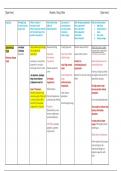
Dopaminergic Levodopa/ Helps relieves and manage Nausea/vomiting Pt with glaucoma Monitor adverse effects Warn that urine or saliva
drugs Carbidopa the symptoms of may be dark n sweat but it
[Sinemet] Parkinson's Dyskinesia Avoid Use of MAO Assess motor function is normal, not a concern
Parkinson disease (involuntary inhibitor drugs
meds Levodopa is converted to movement) Monitor for Report hallucinations and
dopamine in the brain, Avoid High protein orthostatic/postural paranoid delusions
improving motor function. Darken sweat and meals hypotension
urine Instruct pt to get up slowly
-As dopamine, levodopa Avoid antipsychotic Monitor for any loss of drug or dangle at the side of the
helps restore balance Orthostatic drugs effect bed before standing
of dopamine and Ach. hypotension (chlorpromazine,
haloperidol) No high protein meals
Goal of Treatment: Hallucinations because protein reduces
Alleviate symptoms and Food reduces absorption
improve quality of life such Postural hypotension absorption
as motor function BUT it cardiovascular effects) Do not stop taking abruptly
does NOT slow disease Anticholinergic drugs
progression or memory Psychosis Take orally but without food
(hallucinations, vivid because food delays
dreams, nightmares, absorption
paranoid ideation)
Increase salt and water
CNS Effects (anxiety, intake if feeling dizzy when
agitation, cognitive standing up
impairment)
Notify doctor of dyskinesia
Inform patients that nausea
and vomiting can be
reduced by taking oral
dopamine agonists with
food.
, [Type here] Module 2 Drug Table [Type here]
Drug Class Prototype Drug What is it used for? Most Common Side List concerns or Other Nursing Considerations: What to teach the patient:
List other common How does it work? Effects & contraindications What assessments? 1. Side effects
drugs in class What is the goal of treatment Adverse Reactions List most common How to administer 2. Adverse effects to
with this class? (what is the interactions What evaluations? report
benefit to the patient?) (food or drugs) Interventions 3. How to take
What to Monitor? 4. Lifestyle changes
Cholinesterase Donepezil Treats cognitive decline in N/V/D- GI upset GI bleeding (dark dosage should be low Take it with food or without
inhibitors [Aricept] Alzheimer's disease stools or coffee initially and then gradually BUT AT BEDTIME
Bronchoconstriction ground emesis) increased to the highest
Alzheimer’s meds Mild to severe This drug does not stop tolerable amount The 23-mg tablets must be
Alzheimer’s the progression of the Bradycardia Pt who has Asthma swallowed whole.
disease, nor does it and COPD Oral tablet drug
significantly slow disease Dizziness Dissolve ODT tablets on the
progress Avoid anticholinergic Monitor for any signs of GI tongue followed by water.
Dyspepsia (stomach agents, first- bleeding
It prevents the breakdown pain) generation Take acetaminophen for
of acetylcholine, so more is antihistamines, Monitor any weight loss stomach pain instead of
available for transmitting Headaches tricyclic and LOC aspirin/ibuprofen
nerve impulses antidepressants,
Incontinence of conventional Fall risk precautions Be aware of GI bleed s/s
Goal of treatment: slow bowel/bladder antipsychotics - can (black or tarry stool.
cognitive decline and reduce therapeutic bright red blood in vomit)
enhance memory insomnia effects
Do not crush or chew tabs
Avoid NSAIDS
(aspirin, ibuprofen)
NMDA Receptor Memantine Used for ONLY moderate Dizziness Renal impairment Monitor cognitive function Watch out for any adverse
Antagonist [Namenda] to severe Alzheimer's effects and report it
Headache Liver disorders Monitor renal function
Alzheimer’s meds Moderate to Although memantine helps (expected range of creatine Can be given orally or liquid,
severe Alzheimer's treat symptoms of AD, Confusion Avoid OTC Antacids clearance is 87-139) take with or without food
Drug Class Prototype Drug What is it used for? Most Common Side List concerns or Other Nursing Considerations: What to teach the patient:
List other common How does it work? Effects & contraindications What assessments? 1. Side effects
drugs in class What is the goal of treatment Adverse Reactions List most common How to administer 2. Adverse effects to
with this class? (what is the interactions What evaluations? report
benefit to the patient?) (food or drugs) Interventions 3. How to take
What to Monitor? 4. Lifestyle changes
Dopaminergic Levodopa/ Helps relieves and manage Nausea/vomiting Pt with glaucoma Monitor adverse effects Warn that urine or saliva
drugs Carbidopa the symptoms of may be dark n sweat but it
[Sinemet] Parkinson's Dyskinesia Avoid Use of MAO Assess motor function is normal, not a concern
Parkinson disease (involuntary inhibitor drugs
meds Levodopa is converted to movement) Monitor for Report hallucinations and
dopamine in the brain, Avoid High protein orthostatic/postural paranoid delusions
improving motor function. Darken sweat and meals hypotension
urine Instruct pt to get up slowly
-As dopamine, levodopa Avoid antipsychotic Monitor for any loss of drug or dangle at the side of the
helps restore balance Orthostatic drugs effect bed before standing
of dopamine and Ach. hypotension (chlorpromazine,
haloperidol) No high protein meals
Goal of Treatment: Hallucinations because protein reduces
Alleviate symptoms and Food reduces absorption
improve quality of life such Postural hypotension absorption
as motor function BUT it cardiovascular effects) Do not stop taking abruptly
does NOT slow disease Anticholinergic drugs
progression or memory Psychosis Take orally but without food
(hallucinations, vivid because food delays
dreams, nightmares, absorption
paranoid ideation)
Increase salt and water
CNS Effects (anxiety, intake if feeling dizzy when
agitation, cognitive standing up
impairment)
Notify doctor of dyskinesia
Inform patients that nausea
and vomiting can be
reduced by taking oral
dopamine agonists with
food.
, [Type here] Module 2 Drug Table [Type here]
Drug Class Prototype Drug What is it used for? Most Common Side List concerns or Other Nursing Considerations: What to teach the patient:
List other common How does it work? Effects & contraindications What assessments? 1. Side effects
drugs in class What is the goal of treatment Adverse Reactions List most common How to administer 2. Adverse effects to
with this class? (what is the interactions What evaluations? report
benefit to the patient?) (food or drugs) Interventions 3. How to take
What to Monitor? 4. Lifestyle changes
Cholinesterase Donepezil Treats cognitive decline in N/V/D- GI upset GI bleeding (dark dosage should be low Take it with food or without
inhibitors [Aricept] Alzheimer's disease stools or coffee initially and then gradually BUT AT BEDTIME
Bronchoconstriction ground emesis) increased to the highest
Alzheimer’s meds Mild to severe This drug does not stop tolerable amount The 23-mg tablets must be
Alzheimer’s the progression of the Bradycardia Pt who has Asthma swallowed whole.
disease, nor does it and COPD Oral tablet drug
significantly slow disease Dizziness Dissolve ODT tablets on the
progress Avoid anticholinergic Monitor for any signs of GI tongue followed by water.
Dyspepsia (stomach agents, first- bleeding
It prevents the breakdown pain) generation Take acetaminophen for
of acetylcholine, so more is antihistamines, Monitor any weight loss stomach pain instead of
available for transmitting Headaches tricyclic and LOC aspirin/ibuprofen
nerve impulses antidepressants,
Incontinence of conventional Fall risk precautions Be aware of GI bleed s/s
Goal of treatment: slow bowel/bladder antipsychotics - can (black or tarry stool.
cognitive decline and reduce therapeutic bright red blood in vomit)
enhance memory insomnia effects
Do not crush or chew tabs
Avoid NSAIDS
(aspirin, ibuprofen)
NMDA Receptor Memantine Used for ONLY moderate Dizziness Renal impairment Monitor cognitive function Watch out for any adverse
Antagonist [Namenda] to severe Alzheimer's effects and report it
Headache Liver disorders Monitor renal function
Alzheimer’s meds Moderate to Although memantine helps (expected range of creatine Can be given orally or liquid,
severe Alzheimer's treat symptoms of AD, Confusion Avoid OTC Antacids clearance is 87-139) take with or without food