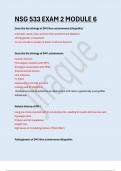
NSG 533 EXAM 2 MODULE 6
Describe the etiology of DM I Non-autoimmune (idiopathic)
unknown cause, less common than autoimmune diabetes
strong genetic component
occurs mostly in people of asian or african descent
Describe the etiology of DM I autoimmune
Genetic factors:
First degree relatives with DM 1
Strongest association with MHC
Environmental factors:
viral infection
H. Pylori
exposure to cow milk proteins
relative lack of Vitamin D
-Gradual process of autoimmune destruction of B cells in genetically susceptible
individuals
Natural history of DM I
Long pre-clinical period with B cell destruction, leading to insulin deficiencies and
hyperglycemia
Protein and fat breakdown:
weight loss
high levels of circulating Ketons (Think DKA!)
Pathogenesis of DM I Non autoimmune/Idiopathic
,no evidence of B cell autoimmunity, varying degrees of insulin deficiency
pathogenesis of DM I Autoimmune
Slowly progressive disease that destroys all B cells of pancreas
How many of the B cells are destroyed with DM I autoimmune?
80-90% of insulin secreting B cells int eh slate of lagerhands are destroyed and
insulin synthesis declines
What does insulin normally suppress?
Glucagon
What is there a decreased secretion of in DM I? and the result?
amylin - which increases glucagon production
What is glucagon?
A hormone produced by the a cells of the islets, acts in the liver, increases blood
glucose by stimulating glycogenesis and contributes to hyperglycemia in DM I.
What contributes to hyperglycemia in DM I?
lack of insulin and excess glucagon
DM II Etiology
, genetic susceptibility (polygenic)
environmental defects in b cell function combined with insulin resistance
associated with long-duration obesity
DM II natural history
compensatory hyperinsulinemia prevents the clinical appearance of diabetes for
many years
decrease in B cell mass and reduction in normal B cell function develops and leads
to a relative deficiency of insulin activity
Pathogenesis of DM II
Defects in uncreative insulin secretion and insulin effects on target tissues (insulin
resistance) = persistent state of hyperglycemia, inducing metabolic alteration, cell
death, and inflammation
What causes insulin resistance?
abnormality of insulin molecule
high amounts of insulin antagonists
down-regulation of insulin receptor
alteration of glucose transporter (GLUT) proteins
What is the most important contributor to insulin resistance and how?
Obesity
adipose tissue releases/produces:
fatty acids
glycerol
hormones
pro-inflammatory cytokines (adipokines)
Describe the etiology of DM I Non-autoimmune (idiopathic)
unknown cause, less common than autoimmune diabetes
strong genetic component
occurs mostly in people of asian or african descent
Describe the etiology of DM I autoimmune
Genetic factors:
First degree relatives with DM 1
Strongest association with MHC
Environmental factors:
viral infection
H. Pylori
exposure to cow milk proteins
relative lack of Vitamin D
-Gradual process of autoimmune destruction of B cells in genetically susceptible
individuals
Natural history of DM I
Long pre-clinical period with B cell destruction, leading to insulin deficiencies and
hyperglycemia
Protein and fat breakdown:
weight loss
high levels of circulating Ketons (Think DKA!)
Pathogenesis of DM I Non autoimmune/Idiopathic
,no evidence of B cell autoimmunity, varying degrees of insulin deficiency
pathogenesis of DM I Autoimmune
Slowly progressive disease that destroys all B cells of pancreas
How many of the B cells are destroyed with DM I autoimmune?
80-90% of insulin secreting B cells int eh slate of lagerhands are destroyed and
insulin synthesis declines
What does insulin normally suppress?
Glucagon
What is there a decreased secretion of in DM I? and the result?
amylin - which increases glucagon production
What is glucagon?
A hormone produced by the a cells of the islets, acts in the liver, increases blood
glucose by stimulating glycogenesis and contributes to hyperglycemia in DM I.
What contributes to hyperglycemia in DM I?
lack of insulin and excess glucagon
DM II Etiology
, genetic susceptibility (polygenic)
environmental defects in b cell function combined with insulin resistance
associated with long-duration obesity
DM II natural history
compensatory hyperinsulinemia prevents the clinical appearance of diabetes for
many years
decrease in B cell mass and reduction in normal B cell function develops and leads
to a relative deficiency of insulin activity
Pathogenesis of DM II
Defects in uncreative insulin secretion and insulin effects on target tissues (insulin
resistance) = persistent state of hyperglycemia, inducing metabolic alteration, cell
death, and inflammation
What causes insulin resistance?
abnormality of insulin molecule
high amounts of insulin antagonists
down-regulation of insulin receptor
alteration of glucose transporter (GLUT) proteins
What is the most important contributor to insulin resistance and how?
Obesity
adipose tissue releases/produces:
fatty acids
glycerol
hormones
pro-inflammatory cytokines (adipokines)