TESTBANK x
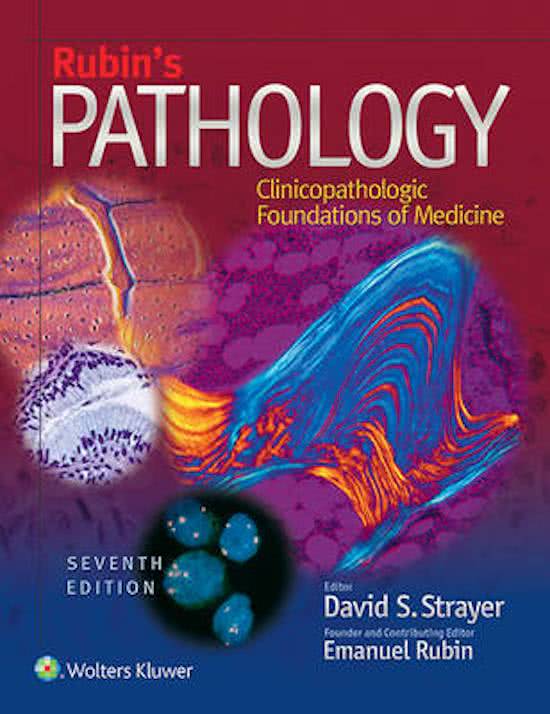
RUBIN'S PATHOLOGY: x
CLINICOPATHOLOGIC
x
FOUNDATIONS OF MEDICINE
x x x
7th Edition By David S. Strayer, Emanuel Rubin
x x x x x x x
TESTBANK x
,Test Bank Rubin's Pathology: Clinicopathologic Foundations of Medicine 7th Edition
x x x x x x x x
x
Table of Contents:
x x
Chapter 1: Cell Adaptation, Injury and Death
x x x x x x
Chapter 2: Inflammation
x x
Chapter 3: Repair, Regeneration and Fibrosis
x x x x x
Chapter 4: Immunopathology
x x
Chapter 5: Neoplasia
x x
Chapter 6: Developmental and Genetic Diseases
x x x x x
Chapter 7: Hemodynamic Disorders
x x x
Chapter 8: Environmental and Nutritional Pathology
x x x x x
Chapter 9: Infectious and Parasitic Diseases
x x x x x
Section II: Pathogenesis of Systemic Conditions Expandable section
x x x x x x x
Chapter 10: Aging
x x
Chapter 11: Systemic Autoimmune Diseases
x x x x
Chapter 12: Sepsis
x x
Chapter 13: Obesity and Diabetes Mellitus
x x x x x
Chapter 14: The Pathology of Pregnancy
x x x x x
Chapter 15: The Amyloidoses
x x x
Section III: Diseases of Individual Organ SystemsExpandable section
x x x x x x x
Chapter 16: Blood Vessels
x x x
Chapter 17: The Heart
x x x
Chapter 18: The Respiratory System
x x x x
Chapter 19: The Gastrointestinal Tract
x x x x
Chapter 20: The Liver and Biliary System
x x x x x x
Chapter 21: The Pancreas
x x x
Chapter 22: The Kidney
x x x
Chapter 23: The Lower Urinary Tract and Male Reproductive System
x x x x x x x x x
Chapter 24: The Female Reproductive System and Peritoneum
x x x x x x x
Chapter 25: The Breast
x x x
Chapter 26: Hematopathology
x x
Chapter 27: The Endocrine System
x x x x
Chapter 28: The Skin
x x x
Chapter 29: The Head and Neck
x x x x x
Chapter 30: Bones, Joints and Soft Tissue
x x x x x x
Chapter 31: Skeletal Muscle and Peripheral Nervous System
x x x x x x x
Chapter 32: The Central Nervous System
x x x x x
Chapter 33: The Eye
x x x
Chapter 34: Forensic Pathology
x x x
,Rubin's Pathology: Clinicopathologic Foundations of Medicine
x x x x x
Chapter 1: Cell Adaptation, Injury and Death
x x x x x x x
Ischemia and other toxic injuries increase the accumulation of intracellular calcium as a result
x x x x x x x x x x x x x
1. xof:
A) release of stored calcium from the mitochondria.
x x x x x x
B) improved intracellular volume regulation. x x x
C) decreased influx across the cell membrane. x x x x x
D) attraction of calcium to fatty infiltrates. x x x x x
The patient is found to have liver disease, resulting in the removal of a lobe of his liver.
x x x x x x x x x x x x x x x x x
2. Adaptation to the reduced size of the liver leads to _
x x x of the remaining liver cells.
x x x x x x x x x x x x
A) metaplasia
B) organ atrophy x
C) compensatory hyperplasia x
D) physiologic hypertrophy x
A person eating peanuts starts choking and collapses. His airway obstruction is partially
x x x x x x x x x x x x
cleared, but he remains hypoxic until he reaches the hospital. The prolonged cell hypoxia
x x x x x x x x x x x x x x
3. caused a cerebral infarction and resulting
x x x _ in the brain. x x x x x x
A) caspase activation x
B) coagulation necrosis x
C) rapid phagocytosis
x
D) protein p53 deficiency x x
Bacteria and viruses cause cell damage by
x x x x x x , which is unique from the intracellular
x x x x x x
4. damage caused by other injurious agents.
x x x x x x
A) disrupting the sodium/potassium ATPase pump x x x x
B) interrupting oxidative metabolism processes x x x
C) replicating and producing continued injury x x x x
D) decreasing protein synthesis and function x x x x
The patient has a prolonged interruption in arterial blood flow to his left kidney, causing
x x x x x x x x x x x x x x
5. hypoxic cell injury and the release of free radicals. Free radicals damage cells by:
x x x x x x x x x x x x x x
A) destroying phospholipids in the cell membrane. x x x x x
B) altering the immune response of the cell.
x x x x x x
C) disrupting calcium storage in the cell. x x x x x
D) inactivation of enzymes and mitochondria. x x x x
, 6. Injured cells have impaired flow of substances through the cell membrane as a result of:
x x x x x x x x x x x x x x
A) increased fat load. x x
B) altered permeability.x
C) altered glucose utilization.
x x
D) increased surface receptors. x x
7. Reversible adaptive intracellular responses are initiated by:
x x x x x x
A) stimulus overload. x
B) genetic mutations. x
C) chemical messengers. x
D) mitochondrial DNA. x
8. Injured cells become very swollen as a result of:
x x x x x x x x
A) increased cell protein synthesis. x x x
B) altered cell volume regulation.
x x x
C) passive entry of potassium into the cell.
x x x x x x
D) bleb formation in the plasma membrane.
x x x x x
A diabetic patient has impaired sensation, circulation, and oxygenation of his feet. He steps on
x x x x x x x x x x x x x x
a piece of glass, the wound does not heal, and the area tissue becomes necrotic. The necrotic
x x x x x x x x x x x x x x x x x
9. cell death is characterized by:
x x x x x
A) rapid apoptosis. x
B) cellular rupture. x
C) shrinkage and collapse. x x
D) chronic inflammation. x
A 99-year-old woman has experienced the decline of cell function associated with age. A
x x x x x x x x x x x x x
10. group of theories of cellular aging focus on programmed:
x x x x x x x x x
A) changes with genetic influences. x x x
B) elimination of cell receptor sites. x x x x
C) insufficient telomerase enzyme. x x
D) DNA mutation or faulty repair.
x x x x
An 89-year-old female patient has experienced significant decreases in her mobility and
x x x x x x x x x x x
stamina during a 3-week hospital stay for the treatment of a femoral head fracture. Which of
x x x x x x x x x x x x x x x x
the following phenomena most likely accounts for the patients decrease in muscle function
x x x x x x x x x x x x x
11. that underlies her reduced mobility?
x x x x x
A) Impaired muscle cell metabolism resulting from metaplasia
x x x x x x
B) Dysplasia as a consequence of inflammation during bone remodeling
x x x x x x x x
C) Disuse atrophy of muscle cells during a prolonged period of immobility
x x x x x x x x x x
RUBIN'S PATHOLOGY: x
CLINICOPATHOLOGIC
x
FOUNDATIONS OF MEDICINE
x x x
7th Edition By David S. Strayer, Emanuel Rubin
x x x x x x x
TESTBANK x
,Test Bank Rubin's Pathology: Clinicopathologic Foundations of Medicine 7th Edition
x x x x x x x x
x
Table of Contents:
x x
Chapter 1: Cell Adaptation, Injury and Death
x x x x x x
Chapter 2: Inflammation
x x
Chapter 3: Repair, Regeneration and Fibrosis
x x x x x
Chapter 4: Immunopathology
x x
Chapter 5: Neoplasia
x x
Chapter 6: Developmental and Genetic Diseases
x x x x x
Chapter 7: Hemodynamic Disorders
x x x
Chapter 8: Environmental and Nutritional Pathology
x x x x x
Chapter 9: Infectious and Parasitic Diseases
x x x x x
Section II: Pathogenesis of Systemic Conditions Expandable section
x x x x x x x
Chapter 10: Aging
x x
Chapter 11: Systemic Autoimmune Diseases
x x x x
Chapter 12: Sepsis
x x
Chapter 13: Obesity and Diabetes Mellitus
x x x x x
Chapter 14: The Pathology of Pregnancy
x x x x x
Chapter 15: The Amyloidoses
x x x
Section III: Diseases of Individual Organ SystemsExpandable section
x x x x x x x
Chapter 16: Blood Vessels
x x x
Chapter 17: The Heart
x x x
Chapter 18: The Respiratory System
x x x x
Chapter 19: The Gastrointestinal Tract
x x x x
Chapter 20: The Liver and Biliary System
x x x x x x
Chapter 21: The Pancreas
x x x
Chapter 22: The Kidney
x x x
Chapter 23: The Lower Urinary Tract and Male Reproductive System
x x x x x x x x x
Chapter 24: The Female Reproductive System and Peritoneum
x x x x x x x
Chapter 25: The Breast
x x x
Chapter 26: Hematopathology
x x
Chapter 27: The Endocrine System
x x x x
Chapter 28: The Skin
x x x
Chapter 29: The Head and Neck
x x x x x
Chapter 30: Bones, Joints and Soft Tissue
x x x x x x
Chapter 31: Skeletal Muscle and Peripheral Nervous System
x x x x x x x
Chapter 32: The Central Nervous System
x x x x x
Chapter 33: The Eye
x x x
Chapter 34: Forensic Pathology
x x x
,Rubin's Pathology: Clinicopathologic Foundations of Medicine
x x x x x
Chapter 1: Cell Adaptation, Injury and Death
x x x x x x x
Ischemia and other toxic injuries increase the accumulation of intracellular calcium as a result
x x x x x x x x x x x x x
1. xof:
A) release of stored calcium from the mitochondria.
x x x x x x
B) improved intracellular volume regulation. x x x
C) decreased influx across the cell membrane. x x x x x
D) attraction of calcium to fatty infiltrates. x x x x x
The patient is found to have liver disease, resulting in the removal of a lobe of his liver.
x x x x x x x x x x x x x x x x x
2. Adaptation to the reduced size of the liver leads to _
x x x of the remaining liver cells.
x x x x x x x x x x x x
A) metaplasia
B) organ atrophy x
C) compensatory hyperplasia x
D) physiologic hypertrophy x
A person eating peanuts starts choking and collapses. His airway obstruction is partially
x x x x x x x x x x x x
cleared, but he remains hypoxic until he reaches the hospital. The prolonged cell hypoxia
x x x x x x x x x x x x x x
3. caused a cerebral infarction and resulting
x x x _ in the brain. x x x x x x
A) caspase activation x
B) coagulation necrosis x
C) rapid phagocytosis
x
D) protein p53 deficiency x x
Bacteria and viruses cause cell damage by
x x x x x x , which is unique from the intracellular
x x x x x x
4. damage caused by other injurious agents.
x x x x x x
A) disrupting the sodium/potassium ATPase pump x x x x
B) interrupting oxidative metabolism processes x x x
C) replicating and producing continued injury x x x x
D) decreasing protein synthesis and function x x x x
The patient has a prolonged interruption in arterial blood flow to his left kidney, causing
x x x x x x x x x x x x x x
5. hypoxic cell injury and the release of free radicals. Free radicals damage cells by:
x x x x x x x x x x x x x x
A) destroying phospholipids in the cell membrane. x x x x x
B) altering the immune response of the cell.
x x x x x x
C) disrupting calcium storage in the cell. x x x x x
D) inactivation of enzymes and mitochondria. x x x x
, 6. Injured cells have impaired flow of substances through the cell membrane as a result of:
x x x x x x x x x x x x x x
A) increased fat load. x x
B) altered permeability.x
C) altered glucose utilization.
x x
D) increased surface receptors. x x
7. Reversible adaptive intracellular responses are initiated by:
x x x x x x
A) stimulus overload. x
B) genetic mutations. x
C) chemical messengers. x
D) mitochondrial DNA. x
8. Injured cells become very swollen as a result of:
x x x x x x x x
A) increased cell protein synthesis. x x x
B) altered cell volume regulation.
x x x
C) passive entry of potassium into the cell.
x x x x x x
D) bleb formation in the plasma membrane.
x x x x x
A diabetic patient has impaired sensation, circulation, and oxygenation of his feet. He steps on
x x x x x x x x x x x x x x
a piece of glass, the wound does not heal, and the area tissue becomes necrotic. The necrotic
x x x x x x x x x x x x x x x x x
9. cell death is characterized by:
x x x x x
A) rapid apoptosis. x
B) cellular rupture. x
C) shrinkage and collapse. x x
D) chronic inflammation. x
A 99-year-old woman has experienced the decline of cell function associated with age. A
x x x x x x x x x x x x x
10. group of theories of cellular aging focus on programmed:
x x x x x x x x x
A) changes with genetic influences. x x x
B) elimination of cell receptor sites. x x x x
C) insufficient telomerase enzyme. x x
D) DNA mutation or faulty repair.
x x x x
An 89-year-old female patient has experienced significant decreases in her mobility and
x x x x x x x x x x x
stamina during a 3-week hospital stay for the treatment of a femoral head fracture. Which of
x x x x x x x x x x x x x x x x
the following phenomena most likely accounts for the patients decrease in muscle function
x x x x x x x x x x x x x
11. that underlies her reduced mobility?
x x x x x
A) Impaired muscle cell metabolism resulting from metaplasia
x x x x x x
B) Dysplasia as a consequence of inflammation during bone remodeling
x x x x x x x x
C) Disuse atrophy of muscle cells during a prolonged period of immobility
x x x x x x x x x x