Genetics 16
HC 13-14
16.1
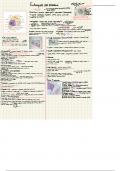
Epigenetic changes, beyond DNA sequences, are responsible for gene activation and/or
repression, like X-chromosome inactivation and genomic imprinting. It involves changes that
are passed on from cell to cell, without affecting the DNA sequence, so a heritable change in
gene expression that does not alter the DNA sequence (epimutation). Though, they consist
for long-term periods, like when a gene during embryonic development is switched off via
DNA methylation for the rest of the life. Or, when one of the X-chromosomes is converted
into the inactive, compact Barr body by epigenetic changes. So, some are permanent, others
may be reversible during life and again some may be reversible over generations. Genomic
imprinting can therefore be passed on from parent to offspring, (transgenerational)
epigenetic inheritance.
There are several molecular mechanisms that underlie epigenetic regulation: DNA
methylation; chromatin remodelling; covalent histone modification; histone variants and
feedback loops. Epigenetic changes are initiated via transcription factors that recognise
certain gene sequences, recruits other proteins and then methylate the gene which alter the
expression and is retained over cell divisions. Or, non-coding RNAs (ncRNA) act as bridges
between the DNA and proteins that alter chromatin or DNA structure, resulting in epigenetic
changes. There are two types of epigenetic mechanisms:
- Cis-epigenetic: maintained at a specific site and during cell division, it only affects
one copy of a gene in a diploid cell via DNA methylation or chromatin remodelling.
- Trans-epigenetic: maintained by diffusible factors, like TFs or ncRNA, which do affect
both copies of a gene, this done via feedback loops. Because it influences such a
wide variety due to its diffusing property, it might give phenotypic effects.
The two can be distinguished from each other with cell fusion; is one cell with working gene
fused with one cell that does not have the working gene and after fusion both genes work?
Trans. Still only one works? Cis.
In general, epigenetic changes occur:
- Programmed developmental change: genomic imprinting, like of the Igf2 gene where
the maternal version is silenced and the paternal is active during gametogenesis.
Genomic imprinting is determined by the parents. Or like the inactivation of one X-
chromosome during embryonic development. Also, with cell differentiation
epigenetic mechanisms play a role.
- Environmental agents: temperature, diet and toxins or stress might prove to be vital
for specific gene expression via epigenetics, where another diet might even give a
completely different phenotype.
16.2
Development is best described in multicellular species as the series of genetically
programmed stages from a fertilised egg, to an embryo and finally an adult. Many genes
thus play an important role in this process, like Igf2, a growth factor. This gene is later
passed on by both mother and father to their offspring, but only the paternal gene is
activated, based on genetic imprinting. This molecular mechanism has its root with
methylation during gametogenesis. It occurs at the imprinting control region (ICR) and
HC 13-14
16.1
Epigenetic changes, beyond DNA sequences, are responsible for gene activation and/or
repression, like X-chromosome inactivation and genomic imprinting. It involves changes that
are passed on from cell to cell, without affecting the DNA sequence, so a heritable change in
gene expression that does not alter the DNA sequence (epimutation). Though, they consist
for long-term periods, like when a gene during embryonic development is switched off via
DNA methylation for the rest of the life. Or, when one of the X-chromosomes is converted
into the inactive, compact Barr body by epigenetic changes. So, some are permanent, others
may be reversible during life and again some may be reversible over generations. Genomic
imprinting can therefore be passed on from parent to offspring, (transgenerational)
epigenetic inheritance.
There are several molecular mechanisms that underlie epigenetic regulation: DNA
methylation; chromatin remodelling; covalent histone modification; histone variants and
feedback loops. Epigenetic changes are initiated via transcription factors that recognise
certain gene sequences, recruits other proteins and then methylate the gene which alter the
expression and is retained over cell divisions. Or, non-coding RNAs (ncRNA) act as bridges
between the DNA and proteins that alter chromatin or DNA structure, resulting in epigenetic
changes. There are two types of epigenetic mechanisms:
- Cis-epigenetic: maintained at a specific site and during cell division, it only affects
one copy of a gene in a diploid cell via DNA methylation or chromatin remodelling.
- Trans-epigenetic: maintained by diffusible factors, like TFs or ncRNA, which do affect
both copies of a gene, this done via feedback loops. Because it influences such a
wide variety due to its diffusing property, it might give phenotypic effects.
The two can be distinguished from each other with cell fusion; is one cell with working gene
fused with one cell that does not have the working gene and after fusion both genes work?
Trans. Still only one works? Cis.
In general, epigenetic changes occur:
- Programmed developmental change: genomic imprinting, like of the Igf2 gene where
the maternal version is silenced and the paternal is active during gametogenesis.
Genomic imprinting is determined by the parents. Or like the inactivation of one X-
chromosome during embryonic development. Also, with cell differentiation
epigenetic mechanisms play a role.
- Environmental agents: temperature, diet and toxins or stress might prove to be vital
for specific gene expression via epigenetics, where another diet might even give a
completely different phenotype.
16.2
Development is best described in multicellular species as the series of genetically
programmed stages from a fertilised egg, to an embryo and finally an adult. Many genes
thus play an important role in this process, like Igf2, a growth factor. This gene is later
passed on by both mother and father to their offspring, but only the paternal gene is
activated, based on genetic imprinting. This molecular mechanism has its root with
methylation during gametogenesis. It occurs at the imprinting control region (ICR) and