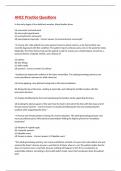
NREMT Practice EXAM 2025 QUESTIONS AND CORRECT ANSWER
Which of the following is not part of the history or secondary exam?
A. form a general impression of the patient
B. take the patient's history
C. conduct a physical exam
D. take baseline vitals - answer>>>A
In which age is capillary refill most useful?
A. infants only
B. patients less than six years of age
C. patients greater than six years of age
D. all ages - answer>>>B
You are assessing a conscious patient complaining of chest pain. Which mnemonic will assist
you in assessing the patient's current chief complaint?
A. DCAP-BTLS
B. SAMPLE
C. OPQRST
D. ABC - answer>>>C
The patient you are treating has white, waxy skin on both hands. The patient's hands feel as if
they're frozen. They are swollen and you notice that blisters are forming. Which of the
following would you not want to do in caring for the patient.
A. rub the hands
B. remove any jewelry
C. cover the hands with dry sterile dressings
D. leave blisters intact - answer>>>A
Which of the following is a late sign of shock?
,A. hypotension
B. tachycardia
C. cyanosis
D. anxiety - answer>>>A
You should never approach a helicopter from the:
A. front
B. rear
C. left
D. right - answer>>>B
EMTs should wear high-efficiency particulate air (HEPA) respirators when they are in contact
with patients who would have which of the following?
A. HIV
B. TB
C. open wounds
D. hepatitis B - answer>>>B
You are called to assist a 60-year-old female who consists of a severe headache. Upon entering
the home, you smell a strong odor of natural gas. What is your first action?
A. check the patient's airway, breathing and circulation
B. insert a nasopharyngeal airway and assess vital signs
C. remove the patient from the house to your ambulance
D. open all the windows and determine the source of the gas leak - answer>>>C
The most common electrical rhythm disturbance that results in sudden cardiac arrest is called:
A. pulseless electrical activity
B. ventricular fibrillation
C. ventricular tachycardia
,D. asystole - answer>>>B
Which of the following is the highest priority patient?
A. 57 year old male with chest pain and systolic blood pressure of 80
B. 40 year old female with moderate pain from a leg injury
C. 75 year old male who appears confused but responds to commands
D. 25 year old female in labor with contractions six minutes apart - answer>>>A
Of the following, which body fluid has the most potential to transmit blood-borne diseases?
A. nasal discharge
B. vomitus
C. amniotic fluid
D. feces - answer>>>C
Your patient is an 11-month-old female. How can you determine if she was decreased mental
status and is responsive to verbal stimuli?
A. she will be upset when you take her from her mother's arms
B. she will be unable to tell you how old she is if you ask her
C. she will attempt to locate her parents' voices when they speak
D. she will try to pull away from a painful stimulus on her toe - answer>>>C
What is the best method to assess circulation in an infant?
A. palpate the carotid pulse
B. palpate the brachial pulse
C. palpate the radial pulse
D. observe capillary refill time - answer>>>B
A 45 year old male is experiencing chest discomfort. After placing him in his position of comfort,
your next action should be to
, A. ventilate the patient with a nonrebreather mask at 15L/min
B. ventilate the patient with the bag-valve-mask at 15L/min
C. administer oxygen by nonrebreather mask at 15L/min
D. administer oxygen by the nasal cannula at 6L/min - answer>>>C
Which patient should receive a rapid trauma survey to determine hidden injuries?
A. alert 2-year-old child in car seat who was in a medium-speed crash
B. alert 20-year-old male who fell ten feet and is complaining of leg pain
C. alert 65-year-old female who fell in the bathtub and is complaining of wrist pain
D. alert 11-year-old who tripped while roller-skating and fell down three steps - answer>>>A
After arriving at the hospital you notice blood on your stretcher. The most appropriate way to
disinfect the stretcher is a(n)
A. 1:10 ratio of bleach to water solution
B. 1:100 ratio of bleach to water solution
C. 1:1000 ratio of bleach to water solution
D. straight bleach solution - answer>>>A
In which of the following situations may an EMT-B place their hands in a patient's vagina?
A. there is never an incident that allows this
B. a breech birth
C. to examine the vagina
D. to relieve pressure on a prolapsed cord - answer>>>D
Which of the following is NOT a risk for a stroke?
A. previous TIA
B. diabetes
C. hypervolemia
D. hypertension - answer>>>C
Which of the following is not part of the history or secondary exam?
A. form a general impression of the patient
B. take the patient's history
C. conduct a physical exam
D. take baseline vitals - answer>>>A
In which age is capillary refill most useful?
A. infants only
B. patients less than six years of age
C. patients greater than six years of age
D. all ages - answer>>>B
You are assessing a conscious patient complaining of chest pain. Which mnemonic will assist
you in assessing the patient's current chief complaint?
A. DCAP-BTLS
B. SAMPLE
C. OPQRST
D. ABC - answer>>>C
The patient you are treating has white, waxy skin on both hands. The patient's hands feel as if
they're frozen. They are swollen and you notice that blisters are forming. Which of the
following would you not want to do in caring for the patient.
A. rub the hands
B. remove any jewelry
C. cover the hands with dry sterile dressings
D. leave blisters intact - answer>>>A
Which of the following is a late sign of shock?
,A. hypotension
B. tachycardia
C. cyanosis
D. anxiety - answer>>>A
You should never approach a helicopter from the:
A. front
B. rear
C. left
D. right - answer>>>B
EMTs should wear high-efficiency particulate air (HEPA) respirators when they are in contact
with patients who would have which of the following?
A. HIV
B. TB
C. open wounds
D. hepatitis B - answer>>>B
You are called to assist a 60-year-old female who consists of a severe headache. Upon entering
the home, you smell a strong odor of natural gas. What is your first action?
A. check the patient's airway, breathing and circulation
B. insert a nasopharyngeal airway and assess vital signs
C. remove the patient from the house to your ambulance
D. open all the windows and determine the source of the gas leak - answer>>>C
The most common electrical rhythm disturbance that results in sudden cardiac arrest is called:
A. pulseless electrical activity
B. ventricular fibrillation
C. ventricular tachycardia
,D. asystole - answer>>>B
Which of the following is the highest priority patient?
A. 57 year old male with chest pain and systolic blood pressure of 80
B. 40 year old female with moderate pain from a leg injury
C. 75 year old male who appears confused but responds to commands
D. 25 year old female in labor with contractions six minutes apart - answer>>>A
Of the following, which body fluid has the most potential to transmit blood-borne diseases?
A. nasal discharge
B. vomitus
C. amniotic fluid
D. feces - answer>>>C
Your patient is an 11-month-old female. How can you determine if she was decreased mental
status and is responsive to verbal stimuli?
A. she will be upset when you take her from her mother's arms
B. she will be unable to tell you how old she is if you ask her
C. she will attempt to locate her parents' voices when they speak
D. she will try to pull away from a painful stimulus on her toe - answer>>>C
What is the best method to assess circulation in an infant?
A. palpate the carotid pulse
B. palpate the brachial pulse
C. palpate the radial pulse
D. observe capillary refill time - answer>>>B
A 45 year old male is experiencing chest discomfort. After placing him in his position of comfort,
your next action should be to
, A. ventilate the patient with a nonrebreather mask at 15L/min
B. ventilate the patient with the bag-valve-mask at 15L/min
C. administer oxygen by nonrebreather mask at 15L/min
D. administer oxygen by the nasal cannula at 6L/min - answer>>>C
Which patient should receive a rapid trauma survey to determine hidden injuries?
A. alert 2-year-old child in car seat who was in a medium-speed crash
B. alert 20-year-old male who fell ten feet and is complaining of leg pain
C. alert 65-year-old female who fell in the bathtub and is complaining of wrist pain
D. alert 11-year-old who tripped while roller-skating and fell down three steps - answer>>>A
After arriving at the hospital you notice blood on your stretcher. The most appropriate way to
disinfect the stretcher is a(n)
A. 1:10 ratio of bleach to water solution
B. 1:100 ratio of bleach to water solution
C. 1:1000 ratio of bleach to water solution
D. straight bleach solution - answer>>>A
In which of the following situations may an EMT-B place their hands in a patient's vagina?
A. there is never an incident that allows this
B. a breech birth
C. to examine the vagina
D. to relieve pressure on a prolapsed cord - answer>>>D
Which of the following is NOT a risk for a stroke?
A. previous TIA
B. diabetes
C. hypervolemia
D. hypertension - answer>>>C