Chapter 7: Sensation and Perception
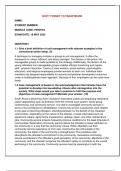
Overview of Sensory Processes
Smell Taste Pain Hearing
Anatomy and Anatomy and neutral pathways for Sound and its
physiology of smell physiology of taste pain transduction by the
ear
Differences among An evolutionary The modulation of Pitch perception
people in olfactory account of taste pain
sensitivity quality
Discriminating Making sense of
among individuals sounds
by smell
Smell as mode of
communication: do
humans produce
pheromones?
All our perceptions derive from our senses. Reaction and learning require sensory input.
Philosophers like Aristotle have concluded there would be no mental life without sensation;
what would you be able to think about with no knowledge gained from senses?
Sensory systems have evolved in all animals for the purpose of guiding their
behaviour. To survive and reproduce, they must react to the world in which they live. Sensory
systems did not evolve to provide full, objective accounts of the world’s physical properties.
Rather, they evolved to provide specific kinds of information to the animal to help it survive
and reproduce.
Sensation refers to the basic processes by which sensory organs and the nervous
system respond to stimuli in the environment and to the elementary physiological
experiences that result from those processes (e.g. bitterness of a taste, loudness of sound).
Perception refers to the more complex organising of sensory information within the
brain and to the meaningful interpretations extracted from it (e.g. my alarm clock is ringing,
that object is an apple).
The study of perception is more closely tied to the study of thought and memory than
is the study of sensation. The distinction is fuzzy because the organising of stimulus
information in ways useful for extracting meaning actually begins during the earliest steps in
taking that information in.
1. Overview of sensory processes
Q: how can the process of sensation be described as a chain of three different kinds of
events?
Physical stimulus → physiological response → sensory experience
(1) The physical stimulus is the matter of energy of the physical world that impinges on
sense organs; (2) the physiological response is the pattern of chemical and electrical
activity that occurs in sense organs, nerves, and the brain as a result of the stimulus; and (3)
,the sensory experience is the subjective, psychological sensation or perception - the taste,
sound, or sight, for instance - experienced by the individual whose sense organs have been
stimulated.
The sensory experience generally tells us something about the physical stimulus, but
it is a very different thing from the physical stimulus. Sensory psychologists are interested in
identifying lawful relationships among the three classes of events.
Examples
- Molecules of caffeine on the tongue let us experience a bitter taste. The bitterness is
not a chemical property of the caffeine molecules; it exists only in the sensory
experience triggered by the molecules
- Electromagnetic energy of a certain wavelength enters our eyes and we experience
the colour red. The redness is not a property of electromagnetic energy, but only
exists in our sensory experience
General principles that apply to all sensory systems
Sense Stimulus Receptors Pathways to the
brain
Smell Molecules dissolved Sensitive ends of Olfactory nerves
in fluid on mucous olfactory neurons in (1st cranial nerve)
membranes in the the olfactory
nose epithelium in the
nose
Taste Molecules dissolved Taste cells in taste Portions of facial,
in fluid on the buds on the tongue glossopharyngeal,
tongue and vagus nerves
(7th, 9th, and 10th
cranial nerves)
Touch Pressure on the skin Sensitive ends of Trigeminal nerve
touch neurons on (5th cranial nerve for
the skin touch above the
neck; spinal nerves
for pain elsewhere)
Pain Wide variety of Sensitive ends of Trigeminal nerve
potentially harmful pain neurons in skin (5th cranial nerve for
stimuli and other tissues pain above the
neck; spinal nerves
for pain elsewhere)
Hearing Sound waves Pressure-sensitive Auditory nerve (2nd
hair cells in cochlea cranial nerve)
of inner ear
Vision Light waves Light-sensitive rods Optic nerve (2nd
and cones in retina cranial nerve)
of eye
, ● Each sensory system has distinct receptors and neural pathways
People speak of five senses (smell, taste, touch, hearing, vision). Humans have more, and
any attempt to tally them up into an exact number is arbitrary. For example, the skin is
sensitive to touch, temperature, and pain. Each sense has distinct sensory receptors and
neural pathways to and within the brain.
Sensory receptors are specialised structures that respond to physical stimuli by
producing electrical changes that can initiate neural impulses in sensory neurons. Sensory
neurons are specialised neurons that carry information from sensory receptors into the
central nervous system. The neurons for any given sense lead to pathways in the central
nervous system that are unique to that sense. Pathways send messages to different parts of
the brain, including specific sensory areas of the cerebral cortex.
● Sensory receptors generate action potentials through a process of transduction
Q: in general, how do physical stimuli produce action potentials in sensory neurons?
Transduction is the process by which a receptor cell produces an electrical change in
response to physical stimulus. The membrane of the receptor cell becomes more permeable
to certain electrically charged particles when the appropriate type of stimulus energy acts on
the receptor cell. These charged particles then flow through the membrane and change the
electrical charge across the membrane. The electrical change is called the receptor
potential.
● Sensory systems preserve information about stimulus quantity and quality
For senses to be useful they need to preserve relevant information about the physical stimuli
to which they are responding. This preservation of information is called sensory coding.
Quantitative variation has to do with the amount of intensity of energy (a sound or light can
be weak or strong). Qualitative variation has to do with the precise kind of energy (lights of
different wavelengths that are perceived as different colours are considered to be
qualitatively different).
Q: in general, how do sensory systems code information about the amount and kind
of stimulus energy?
Coding of stimulus quantity results from the fact that stronger stimuli produce larger receptor
potentials, which produce faster rates of action potentials in sensory neurons. The brain
interprets a fast rate of action potentials as a strong stimulus and a slow rate as a weak
Overview of Sensory Processes
Smell Taste Pain Hearing
Anatomy and Anatomy and neutral pathways for Sound and its
physiology of smell physiology of taste pain transduction by the
ear
Differences among An evolutionary The modulation of Pitch perception
people in olfactory account of taste pain
sensitivity quality
Discriminating Making sense of
among individuals sounds
by smell
Smell as mode of
communication: do
humans produce
pheromones?
All our perceptions derive from our senses. Reaction and learning require sensory input.
Philosophers like Aristotle have concluded there would be no mental life without sensation;
what would you be able to think about with no knowledge gained from senses?
Sensory systems have evolved in all animals for the purpose of guiding their
behaviour. To survive and reproduce, they must react to the world in which they live. Sensory
systems did not evolve to provide full, objective accounts of the world’s physical properties.
Rather, they evolved to provide specific kinds of information to the animal to help it survive
and reproduce.
Sensation refers to the basic processes by which sensory organs and the nervous
system respond to stimuli in the environment and to the elementary physiological
experiences that result from those processes (e.g. bitterness of a taste, loudness of sound).
Perception refers to the more complex organising of sensory information within the
brain and to the meaningful interpretations extracted from it (e.g. my alarm clock is ringing,
that object is an apple).
The study of perception is more closely tied to the study of thought and memory than
is the study of sensation. The distinction is fuzzy because the organising of stimulus
information in ways useful for extracting meaning actually begins during the earliest steps in
taking that information in.
1. Overview of sensory processes
Q: how can the process of sensation be described as a chain of three different kinds of
events?
Physical stimulus → physiological response → sensory experience
(1) The physical stimulus is the matter of energy of the physical world that impinges on
sense organs; (2) the physiological response is the pattern of chemical and electrical
activity that occurs in sense organs, nerves, and the brain as a result of the stimulus; and (3)
,the sensory experience is the subjective, psychological sensation or perception - the taste,
sound, or sight, for instance - experienced by the individual whose sense organs have been
stimulated.
The sensory experience generally tells us something about the physical stimulus, but
it is a very different thing from the physical stimulus. Sensory psychologists are interested in
identifying lawful relationships among the three classes of events.
Examples
- Molecules of caffeine on the tongue let us experience a bitter taste. The bitterness is
not a chemical property of the caffeine molecules; it exists only in the sensory
experience triggered by the molecules
- Electromagnetic energy of a certain wavelength enters our eyes and we experience
the colour red. The redness is not a property of electromagnetic energy, but only
exists in our sensory experience
General principles that apply to all sensory systems
Sense Stimulus Receptors Pathways to the
brain
Smell Molecules dissolved Sensitive ends of Olfactory nerves
in fluid on mucous olfactory neurons in (1st cranial nerve)
membranes in the the olfactory
nose epithelium in the
nose
Taste Molecules dissolved Taste cells in taste Portions of facial,
in fluid on the buds on the tongue glossopharyngeal,
tongue and vagus nerves
(7th, 9th, and 10th
cranial nerves)
Touch Pressure on the skin Sensitive ends of Trigeminal nerve
touch neurons on (5th cranial nerve for
the skin touch above the
neck; spinal nerves
for pain elsewhere)
Pain Wide variety of Sensitive ends of Trigeminal nerve
potentially harmful pain neurons in skin (5th cranial nerve for
stimuli and other tissues pain above the
neck; spinal nerves
for pain elsewhere)
Hearing Sound waves Pressure-sensitive Auditory nerve (2nd
hair cells in cochlea cranial nerve)
of inner ear
Vision Light waves Light-sensitive rods Optic nerve (2nd
and cones in retina cranial nerve)
of eye
, ● Each sensory system has distinct receptors and neural pathways
People speak of five senses (smell, taste, touch, hearing, vision). Humans have more, and
any attempt to tally them up into an exact number is arbitrary. For example, the skin is
sensitive to touch, temperature, and pain. Each sense has distinct sensory receptors and
neural pathways to and within the brain.
Sensory receptors are specialised structures that respond to physical stimuli by
producing electrical changes that can initiate neural impulses in sensory neurons. Sensory
neurons are specialised neurons that carry information from sensory receptors into the
central nervous system. The neurons for any given sense lead to pathways in the central
nervous system that are unique to that sense. Pathways send messages to different parts of
the brain, including specific sensory areas of the cerebral cortex.
● Sensory receptors generate action potentials through a process of transduction
Q: in general, how do physical stimuli produce action potentials in sensory neurons?
Transduction is the process by which a receptor cell produces an electrical change in
response to physical stimulus. The membrane of the receptor cell becomes more permeable
to certain electrically charged particles when the appropriate type of stimulus energy acts on
the receptor cell. These charged particles then flow through the membrane and change the
electrical charge across the membrane. The electrical change is called the receptor
potential.
● Sensory systems preserve information about stimulus quantity and quality
For senses to be useful they need to preserve relevant information about the physical stimuli
to which they are responding. This preservation of information is called sensory coding.
Quantitative variation has to do with the amount of intensity of energy (a sound or light can
be weak or strong). Qualitative variation has to do with the precise kind of energy (lights of
different wavelengths that are perceived as different colours are considered to be
qualitatively different).
Q: in general, how do sensory systems code information about the amount and kind
of stimulus energy?
Coding of stimulus quantity results from the fact that stronger stimuli produce larger receptor
potentials, which produce faster rates of action potentials in sensory neurons. The brain
interprets a fast rate of action potentials as a strong stimulus and a slow rate as a weak