NURS 6501 ADVANCED
PATHOPHYSIOLOGY
MIDTERM ALL 150
QUESTIONS AND
CORRECT ANSWERS
LATEST EXAM/ NURS6501
MIDTERM EXAM LATEST
2024
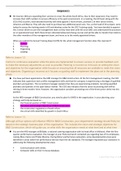
1. A patient presents with a history of chronic obstructive pulmonary disease (COPD).
Which pathophysiological mechanism is primarily responsible for the airflow limitation in
COPD?
● A) Bronchoconstriction
● B) Mucus hypersecretion
● C) Alveolar wall destruction
● D) Airway remodeling
Answer: C) Alveolar wall destruction
2. Which of the following genetic mutations is most commonly associated with cystic
fibrosis?
, ● A) CFTR gene mutation
● B) BRCA1 gene mutation
● C) APC gene mutation
● D) MYH7 gene mutation
Answer: A) CFTR gene mutation
3. In type 1 diabetes mellitus, what is the primary mechanism leading to hyperglycemia?
● A) Increased insulin resistance
● B) Autoimmune destruction of beta cells
● C) Excessive hepatic glucose production
● D) Increased glucagon secretion
Answer: B) Autoimmune destruction of beta cells
4. Which electrolyte imbalance is most commonly associated with metabolic acidosis?
● A) Hypokalemia
● B) Hyperkalemia
● C) Hyponatremia
● D) Hypernatremia
Answer: B) Hyperkalemia
5. A patient with chronic kidney disease (CKD) presents with anemia. Which of the
following is the most likely cause of anemia in CKD?
● A) Iron deficiency
● B) Hemolysis
● C) Erythropoietin deficiency
● D) Blood loss
Answer: C) Erythropoietin deficiency
6. In the context of heart failure, what is the role of natriuretic peptides?
● A) Promote sodium retention
● B) Cause vasoconstriction
● C) Promote diuresis and vasodilation
● D) Increase aldosterone secretion
Answer: C) Promote diuresis and vasodilation
PATHOPHYSIOLOGY
MIDTERM ALL 150
QUESTIONS AND
CORRECT ANSWERS
LATEST EXAM/ NURS6501
MIDTERM EXAM LATEST
2024
1. A patient presents with a history of chronic obstructive pulmonary disease (COPD).
Which pathophysiological mechanism is primarily responsible for the airflow limitation in
COPD?
● A) Bronchoconstriction
● B) Mucus hypersecretion
● C) Alveolar wall destruction
● D) Airway remodeling
Answer: C) Alveolar wall destruction
2. Which of the following genetic mutations is most commonly associated with cystic
fibrosis?
, ● A) CFTR gene mutation
● B) BRCA1 gene mutation
● C) APC gene mutation
● D) MYH7 gene mutation
Answer: A) CFTR gene mutation
3. In type 1 diabetes mellitus, what is the primary mechanism leading to hyperglycemia?
● A) Increased insulin resistance
● B) Autoimmune destruction of beta cells
● C) Excessive hepatic glucose production
● D) Increased glucagon secretion
Answer: B) Autoimmune destruction of beta cells
4. Which electrolyte imbalance is most commonly associated with metabolic acidosis?
● A) Hypokalemia
● B) Hyperkalemia
● C) Hyponatremia
● D) Hypernatremia
Answer: B) Hyperkalemia
5. A patient with chronic kidney disease (CKD) presents with anemia. Which of the
following is the most likely cause of anemia in CKD?
● A) Iron deficiency
● B) Hemolysis
● C) Erythropoietin deficiency
● D) Blood loss
Answer: C) Erythropoietin deficiency
6. In the context of heart failure, what is the role of natriuretic peptides?
● A) Promote sodium retention
● B) Cause vasoconstriction
● C) Promote diuresis and vasodilation
● D) Increase aldosterone secretion
Answer: C) Promote diuresis and vasodilation