NURSING NUR 254 EXAM 4 STUDY MATERIAL [GRADED A+] QUESTION AND WELL
DETAILED ANSWERS
Pharmacology
1. Question: What is the primary purpose of administering antihypertensive medications?
o Answer: The primary purpose of administering antihypertensive medications is to
lower blood pressure in patients with hypertension, reducing the risk of
complications such as stroke, heart attack, and kidney damage.
2. Question: What should a nurse monitor when a patient is prescribed a new
anticoagulant?
o Answer: The nurse should monitor for signs of bleeding, check the patient’s INR
(International Normalized Ratio) or other relevant coagulation tests, and observe
for any adverse reactions or interactions with other medications.
3. Question: What is the significance of the half-life of a medication?
o Answer: The half-life of a medication indicates the time it takes for the
concentration of the drug in the bloodstream to reduce by half. It helps determine
the dosing interval and how long a medication will remain effective in the body.
Pathophysiology
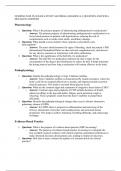
1. Question: Explain the pathophysiology of type 2 diabetes mellitus.
o Answer: Type 2 diabetes mellitus is characterized by insulin resistance, where the
body's cells do not respond effectively to insulin, and impaired insulin secretion
from the pancreas. This leads to elevated blood glucose levels.
2. Question: What are the common signs and symptoms of congestive heart failure (CHF)?
o Answer: Common signs and symptoms of CHF include shortness of breath,
edema (swelling) in the legs and ankles, fatigue, and a persistent cough or
wheezing. These symptoms result from the heart’s inability to pump blood
efficiently.
3. Question: Describe the pathophysiological changes that occur in chronic obstructive
pulmonary disease (COPD).
o Answer: In COPD, there is progressive inflammation and narrowing of the
airways, destruction of alveolar walls (emphysema), and increased mucus
production. This leads to airflow limitation, breathing difficulty, and reduced gas
exchange.
Evidence-Based Practice
1. Question: What is the purpose of evidence-based practice (EBP) in nursing?
o Answer: The purpose of evidence-based practice in nursing is to integrate the
best available research evidence with clinical expertise and patient preferences to
make informed decisions about patient care, leading to improved outcomes.
2. Question: How does a nurse evaluate the quality of a research article for clinical
practice?
DETAILED ANSWERS
Pharmacology
1. Question: What is the primary purpose of administering antihypertensive medications?
o Answer: The primary purpose of administering antihypertensive medications is to
lower blood pressure in patients with hypertension, reducing the risk of
complications such as stroke, heart attack, and kidney damage.
2. Question: What should a nurse monitor when a patient is prescribed a new
anticoagulant?
o Answer: The nurse should monitor for signs of bleeding, check the patient’s INR
(International Normalized Ratio) or other relevant coagulation tests, and observe
for any adverse reactions or interactions with other medications.
3. Question: What is the significance of the half-life of a medication?
o Answer: The half-life of a medication indicates the time it takes for the
concentration of the drug in the bloodstream to reduce by half. It helps determine
the dosing interval and how long a medication will remain effective in the body.
Pathophysiology
1. Question: Explain the pathophysiology of type 2 diabetes mellitus.
o Answer: Type 2 diabetes mellitus is characterized by insulin resistance, where the
body's cells do not respond effectively to insulin, and impaired insulin secretion
from the pancreas. This leads to elevated blood glucose levels.
2. Question: What are the common signs and symptoms of congestive heart failure (CHF)?
o Answer: Common signs and symptoms of CHF include shortness of breath,
edema (swelling) in the legs and ankles, fatigue, and a persistent cough or
wheezing. These symptoms result from the heart’s inability to pump blood
efficiently.
3. Question: Describe the pathophysiological changes that occur in chronic obstructive
pulmonary disease (COPD).
o Answer: In COPD, there is progressive inflammation and narrowing of the
airways, destruction of alveolar walls (emphysema), and increased mucus
production. This leads to airflow limitation, breathing difficulty, and reduced gas
exchange.
Evidence-Based Practice
1. Question: What is the purpose of evidence-based practice (EBP) in nursing?
o Answer: The purpose of evidence-based practice in nursing is to integrate the
best available research evidence with clinical expertise and patient preferences to
make informed decisions about patient care, leading to improved outcomes.
2. Question: How does a nurse evaluate the quality of a research article for clinical
practice?