NUR 308 EAQ Pain Management. (PRE-TEST)
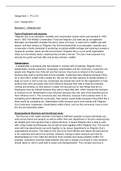
NUR 308 EAQ Pain Management. (PRE-TEST) Pre-Test 1. The nurse is caring for a hospitalized patient whose home medications include daily acetaminophen for headaches. Which associated assessment finding should the nurse report to the healthcare provider immediately? A. Pain level of 4/10 B. Urinary output 75 mL/hr C. Dyspepsia D. Dark urine 2. Which of these outcomes would be most appropriate to establish for a patient who is being treated for post-operative pain following an open abdominal procedure? Select all that apply. A. Patient reports pain level of 2/10 on 0–10 scale. B. Patient’s blood pressure is 162/81 mm Hg. C. Patient monitor displays sinus tachycardia. D. Patient will be free from pain during hospitalization. E. Oxygen saturation remains above 94% on room air. 3. The nurse should include which questions when assessing a patient’s pain following a fractured ankle injury? Select all that apply. A. Intensity B. Onset C. How much weight he is able to bear D. Location E. What makes it better or worse 4. A patient has undergone knee replacement surgery. The nurse should perform which priority assessment after the patient has received an intravenous dose of hydromorphone for pain? A. Assess respiratory rate B. Auscultate lung sounds C. Re-assess pain D. Check surgical wound 5. An older adult has suffered a stroke and exhibits expressive aphasia. When assessing for pain, which tool is best for the nurse to utilize with this patient? A. Numerical scale B. FACES scale C. Wong-Baker Faces D. Verbal scale Activity You are responsible for providing care to Mr. Jones, a 58-year-old salesman who was admitted to the surgical unit for a left total knee replacement surgery. Mr. Jones is 12 hours post-op. During shift report, the assigned nurse shares the following information with you: • Pain rating of an 8 of 10 during initial assessment • Prescribed pain medication (morphine) administered per order • Post-medication administration assessment revealed pain rated at 5 of 10. 1. Patient was restless most of the overnight. You enter Mr. Jones’ room to complete a shift assessment. Which is your priority action? A. Palpating a radial pulse B. Monitoring blood pressure C. Conducting a pain assessment D. Inspecting the surgical incision ANS: Pain assessment and management is your priority based on the information shared during the shift assessment, which portrays the concern that the patient’s pain has not been controlled with morphine alone. The American Pain Society champions this relatively straightforward way to improve pain management, since inclusion of a pain assessment when assessing vital signs (blood pressure, pulse, and respirations) gives the pain assessment clinical priority. 2. Which tool should you use to assess Mr. Jones’ current level of pain? A. FACES pain scale B. FLACC pain scale C. Numerical pain scale D. Neonatal infant pain scale ANS: A numerical pain scale allows the patient to rate current level of pain on a scale of 1 to 10. This unidimensional measurement is designed to assess treatment response to both pharmacologic and non-pharmacologic interventions for many forms of acute pain, including burns, postoperative pain, and chronic non-cancer pain. Evidence suggests that this unidimensional scale may be less effective as a measure of chronic pain or of mixed acute and chronic pain. The FACES scale is more appropriate for a pediatric patient. The FLACC pain scale is more appropriate when assessing pain for an infant patient. The neonatal infant pain scale, referred to as NIPS, is designed for a neonate. 3. Which questions should you ask Mr. Jones in order to conduct a focused pain assessment? Select all that apply. A. “When did your pain begin?” B. “Can you describe your pain for me?” C. “Are there any activities that make your pain worse?” D. “When was the last time you received pain medication?” E. "Can you trace your pain for me?" ANS: OPQRST-AAA is a useful mnemonic the nurse can use to evaluate pain symptoms, with each letter representing an i
Written for
- Institution
- NUR 308
- Course
- NUR 308
Document information
- Uploaded on
- May 27, 2024
- Number of pages
- 7
- Written in
- 2023/2024
- Type
- Exam (elaborations)
- Contains
- Questions & answers
Subjects
-
nur 308 eaq pain management pre test pre tes