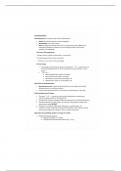
Phases of Matter
The role of molecular forces
In all phases, intramolecular forces (chemical bonding forces are the same) influence
chemical properties
Intermolecular forces: the electrostatic forces between molecules/particles and kinetic
energy are responsible for physical properties of the phase/phase changes
Kinetic-Molecular view
Phase depends on:
o Ep, potential energy of intermolecular forces
q1 x q2
Attraction according to Coulomb’s law: E ∝
distance
o Ek, kinetic energy E ∝ average particle speed E ∝ T (abs. temp)
Macroscopic properties of phases
State Shape/volume Compressibility Ability to flow
Gas Conforms to shape High High
and volume of
container
Liquid Conforms to shape of Very low Moderate
container, volume
limited by surface
Solid Maintains its own Almost none Almost none
fixed shape
Ideal gas Real gas Liquid Solid
Molecules act n2 a Molecules stick to one Molecules pack
independently (P+ )(V- another closely together, often
V2
PV=nRT nb)=nRT Radial dist. function crystalline
Periodic function
Intermolecular interactions increases
Kinetic energy increases
Phase Changes
Determined by intermolecular forces and kinetic energy.
An increase in Ek allows particles to overcome attractive intermolecular forces and vice versa
Enthalpy changes occur with phase change
Enthalpy: A thermodynamics quantity that is the sum of the internal energy plus the product
of the pressure and volume
Gas to liquid Condensation/liquefaction dew
Liquid to gas vaporisation Boiling water steam
Gas to solid deposition frost
Solid to gas sublimation Evaporation of CO2
Liquid to solid Freezing Water ice
,Solid to liquid Melting/fusion Ice water
Quantitative Aspects of Phase Changes
Within a phase, heat flow is accompanied by a change temperature, since the average Ek of
the particles changes.
q=(amount) x (heat capacity) x ∆ T =n csubstance, phase ∆ T
During a phase change, heat flow occurs at constant temperatures as the average distance
between particles changes.
q=n x ∆ H of phase change
Water cooling curve
1. Gas cools: As T decr, Ek
decr, molecular speed
decr and
intermolecular
attractions become
more important.
2. Gas condenses:
Molecules aggregate
into droplets, then
bulk into liquid. T and
Ek remain constant.
3. Liquid cools: T decr, Ek
decr, molecular speed
decr.
q= n x c(g) x ∆ T
q= n x (- ∆ H ° vap )
q=n x c(l) x ∆ T
4. Liquid freezes: At freezing T, intermolecular attractions overcome molecular motion and
molecules freeze into crystal structure. During freezing, T and average Ek remain
constant
5. Solid cools: Molecules can only vibrate in place. Further cooling reduces the average
speed of this vibration.
q= n x (- ∆ H ° fus )
q= n x c(l) x ∆ T
, q for sum of stages 1-5= Hess’s Law
Vapour Pressure
vapour pressure: the pressure exerted by the vapour on the liquid
The pressure increases until eqm. Is reached: at eqm. pressure is constant
Rate vap > Rate cond At eqm: Rate vap=Rate cond
Liquid-Gas Equilibria
In a closed system, phase changes are usually reversible.
The system reaches a state of dynamic equilibrium, where molecules are leaving and
entering the liquid at the same rate.
Some fast moving liquid molecules escape into gas phase.
These gas molecules exert pressure on the liquid surface.
The pressure increases as more molecules enter gas phase.
Some gas molecules collide with the surface and stick to it, re-entering the liquid phase.
Eventually, rate of molecules evaporating equals rate of molecules condensing.
Temp and Intermolecular interactions affect Vapour Pressure
As temperature increases, the fraction of molecules with enough energy to enter the vapour
phase increases and the vapour pressure increases: T incr. P incr.
The weaker the intermolecular forces, the more easily particles enter the vapour phase, and
higher the vapour pressure: IMFs decr. P incr.
The Effect of temperature on the distribution of molecular speeds
Vapour pressure increases as temperature increases.
Intermolecular interactions affect Vapour Pressure
Vapour pressure decreases as the strength of IMFs increases.
Vapour pressure is characteristic for each substance.
Average Ek at specific T is the SAME for all substances.
However, the stronger the IMFs the more energy is required to overcome them and less
molecules leave the liquid, hence vapour pressure decreases.
Clausius-Clapeyron Equation
Relates vapour pressure and temperature.
The non-linear P vs T relation can be expressed linearly as lnP vs 1/T
Straight line form:
1
T
)+C
−∆ Hvap
lnP= ¿
R
−∆ Hvap
Where: slope= (can be used to calculate heat of vaporisation from slope)
R
A steeper slope indicates a larger ∆ Hvap and indicates stronger IMFs
When the vapour pressures at two different temperatures are known, use the 2 point form:
The role of molecular forces
In all phases, intramolecular forces (chemical bonding forces are the same) influence
chemical properties
Intermolecular forces: the electrostatic forces between molecules/particles and kinetic
energy are responsible for physical properties of the phase/phase changes
Kinetic-Molecular view
Phase depends on:
o Ep, potential energy of intermolecular forces
q1 x q2
Attraction according to Coulomb’s law: E ∝
distance
o Ek, kinetic energy E ∝ average particle speed E ∝ T (abs. temp)
Macroscopic properties of phases
State Shape/volume Compressibility Ability to flow
Gas Conforms to shape High High
and volume of
container
Liquid Conforms to shape of Very low Moderate
container, volume
limited by surface
Solid Maintains its own Almost none Almost none
fixed shape
Ideal gas Real gas Liquid Solid
Molecules act n2 a Molecules stick to one Molecules pack
independently (P+ )(V- another closely together, often
V2
PV=nRT nb)=nRT Radial dist. function crystalline
Periodic function
Intermolecular interactions increases
Kinetic energy increases
Phase Changes
Determined by intermolecular forces and kinetic energy.
An increase in Ek allows particles to overcome attractive intermolecular forces and vice versa
Enthalpy changes occur with phase change
Enthalpy: A thermodynamics quantity that is the sum of the internal energy plus the product
of the pressure and volume
Gas to liquid Condensation/liquefaction dew
Liquid to gas vaporisation Boiling water steam
Gas to solid deposition frost
Solid to gas sublimation Evaporation of CO2
Liquid to solid Freezing Water ice
,Solid to liquid Melting/fusion Ice water
Quantitative Aspects of Phase Changes
Within a phase, heat flow is accompanied by a change temperature, since the average Ek of
the particles changes.
q=(amount) x (heat capacity) x ∆ T =n csubstance, phase ∆ T
During a phase change, heat flow occurs at constant temperatures as the average distance
between particles changes.
q=n x ∆ H of phase change
Water cooling curve
1. Gas cools: As T decr, Ek
decr, molecular speed
decr and
intermolecular
attractions become
more important.
2. Gas condenses:
Molecules aggregate
into droplets, then
bulk into liquid. T and
Ek remain constant.
3. Liquid cools: T decr, Ek
decr, molecular speed
decr.
q= n x c(g) x ∆ T
q= n x (- ∆ H ° vap )
q=n x c(l) x ∆ T
4. Liquid freezes: At freezing T, intermolecular attractions overcome molecular motion and
molecules freeze into crystal structure. During freezing, T and average Ek remain
constant
5. Solid cools: Molecules can only vibrate in place. Further cooling reduces the average
speed of this vibration.
q= n x (- ∆ H ° fus )
q= n x c(l) x ∆ T
, q for sum of stages 1-5= Hess’s Law
Vapour Pressure
vapour pressure: the pressure exerted by the vapour on the liquid
The pressure increases until eqm. Is reached: at eqm. pressure is constant
Rate vap > Rate cond At eqm: Rate vap=Rate cond
Liquid-Gas Equilibria
In a closed system, phase changes are usually reversible.
The system reaches a state of dynamic equilibrium, where molecules are leaving and
entering the liquid at the same rate.
Some fast moving liquid molecules escape into gas phase.
These gas molecules exert pressure on the liquid surface.
The pressure increases as more molecules enter gas phase.
Some gas molecules collide with the surface and stick to it, re-entering the liquid phase.
Eventually, rate of molecules evaporating equals rate of molecules condensing.
Temp and Intermolecular interactions affect Vapour Pressure
As temperature increases, the fraction of molecules with enough energy to enter the vapour
phase increases and the vapour pressure increases: T incr. P incr.
The weaker the intermolecular forces, the more easily particles enter the vapour phase, and
higher the vapour pressure: IMFs decr. P incr.
The Effect of temperature on the distribution of molecular speeds
Vapour pressure increases as temperature increases.
Intermolecular interactions affect Vapour Pressure
Vapour pressure decreases as the strength of IMFs increases.
Vapour pressure is characteristic for each substance.
Average Ek at specific T is the SAME for all substances.
However, the stronger the IMFs the more energy is required to overcome them and less
molecules leave the liquid, hence vapour pressure decreases.
Clausius-Clapeyron Equation
Relates vapour pressure and temperature.
The non-linear P vs T relation can be expressed linearly as lnP vs 1/T
Straight line form:
1
T
)+C
−∆ Hvap
lnP= ¿
R
−∆ Hvap
Where: slope= (can be used to calculate heat of vaporisation from slope)
R
A steeper slope indicates a larger ∆ Hvap and indicates stronger IMFs
When the vapour pressures at two different temperatures are known, use the 2 point form: