CALCULUS
LIMITS
Consider the function:
𝑥 % + 4𝑥 − 12
𝑦=
𝑥+6
The numerator of the function can be factorised as:
(𝑥 + 6)(𝑥 − 2)
𝑦=
𝑥+6
∴ 𝑦 = 𝑥−2
However, we are only able to cancel the 𝑥 + 6 term if 𝑥 ≠ −6 . If 𝑥 = 6, then the
denominator becomes 0 and the function is not defined. This means that the
domain of the function does not include 𝑥 = 6. But we can examine what
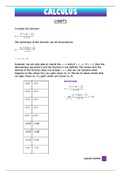
happens to the values for y as x gets closer to 6. The list of values shows that
as x gets closer to 6, y gets closer and closer to 8.
NOTATION:
𝑥 % + 4𝑥 − 12
𝑦=
𝑥+6
(𝑥 + 6)(𝑥 − 2)
∴ lim = −8
3→56 𝑥+6
SASHTI NOTES 1
LIMITS
Consider the function:
𝑥 % + 4𝑥 − 12
𝑦=
𝑥+6
The numerator of the function can be factorised as:
(𝑥 + 6)(𝑥 − 2)
𝑦=
𝑥+6
∴ 𝑦 = 𝑥−2
However, we are only able to cancel the 𝑥 + 6 term if 𝑥 ≠ −6 . If 𝑥 = 6, then the
denominator becomes 0 and the function is not defined. This means that the
domain of the function does not include 𝑥 = 6. But we can examine what
happens to the values for y as x gets closer to 6. The list of values shows that
as x gets closer to 6, y gets closer and closer to 8.
NOTATION:
𝑥 % + 4𝑥 − 12
𝑦=
𝑥+6
(𝑥 + 6)(𝑥 − 2)
∴ lim = −8
3→56 𝑥+6
SASHTI NOTES 1