roach's introductory clinical pharmacology 11th edition TESTBANK
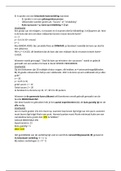
roach's introductory clinical pharmacology 11th edition TESTBANK Answers corrected verified by chris jay Page 1 roach's introductory clinical pharmacology 11th edition TESTBANK 1. A nursing instructor is preparing a teaching plan for a group of nursing students about pharmacology. When describing this topic, the instructor would focus the discussion on which of the following as an essential aspect? A) Drug name B) Drug class C) Drug action D) Drug source Ans: C Feedback: Pharmacology is the study of drugs and their action on living organisms. Thus, an essential aspect of pharmacology is drug action. An understanding of the drug name, drug class, and drug source is important, but the most critical aspect related to pharmacology is how the drug acts in the body. 2. A nursing student is preparing to administer a prescribed drug to a patient. The student reviews information about the drug and its actions. Which of the following would be the best choice for obtaining this information? Select all that apply. A) Nursing instructor B) Nurse assigned to the patient C) Clinical drug reference D) Prescribing health care provider E) Clinical pharmacist Ans: C, E Feedback: Although the nursing student can ask the nursing instructor, the nurse assigned to the patient, and the prescribing health care provider for information about the drug, the best choices for drug information would include an appropriate drug reference and the clinical pharmacist. 3. When describing the various types of medications to a group of nursing students, a nursing instructor would identify which of the following as a source for deriving medications? Select all that apply. A) Plants B) Synthetic sources C) Mold D) Minerals E) Animals Ans: A, B, C, D, E Feedback: Medications are derived from natural sources, for example, plants, molds, minerals, and animals, as well as created synthetically in a laboratory. Answers corrected verified by chris jay Page 2 4. Which of the following names may be assigned to a drug during the process of development? Select all that apply. A) Chemical name B) Official name C) Pharmacologic name D) Trade name E) Nonproprietary name Ans: A, B, D, E Feedback: Throughout the process of development, drugs may have several names assigned to them including a chemical name, a generic (nonproprietary) name, an official name, and a trade or brand name. 5. A drug may be classified by which of the following? Select all that apply. A) The chemical type of the drug's active ingredient B) The way the drug is used to treat a specific condition C) The generic name of the drug D) The trade name of the drug E) The nonproprietary name of the drug Ans: A, B Feedback: A drug may be classified by the chemical type of the active ingredient or by the way it is used to treat a particular condition. Generic, trade, and nonproprietary refer to how a drug is named. 6. A group of nursing students are reviewing information about the process of drug development in the United States. The students demonstrate understanding of this process when they identify that which of the following categories are assigned by the Food and Drug Administration to newly approved drugs? Select all that apply. A) Metabolite B) Noncontrolled substance C) Prescription D) Nonprescription E) Controlled substance Ans: C, D, E Feedback: Once drugs are approved for use, the FDA assigns the drug to one of the following categories: prescription, nonprescription, or controlled substance. Metabolite refers to the inactive form of the drug. Noncontrolled substance is a term that is not used. Answers corrected verified by chris jay Page 3 7. Which of the following would be most important for the nurse to do to ensure the safe use of prescription drugs in the institutional setting? Select all that apply. A) Administering drugs B) Monitoring clients for drug effects C) Prescribing drugs D) Evaluating clients for toxic effects E) Educating clients/caregivers about drugs Ans: A, B, D, E Feedback: In the institutional setting, the nurse's role to ensure safe use of prescription drugs includes administering drugs, monitoring drug effects, evaluating for toxic effects, and educating clients and caregivers about drugs. 8. The nurse is helping a client review a prescription from the health care provider. When examining the prescription, which of the following would the nurse expect to find documented? Select all that apply. A) Name of the drug B) Dosage of the drug C) Route of drug administration D) Times of drug administration E) Licensed prescriber's signature Ans: A, B, C, D, E Feedback: The prescription must contain the client's name, the name of the drug, the dosage, the method and times of administration, and the signature of the licensed health care provider prescribing the drug. 9. After teaching a group of nursing students about nonprescription drugs, the nursing instructor determines that the teaching was successful when the students identify which of the following? Select all that apply. A) They require a licensed health care provider's signature. B) They are referred to as over-the-counter drugs. C) They can be taken without risk to the client. D) They have certain labeling requirements. E) They should be taken only as directed on the label. Ans: B, D, E Feedback: Nonprescription drugs are often referred to as over-the-counter (OTC) drugs. They do not require a prescription (a licensed health care provider's signature) but do not come without risk to the client. The federal government has imposed labeling requirements of OTC drugs and they should only be taken as directed on the label unless under the supervision of a health care provider
Written for
- Institution
- Roach\'s introductory clinical pharmacology 11th e
- Course
- Roach\'s introductory clinical pharmacology 11th e
Document information
- Uploaded on
- December 15, 2023
- Number of pages
- 607
- Written in
- 2023/2024
- Type
- Exam (elaborations)
- Contains
- Questions & answers
Subjects
-
roachs introductory clinical pharmacology 11th e
-
roachs introductory clinical pharmacology
-
roachs introductory clinical