Fast
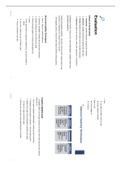
Can often be done in one (1) day
Fewer “testers” involved
Evaluation Easy to use
Can be taught in
Genres of Assessment
2-4 hours
1. Automated: Usability measures computed by software
2. Empirical: Usability assessed by testing with real users
3. Formal: Models and formulas used to calculate measures
4. Inspection: Based on heuristics, skills, and experience of evaluators
Quantitative Testing: Costly due to: user compensation, usability expert hours,
specialised equipment
Traditional Qualitative Methods: Take lots of time but don’t always lead to clear
outcomes or implications for design. Hard to do well.
→ Ethnography (years), transcrive and analyse (weeks), training (years).
Discount Usability Techniques
How is “discount” usability different? Cognitive Walkthrough
Scenarios, Simplified Thinking Aloud, Heuristic Evaluation → Complete tasks/ run through scenarios and have them think aloud as they interact
Simpler methods are more likely to be used with your UI.
→ Key to good cognitive walkthrough is setting up good scenarios:
Pareto principle applies to research participants too!
Prototype around specific scenarios – not the whole system
Cheap
Reduce the scope of the evaluation to specific use cases
No special labs or equipment needed (e.g. use notes instead of
video) Easy to create and throw away
The more careful you are, the better it gets But the user must stick to the planned path or it breaks!
Focus on benefit-to-cost ratio
Evaluation 1 Evaluation 2
Can often be done in one (1) day
Fewer “testers” involved
Evaluation Easy to use
Can be taught in
Genres of Assessment
2-4 hours
1. Automated: Usability measures computed by software
2. Empirical: Usability assessed by testing with real users
3. Formal: Models and formulas used to calculate measures
4. Inspection: Based on heuristics, skills, and experience of evaluators
Quantitative Testing: Costly due to: user compensation, usability expert hours,
specialised equipment
Traditional Qualitative Methods: Take lots of time but don’t always lead to clear
outcomes or implications for design. Hard to do well.
→ Ethnography (years), transcrive and analyse (weeks), training (years).
Discount Usability Techniques
How is “discount” usability different? Cognitive Walkthrough
Scenarios, Simplified Thinking Aloud, Heuristic Evaluation → Complete tasks/ run through scenarios and have them think aloud as they interact
Simpler methods are more likely to be used with your UI.
→ Key to good cognitive walkthrough is setting up good scenarios:
Pareto principle applies to research participants too!
Prototype around specific scenarios – not the whole system
Cheap
Reduce the scope of the evaluation to specific use cases
No special labs or equipment needed (e.g. use notes instead of
video) Easy to create and throw away
The more careful you are, the better it gets But the user must stick to the planned path or it breaks!
Focus on benefit-to-cost ratio
Evaluation 1 Evaluation 2