4. False affordance: Perceive it but cant actually do the action.
Things that impact it: Physical impairments, OS changes (ie IOS user trying to use
Android), backgrounds (assumptions from previous knowledge that some might not
Everyday Design have (ie, someone living in a jungle)).
Affordances
Affordances are the potential actions and interactions that the environment offers.
Determines how we design everyday things
Affordance is a relationship between a person and a physical or digital object.
Perceived affordances of an object are those properties of the object which give
users clues as to how the device is used
Visual affordance: What the user can see. ie, buttons have a visual affordance of
being pressed. Works by using familiar idioms and metaphors.
Discoverability feedback: Can discover how it works by looking at it (visual
affordance). Feedback is confirmation to the user that you did it corrector or wrong Perceived Affordance
(discoverability).
Helps understand how the user interacts with the design, and how to improve it.
Easter eggs in applications: affordances that are hidden (can’t see that you can do Function over Form
something).
→ Don’t take this too far
Types of Affordances
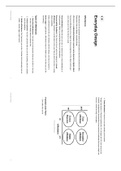
1. Perceived affordances: You look at it and assume what you do with it. And you
can do it. We ideally want to achieve this.
2. Correct rejection: You don’t perceive that you can do anything, and you actually
can’t do anything.
3. hidden affordance: Don’t perceive you an do it but has the functionality, but not
visible. (easter eggs, expert users)
Everyday Design 1 Everyday Design 2
Things that impact it: Physical impairments, OS changes (ie IOS user trying to use
Android), backgrounds (assumptions from previous knowledge that some might not
Everyday Design have (ie, someone living in a jungle)).
Affordances
Affordances are the potential actions and interactions that the environment offers.
Determines how we design everyday things
Affordance is a relationship between a person and a physical or digital object.
Perceived affordances of an object are those properties of the object which give
users clues as to how the device is used
Visual affordance: What the user can see. ie, buttons have a visual affordance of
being pressed. Works by using familiar idioms and metaphors.
Discoverability feedback: Can discover how it works by looking at it (visual
affordance). Feedback is confirmation to the user that you did it corrector or wrong Perceived Affordance
(discoverability).
Helps understand how the user interacts with the design, and how to improve it.
Easter eggs in applications: affordances that are hidden (can’t see that you can do Function over Form
something).
→ Don’t take this too far
Types of Affordances
1. Perceived affordances: You look at it and assume what you do with it. And you
can do it. We ideally want to achieve this.
2. Correct rejection: You don’t perceive that you can do anything, and you actually
can’t do anything.
3. hidden affordance: Don’t perceive you an do it but has the functionality, but not
visible. (easter eggs, expert users)
Everyday Design 1 Everyday Design 2