SANJANA VINOD
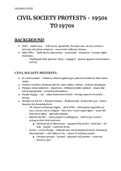
CIVIL SOCIETY PROTESTS - 1950s
TO 1970s
BACKGROUND
● WW2 - ended 1945 - still issues: apartheid, Vietnam war, racism, sexism +
increase of nuclear weapons - concerned ordinary citizens.
● After WW2 - ‘baby boom’ generation - concerned - injustices + human rights
violations.
○ Challenged their parents’ ideas + engaged - protest against conventional
society.
CIVIL SOCIETY PROTESTS:
● It’s action taken - ordinary citizens against gov policies/situations that seems
unfair.
● Protest: marches, demonstrations, mass rallies, strikes + protest campaigns.
● Purpose: draw attention - injustices + influence public opinion - issues like
racial segregation + racial discrimination.
● People engage - csp - make themselves heard + change aspects of society -
wrong.
● Societies in the US + Western Europe - disillusioned- democratic gov -1960s.
Reasons for dissatisfaction:
○ UN Charter of Human Rights - after WW2 - all humans regardless of
race, colour, sex or religion - born free + have equal rights - some felt
that their rights - ignored/violated.
○ Marked decline - 1960s people’s willingness - believe gov in west -
acting in their best interests.
■ Institutions of democracy - supported by police + local gov - no
link - people - voted for them.
○ Desire - social change - Vietnam war, environmental issues, feminism,
disarmament + civil rights of AA - issues of ordinary people.
■ Pressure groups - formed + adopted civil protest - concerns
across to gov
, SANJANA VINOD
WOMEN’S LIBERATION & FEMINIST
MOVEMENTS - 1960s TO 1970s
TRADITIONAL ROLE OF WOMEN IN 1950S:
● During WW2 - women in USA + Britain - important jobs + high wages - men
fighting in war.
○ After war - men + women - expected - return to traditional roles
○ Women - male-dominated society - viewed them - mothers +
housewives.
● Women whi did have jobs - restricted - pink-collar jobs: waitress, teacher,
nurse, salesperson or secretary.
○ Very few women - upper levels of business, management or politics.
WOMEN’S LIBERATION MOVEMENT:
● Role of women - change after WW2 - more women - uni + joined workforce.
○ Dissatisfied - conservative view of women - stay home + raise a family.
● Middle class women - ind countries - Britain + USA - formed groups - fight -
rights.
○ Their protest - women’s liberation movement
○ Purpose of it:
■ Recognise - woman’s dignity + worth
■ Enable women - enjoy equal rights with men - workplace
■ Allow women - more control - lives
● WLM - not single org - consisted of many groups - similar aim: end
discrimination against women - all aspects.
● Start of WLM - coincided - manufacturing - birth control pills
○ Oral contraceptive- women decide - have children + avoid unwanted
pregnancies.
WOMEN’S LIBERATION MOVEMENT - USA 1960s:
● Most active feminist groups - National Org of Women (NOW) - founded by
Betty Friedan.
● Tackled issues:
CIVIL SOCIETY PROTESTS - 1950s
TO 1970s
BACKGROUND
● WW2 - ended 1945 - still issues: apartheid, Vietnam war, racism, sexism +
increase of nuclear weapons - concerned ordinary citizens.
● After WW2 - ‘baby boom’ generation - concerned - injustices + human rights
violations.
○ Challenged their parents’ ideas + engaged - protest against conventional
society.
CIVIL SOCIETY PROTESTS:
● It’s action taken - ordinary citizens against gov policies/situations that seems
unfair.
● Protest: marches, demonstrations, mass rallies, strikes + protest campaigns.
● Purpose: draw attention - injustices + influence public opinion - issues like
racial segregation + racial discrimination.
● People engage - csp - make themselves heard + change aspects of society -
wrong.
● Societies in the US + Western Europe - disillusioned- democratic gov -1960s.
Reasons for dissatisfaction:
○ UN Charter of Human Rights - after WW2 - all humans regardless of
race, colour, sex or religion - born free + have equal rights - some felt
that their rights - ignored/violated.
○ Marked decline - 1960s people’s willingness - believe gov in west -
acting in their best interests.
■ Institutions of democracy - supported by police + local gov - no
link - people - voted for them.
○ Desire - social change - Vietnam war, environmental issues, feminism,
disarmament + civil rights of AA - issues of ordinary people.
■ Pressure groups - formed + adopted civil protest - concerns
across to gov
, SANJANA VINOD
WOMEN’S LIBERATION & FEMINIST
MOVEMENTS - 1960s TO 1970s
TRADITIONAL ROLE OF WOMEN IN 1950S:
● During WW2 - women in USA + Britain - important jobs + high wages - men
fighting in war.
○ After war - men + women - expected - return to traditional roles
○ Women - male-dominated society - viewed them - mothers +
housewives.
● Women whi did have jobs - restricted - pink-collar jobs: waitress, teacher,
nurse, salesperson or secretary.
○ Very few women - upper levels of business, management or politics.
WOMEN’S LIBERATION MOVEMENT:
● Role of women - change after WW2 - more women - uni + joined workforce.
○ Dissatisfied - conservative view of women - stay home + raise a family.
● Middle class women - ind countries - Britain + USA - formed groups - fight -
rights.
○ Their protest - women’s liberation movement
○ Purpose of it:
■ Recognise - woman’s dignity + worth
■ Enable women - enjoy equal rights with men - workplace
■ Allow women - more control - lives
● WLM - not single org - consisted of many groups - similar aim: end
discrimination against women - all aspects.
● Start of WLM - coincided - manufacturing - birth control pills
○ Oral contraceptive- women decide - have children + avoid unwanted
pregnancies.
WOMEN’S LIBERATION MOVEMENT - USA 1960s:
● Most active feminist groups - National Org of Women (NOW) - founded by
Betty Friedan.
● Tackled issues: