Chapter 2
Protein targets for drug binding: Receptors, enzymes, carrier molecules (transporters), ion channels.
Many drugs bind to plasma proteins and other tissue proteins, without producing any obvious
physiological effect.
Drug receptors
When a compound binds to a receptor, a train of reactions is initiated, leading to an effect. But there
are also receptors that are constitutively active, that is, they exert a controlling influence even when
no chemical mediator is present.
Agonist activate receptor
Antagonist combine at the same site without causing activating, and block the effect of agonists on
that receptor.
Drug specificity
No drug acts with complete specificity. The lower the potency of a drug and the higher the dose
needed, the more likely it is that sites of action other than the primary one will assume significance.
Drug receptor interactions
IF a drug binds to the receptor without causing activation and thereby prevents the agonist from
binding, it is termed a receptor antagonist.
Affinity tendency of a drug to bind to the
receptor.
Efficacy tendency to switch the receptor into
its active conformation.
Partial agonists drugs with intermediate level
of efficacy, that even when 100% of the receptors
are occupied the tissue response is submaximal.
Full agonists efficacy of which is sufficient that they can elicit a maximal tissue response.
Binding of drugs to receptors.
Binding of drugs can be
measured by the use of
drug molecules labeled
with one or more
radioactive atoms.
Binding curve defines
the relationship between
concentration and the
amount of drug bound,
and in most cases it fits
well to the relationship
predicted theoretically.
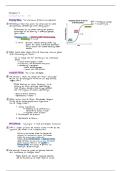
,A concentration-effect curve allows us to estimate the maximal response/effect that the drug can
produce and the concentration or dose needed to produce a 50% maximal response (EC50).
Competitive antagonism
In the presence of a competitive antagonist, the agonist occupancy
(proportion of receptors to which the agonist is bound) at a given
agonist concentration is reduced, because the receptor can usually
accommodate only one molecule at a time. Raising the agonist
occupancy can restore the concentration.
Dose ratio (R) ratio by which the agonist concentration has to be
increased in the presence of the antagonist in order to restore a
given level of response.
Features of competitive antagonisms:
- A shift of the agonist log concentration-effect curve to the
right, without change of slope or maximum.
- Linear relationship between agonist dose ratio and antagonist concentration
- Evidence of competition from binding studies.
The characteristics of reversible competitive antagonism described previously reflect the fact that
agonist and competitive antagonist molecules do not stay bound to the receptor but dissociate and
rebind continuously. The rate of dissociation of the antagonist molecules is sufficiently high that a
new equilibrium is rapidly established on addition of the agonist.
Irreversible competitive antagonism
The agonist binds to the same site on the receptor as the agonist, but dissociates very slowly, or not
at all, from the receptor, with the result that no change in the antagonist occupancy takes place when
the agonist is applied.
Irreversibly competitive antagonism occurs with drugs that possess reactive groups that form
covalent bonds with the receptor.
Partial agonists and efficacy
Full agonists can produce a maximal response (the largest response that the tissue is capable of
giving)
Partial agonists can produce only a submaximal response.
Efficacy is composed of drug-dependent and tissue-dependent components.
- Intrinsic efficacy drug-dependent, the ability of the agonist drug molecule, once bound, to
activate the receptor protein.
- Tissue-dependent the number of receptors that it expresses and the efficiency of coupling
of receptor activation to the measured tissue response.
, Partial agonists as antagonists
The presence of the partial agonist
induces some level of response
dependent upon the concentration
initially applied, but in addition
because the partial agonist is
competing with the full agonist for
the receptors, it effectively acts as a
competitive antagonist, shifting the
concentration-response curve of the
full agonist to the right.
Constitutive receptor
activation and inverse
agonists
Inverse agonists a
ligand that reduces
activity below the basal
level of constitutive
activation.
Neutral antagonists
do not by themselves
affect the level of activation.
Biased agonism
Receptors have more than one inactive and active
conformation. The different conformations may be
preferentially stabilized by different ligands, and may
produce different functional effects by activating different signal transduction pathways.
Receptors that couple to second messenger systems can couple
to more than one intracellular effector pathway, giving rise to
two or more simultaneous responses.
Different agonists can exhibit bias for the generation of one
response over another even though they are acting through the
same receptor.
Allosteric modulation
Agonist binding site orthosteric binding site
Receptor proteins posses many other allosteric binding sites, through which drugs can influence
receptor function in various ways, by increasing or decreasing the affinity of agonists for the agonist
binding site, by modifying efficacy or by producing a response themselves.
Bitopic agonists
Some agonists may display a combination of orthostatic and allosteric actions at the same receptor,
providing direct agonist and modulatory functions. Termed as bitopic agonists.
Protein targets for drug binding: Receptors, enzymes, carrier molecules (transporters), ion channels.
Many drugs bind to plasma proteins and other tissue proteins, without producing any obvious
physiological effect.
Drug receptors
When a compound binds to a receptor, a train of reactions is initiated, leading to an effect. But there
are also receptors that are constitutively active, that is, they exert a controlling influence even when
no chemical mediator is present.
Agonist activate receptor
Antagonist combine at the same site without causing activating, and block the effect of agonists on
that receptor.
Drug specificity
No drug acts with complete specificity. The lower the potency of a drug and the higher the dose
needed, the more likely it is that sites of action other than the primary one will assume significance.
Drug receptor interactions
IF a drug binds to the receptor without causing activation and thereby prevents the agonist from
binding, it is termed a receptor antagonist.
Affinity tendency of a drug to bind to the
receptor.
Efficacy tendency to switch the receptor into
its active conformation.
Partial agonists drugs with intermediate level
of efficacy, that even when 100% of the receptors
are occupied the tissue response is submaximal.
Full agonists efficacy of which is sufficient that they can elicit a maximal tissue response.
Binding of drugs to receptors.
Binding of drugs can be
measured by the use of
drug molecules labeled
with one or more
radioactive atoms.
Binding curve defines
the relationship between
concentration and the
amount of drug bound,
and in most cases it fits
well to the relationship
predicted theoretically.
,A concentration-effect curve allows us to estimate the maximal response/effect that the drug can
produce and the concentration or dose needed to produce a 50% maximal response (EC50).
Competitive antagonism
In the presence of a competitive antagonist, the agonist occupancy
(proportion of receptors to which the agonist is bound) at a given
agonist concentration is reduced, because the receptor can usually
accommodate only one molecule at a time. Raising the agonist
occupancy can restore the concentration.
Dose ratio (R) ratio by which the agonist concentration has to be
increased in the presence of the antagonist in order to restore a
given level of response.
Features of competitive antagonisms:
- A shift of the agonist log concentration-effect curve to the
right, without change of slope or maximum.
- Linear relationship between agonist dose ratio and antagonist concentration
- Evidence of competition from binding studies.
The characteristics of reversible competitive antagonism described previously reflect the fact that
agonist and competitive antagonist molecules do not stay bound to the receptor but dissociate and
rebind continuously. The rate of dissociation of the antagonist molecules is sufficiently high that a
new equilibrium is rapidly established on addition of the agonist.
Irreversible competitive antagonism
The agonist binds to the same site on the receptor as the agonist, but dissociates very slowly, or not
at all, from the receptor, with the result that no change in the antagonist occupancy takes place when
the agonist is applied.
Irreversibly competitive antagonism occurs with drugs that possess reactive groups that form
covalent bonds with the receptor.
Partial agonists and efficacy
Full agonists can produce a maximal response (the largest response that the tissue is capable of
giving)
Partial agonists can produce only a submaximal response.
Efficacy is composed of drug-dependent and tissue-dependent components.
- Intrinsic efficacy drug-dependent, the ability of the agonist drug molecule, once bound, to
activate the receptor protein.
- Tissue-dependent the number of receptors that it expresses and the efficiency of coupling
of receptor activation to the measured tissue response.
, Partial agonists as antagonists
The presence of the partial agonist
induces some level of response
dependent upon the concentration
initially applied, but in addition
because the partial agonist is
competing with the full agonist for
the receptors, it effectively acts as a
competitive antagonist, shifting the
concentration-response curve of the
full agonist to the right.
Constitutive receptor
activation and inverse
agonists
Inverse agonists a
ligand that reduces
activity below the basal
level of constitutive
activation.
Neutral antagonists
do not by themselves
affect the level of activation.
Biased agonism
Receptors have more than one inactive and active
conformation. The different conformations may be
preferentially stabilized by different ligands, and may
produce different functional effects by activating different signal transduction pathways.
Receptors that couple to second messenger systems can couple
to more than one intracellular effector pathway, giving rise to
two or more simultaneous responses.
Different agonists can exhibit bias for the generation of one
response over another even though they are acting through the
same receptor.
Allosteric modulation
Agonist binding site orthosteric binding site
Receptor proteins posses many other allosteric binding sites, through which drugs can influence
receptor function in various ways, by increasing or decreasing the affinity of agonists for the agonist
binding site, by modifying efficacy or by producing a response themselves.
Bitopic agonists
Some agonists may display a combination of orthostatic and allosteric actions at the same receptor,
providing direct agonist and modulatory functions. Termed as bitopic agonists.