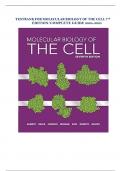
TESTBANK FOR MOLECULAR BIOLOGY OF THE CELL 7TH
EDITION/COMPLETE GUIDE 2024-2025
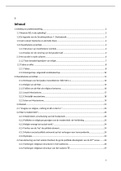
,Contents
CHAPTER 1 :CELLS, GENOMES ,AND DIVERSITY OF LIFE .......................................................................................................... 3
CHAPTER 2: CELL CHEMISTRY AND BIOENERGETICS ............................................................................................................... 22
CHAPTER 2: CELL CHEMISTRY AND BIOENERGETICS ........................................................................................................... 51
CHAPTER 3: PROTEINS ................................................................................................................................................................................. 89
CHAPTER 4: DNA, CHROMOSOMES, AND GENOMES ............................................................................................................. 126
CHAPTER 5: DNA REPLICATION, REPAIR, AND RECOMBINATION ...................................................................................... 158
CHAPTER 6: HOW CELLS READ THE GENOME: FROM DNA TO PROTEIN....................................................................... 181
Chapter 7: CONTROL OF GENE EXPRESSION.................................................................................................................................... 209
CHAPTER 8: ANALYZING CELL, MOLECULES AND SYSTEMS............................................................................................... 244
CHAPTER 9: VISUALIZING CELLS.......................................................................................................................................................... 270
CHAPTER 10 MEMBRANE STRUCTURE ............................................................................................................................................. 287
CHAPTER 11 MEMBRANE TRANSPORT OF SMALL MOLECULES AND THE ELECTRICAL PROPERTIES OF
MEMBRANES .................................................................................................................................................................................................... 301
CHAPTER 12 INTRACELLULAR COMPARTMENTS AND PROTEIN SORTING ............................................................... 326
CHAPTER 13 INTRACELLULAR MEMBRANE TRAFFIC............................................................................................................. 351
CHAPTER 14: ENERGY CONVERSION: MITOCHONDRIA AND CHLOROPLASTS........................................................... 377
CHAPTER 16: THE CYTOSKELETON ..................................................................................................................................................... 441
CHAPTER 17: THE CELL CYCLE .............................................................................................................................................................. 479
CHAPTER 19: CELL JUNCTIONS AND THE EXTRACELLULAR MATRIX ...................................................................... 509
CHAPTER 20: STEM CELLS AND TISSUE RENEWAL..................................................................................................................... 538
, CHAPTER 1 :CELLS, GENOMES ,AND DIVERSITY OF LIFE
1.1 Scientists discover more than ten thousand new species of living organismsevery
year. What is shared between all of these organisms?
A. They are made of cells, whose nuclei enclose their DNA.
B. They obtain their energy from sunlight.
C. They produce and use adenosine triphosphate (ATP).
D. Their genome contains at least 1000 genes.
E. All of the above.
2.2. All cells …
A. have membrane transport proteins.
B. synthesize proteins on the ribosome.
C. replicate their genome by DNA polymerization.
D. transcribe their genetic information by RNA polymerization.
E. All of the above.
7.3. Imagine a segment of DNA (within a gene) encoding a certain amount of
information in its nucleotide sequence. When this segment is fully transcribed
intomRNA and then translated into protein, in general, …
A. the protein sequence would carry more information compared to the DNA and
mRNAsequences, because its alphabet has 20 letters.
B. the protein sequence would carry less information compared to the DNA and
mRNAsequences, because several codons can correspond to one amino acid.
C. the amount of information in the mRNA sequence is lower, because the mRNA
hasbeen transcribed using only one of the DNA strands as the template.
D. the amount of information in the mRNA sequence is higher, because several
mRNAmolecules can be transcribed from one DNA molecule.
8.4. Which of the following processes that happens inside a cell DOES NOT
, normally require consumption of free energy by the cell?
A. Replication of the genetic material
B. Import of nutrients from the environment
C. Diffusion of small molecules within the cell
D. Regulation of gene expression
E. Synthesis of enzymes that catalyze cellular reactions
9.5. Which of the following would you NOT expect to find in a bacterial cell?
A. Swimming using flagella
B. Having a cell wall around the plasma membrane
C. ATP production in mitochondria
D. Protein production on the ribosome
E. Sexual exchange of DNA with other bacteria
10.6. To trace family relationships between distantly related organisms such as
humans, algae, bacteria, and archaea, one should compare their genomes in regions
…
A. that evolve rapidly.
B. that have a higher mutation rate.
C. that code for proteins.
D. where mutations are hardly tolerated.
E. where most mutations are selectively neutral.
10.7. Laboratory strains of the model organism Escherichia coli that are resistant
toantibiotics are very often used in research laboratories as well as in the biotechnology
industry. If cultures of such bacteria were allowed to contaminate the environment
uncontrollably, it is possible that at some point, pathogenic bacteria such as Neisseria
meningitidis (which causes meningitis and can cause death, especially in children) could
acquire the same antibiotic-resistance gene, causing a meningitis outbreak that is difficult to
treat. In this scenario, which of the following
EDITION/COMPLETE GUIDE 2024-2025
,Contents
CHAPTER 1 :CELLS, GENOMES ,AND DIVERSITY OF LIFE .......................................................................................................... 3
CHAPTER 2: CELL CHEMISTRY AND BIOENERGETICS ............................................................................................................... 22
CHAPTER 2: CELL CHEMISTRY AND BIOENERGETICS ........................................................................................................... 51
CHAPTER 3: PROTEINS ................................................................................................................................................................................. 89
CHAPTER 4: DNA, CHROMOSOMES, AND GENOMES ............................................................................................................. 126
CHAPTER 5: DNA REPLICATION, REPAIR, AND RECOMBINATION ...................................................................................... 158
CHAPTER 6: HOW CELLS READ THE GENOME: FROM DNA TO PROTEIN....................................................................... 181
Chapter 7: CONTROL OF GENE EXPRESSION.................................................................................................................................... 209
CHAPTER 8: ANALYZING CELL, MOLECULES AND SYSTEMS............................................................................................... 244
CHAPTER 9: VISUALIZING CELLS.......................................................................................................................................................... 270
CHAPTER 10 MEMBRANE STRUCTURE ............................................................................................................................................. 287
CHAPTER 11 MEMBRANE TRANSPORT OF SMALL MOLECULES AND THE ELECTRICAL PROPERTIES OF
MEMBRANES .................................................................................................................................................................................................... 301
CHAPTER 12 INTRACELLULAR COMPARTMENTS AND PROTEIN SORTING ............................................................... 326
CHAPTER 13 INTRACELLULAR MEMBRANE TRAFFIC............................................................................................................. 351
CHAPTER 14: ENERGY CONVERSION: MITOCHONDRIA AND CHLOROPLASTS........................................................... 377
CHAPTER 16: THE CYTOSKELETON ..................................................................................................................................................... 441
CHAPTER 17: THE CELL CYCLE .............................................................................................................................................................. 479
CHAPTER 19: CELL JUNCTIONS AND THE EXTRACELLULAR MATRIX ...................................................................... 509
CHAPTER 20: STEM CELLS AND TISSUE RENEWAL..................................................................................................................... 538
, CHAPTER 1 :CELLS, GENOMES ,AND DIVERSITY OF LIFE
1.1 Scientists discover more than ten thousand new species of living organismsevery
year. What is shared between all of these organisms?
A. They are made of cells, whose nuclei enclose their DNA.
B. They obtain their energy from sunlight.
C. They produce and use adenosine triphosphate (ATP).
D. Their genome contains at least 1000 genes.
E. All of the above.
2.2. All cells …
A. have membrane transport proteins.
B. synthesize proteins on the ribosome.
C. replicate their genome by DNA polymerization.
D. transcribe their genetic information by RNA polymerization.
E. All of the above.
7.3. Imagine a segment of DNA (within a gene) encoding a certain amount of
information in its nucleotide sequence. When this segment is fully transcribed
intomRNA and then translated into protein, in general, …
A. the protein sequence would carry more information compared to the DNA and
mRNAsequences, because its alphabet has 20 letters.
B. the protein sequence would carry less information compared to the DNA and
mRNAsequences, because several codons can correspond to one amino acid.
C. the amount of information in the mRNA sequence is lower, because the mRNA
hasbeen transcribed using only one of the DNA strands as the template.
D. the amount of information in the mRNA sequence is higher, because several
mRNAmolecules can be transcribed from one DNA molecule.
8.4. Which of the following processes that happens inside a cell DOES NOT
, normally require consumption of free energy by the cell?
A. Replication of the genetic material
B. Import of nutrients from the environment
C. Diffusion of small molecules within the cell
D. Regulation of gene expression
E. Synthesis of enzymes that catalyze cellular reactions
9.5. Which of the following would you NOT expect to find in a bacterial cell?
A. Swimming using flagella
B. Having a cell wall around the plasma membrane
C. ATP production in mitochondria
D. Protein production on the ribosome
E. Sexual exchange of DNA with other bacteria
10.6. To trace family relationships between distantly related organisms such as
humans, algae, bacteria, and archaea, one should compare their genomes in regions
…
A. that evolve rapidly.
B. that have a higher mutation rate.
C. that code for proteins.
D. where mutations are hardly tolerated.
E. where most mutations are selectively neutral.
10.7. Laboratory strains of the model organism Escherichia coli that are resistant
toantibiotics are very often used in research laboratories as well as in the biotechnology
industry. If cultures of such bacteria were allowed to contaminate the environment
uncontrollably, it is possible that at some point, pathogenic bacteria such as Neisseria
meningitidis (which causes meningitis and can cause death, especially in children) could
acquire the same antibiotic-resistance gene, causing a meningitis outbreak that is difficult to
treat. In this scenario, which of the following