
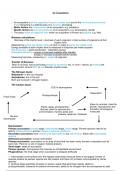
23- Ecosystems
- An ecosystem is all the organisms living in a certain area and all the non living factors found
there interacting in a de ned area. It is dynamic (changing)
- Biotic factors are living features of an ecosystem, e.g. predators
- Abiotic factors are non living features of an ecosystem, e.g. temperature, rainfall
- The place where an organism lives within an ecosystem is known as a habitat, e.g. eld
Biomass calculations:
Biomass of the trophic level = biomass of each organism x total number of organisms at that
trophic level
Measured as grams per square meter on land, in water is grams per cubed meter
Energy available at each trophic level is measured in kilojoules per meter squared
Net production = gross production - respiratory losses
Ecological e ciency = energy or biomass available after transfer
Energy or biomass available before transfer
Measuring biomass= measuring dry weight of organism.
Transfer of Biomass:
Taken in as food, lost as providing energy for movement etc, in urine + faeces, by heating the
environment. Around 90% is lost between trophic levels.
The Nitrogen Cycle:
Rhizobium- in the root nodules
Azotobacter- live in the soil
Both are involved in nitrogen xation.
The Carbon Cycle:
CO2 in atomosphere
Respiration
Photosynthesis
Fossil Fuels
Eaten by animals. Used for
Plants, algae, phytoplankton growth, reproduction and
Glucose used for reproduction formation of biological
and formation of amino acids and molecules
proteins, lipids etc. Cellulose
Die and
decompose
Succession:
Primary succession: pioneer stage, intermediate stage, climax stage. Pioneer species need to be
able to photosynthesise and be tolerant of extreme conditions.
Secondary succession: land cleared of all plant species but soil remains. Starts with intermediate
species.
De ected succession- human intervention
Primary succession- succession on an area of land that has been newly formed or exposed such as
bare rock, There is no soil or organic material present.
Seral stage- steps of succession
Pioneer species- rst species that colonise an inhospitable environment
Phagioclimax- the nal stage when succession is stopped arti cially
1- intermediate communities have the highest biodiversity because there is the largest number of
species present as pioneer species are still present and have not yet been outcompeted by climax
species.
2- produce large quantities of seeds or spores, seeds that germinate rapidly, ability to
photosynthesise, tolerance to extreme environment, ability to x nitrogen from the atmosphere so add
fl
ffi fifi fi fi fifi fi


