Formulas:
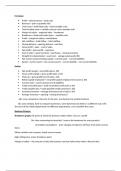
Profit = Sales/revenue - total costs
Revenue = price x quantity sold
Total costs + total fixed costs + total variable costs
Total variable costs = variable cost per unit x quantity sold
Margin of safety – expected sales – breakeven
Breakeven = fixed costs/sales price – variable costs
Profit = margin of safety x contribution
Net cashflow = total inflow – total outflow
Closing balance = opening balance + net flow
Gross profit = sales – cost of sales
Net profit = gross profit – expenses
Cost of sales = open inventory + purchases – closing inventory
Straight line depreciation = asset cost – salvage value/useful life
Net current assets/working capital = current asset – current liabilities
Equity = current asset + non-current assets – current liability – non-current liability
Ratios:
Net profit margin + net profit/sales x 100
Gross profit margin = gross profit/sales x 100
Mark up = gross profit/cost of sales x 100
ROCE (capital employed) = net profit/capital employed (net asset) x 100
Current ratio = current asset/current liabilities
Trade receivable days = trade receivable/credit sales x 365
Trade payable days = trade payable/credit purchases x 365
Inventory turnover = average inventory/cost of sales x 365
Average inventory = opening + closing inventory/2
Adv: easy comparison, this year to last year, one business to another business
Dis: uses old data, hard to compare businesses, some businesses do theirs in a different way, tells
the story of the whole department not different departments, can’t establish the cause
Business Finance:
Breakeven graph: the point at which the business makes either a loss or a profit
Dis: time consuming/not practical– have to do breakeven for every product
Unrealistic assumptions – price changes, breakeven will have to be done several
times
When variable cost increases, break even increases
High selling price, lower breakeven point
Margin of saftey – the amount of sales the business can lose before they make a financial loss
, Depreciation: spread the cost of a tangible or physical asset over its useful life
Non-current assets/fixed assets: more than one year
Straight line depreciation: adv: loses the same amount each year, quick
Dis: not accurate
Reducing balance: adv: more accurate
Dis: loses different amount each year
Current assets: less than one year
Trade receivables/debtors – customers buy on credit
Trade payables/creditors – business buy on credit
Accounting: Systematic recording, analysis and reporting of financial transactions
Fraud- when an individual acquires company’s money for personal gain through illegal action
Key areas of accounting usage:
Recording transaction
Helping the management of the business
Staying compliant with the law
Income statements: calculates whether the firm has made a profit/loss by deducting all expenses from
sales revenue
Income: money coming into the business
Revenue income – sales e.g. cars
Capital income – money coming from somewhere else/fixed assets e.g. loans
Collateral – if the business fails to meet the loan repayments the bank can claim back the assets secured
against it
Profit = Sales/revenue - total costs
Revenue = price x quantity sold
Total costs + total fixed costs + total variable costs
Total variable costs = variable cost per unit x quantity sold
Margin of safety – expected sales – breakeven
Breakeven = fixed costs/sales price – variable costs
Profit = margin of safety x contribution
Net cashflow = total inflow – total outflow
Closing balance = opening balance + net flow
Gross profit = sales – cost of sales
Net profit = gross profit – expenses
Cost of sales = open inventory + purchases – closing inventory
Straight line depreciation = asset cost – salvage value/useful life
Net current assets/working capital = current asset – current liabilities
Equity = current asset + non-current assets – current liability – non-current liability
Ratios:
Net profit margin + net profit/sales x 100
Gross profit margin = gross profit/sales x 100
Mark up = gross profit/cost of sales x 100
ROCE (capital employed) = net profit/capital employed (net asset) x 100
Current ratio = current asset/current liabilities
Trade receivable days = trade receivable/credit sales x 365
Trade payable days = trade payable/credit purchases x 365
Inventory turnover = average inventory/cost of sales x 365
Average inventory = opening + closing inventory/2
Adv: easy comparison, this year to last year, one business to another business
Dis: uses old data, hard to compare businesses, some businesses do theirs in a different way, tells
the story of the whole department not different departments, can’t establish the cause
Business Finance:
Breakeven graph: the point at which the business makes either a loss or a profit
Dis: time consuming/not practical– have to do breakeven for every product
Unrealistic assumptions – price changes, breakeven will have to be done several
times
When variable cost increases, break even increases
High selling price, lower breakeven point
Margin of saftey – the amount of sales the business can lose before they make a financial loss
, Depreciation: spread the cost of a tangible or physical asset over its useful life
Non-current assets/fixed assets: more than one year
Straight line depreciation: adv: loses the same amount each year, quick
Dis: not accurate
Reducing balance: adv: more accurate
Dis: loses different amount each year
Current assets: less than one year
Trade receivables/debtors – customers buy on credit
Trade payables/creditors – business buy on credit
Accounting: Systematic recording, analysis and reporting of financial transactions
Fraud- when an individual acquires company’s money for personal gain through illegal action
Key areas of accounting usage:
Recording transaction
Helping the management of the business
Staying compliant with the law
Income statements: calculates whether the firm has made a profit/loss by deducting all expenses from
sales revenue
Income: money coming into the business
Revenue income – sales e.g. cars
Capital income – money coming from somewhere else/fixed assets e.g. loans
Collateral – if the business fails to meet the loan repayments the bank can claim back the assets secured
against it