HRD3702 – Management of Training and Development
WORKBOOK 9: Career Management
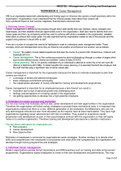
HRD is an organisation tasked with understanding and finding ways to influence the careers of staff positively within the
organisation. Organisations must understand that the choices people make about their careers will
have a profound impact on their success, happiness, financial status and loved ones.
3. Defining Career Concept
Career management is defined as the process through which staff identify their own interests, values, strengths and
weaknesses, and then establish what job opportunities exist in the organisation. Staff also need to identify their own
career goals and then, by comparing what they want to achieve with what is available in the organisation, establish
action plans to achieve their career goals. It is also important that the organisation realise its role in this process and the
support and guidance it should offer to staff.
There are a number of concepts that need to be highlighted in order to understand career management better. These
concepts, which are interdependent since they are linked to one another and influence one another, are as follows:
▪ Career: “the pattern of work-related experiences that span the course of a person’s life” (Greenhaus, Callanan and
Godshalk 2010:21).
▪ Career development: This is “the continuous process by which individuals go through a number of stages which
each involve different issues, themes and activities” (Johns & Saks 2013:43).
▪ Career planning: This is “an activity undertaken by an individual to attempt to control his or her own work life”
(Werner & DeSimone 2012:386). To obtain benefits from career planning, it is essential that both the employer and
the staff member play a significant role in his/her career plan.
Career management is important for the organisation because the failure to motivate employees to plan their
careers can result in:
▪ a shortage of skilled and talented employees
▪ lower employee commitment and loyalty
▪ the inappropriate allocation of money intended for training and development programmes.
Career management is important for an employee because a lack thereof can result in:
▪ frustration due to lack of personal growth and challenging work
▪ feelings and perceptions of not being valued in the organisation.
▪ not getting opportunities to develop into a high-potential employee.
4. Strategies for career success and motivation
It is not only money that motivates staff but also career development and new opportunities in the organisation.
Therefore the organisation will follow certain strategies to provide these motivational traits. It is important that
organisations realise that there is a new, different generation in the workplace, the Millennial‘s, who are not
only technological whizzes but also more educated, as the majority have at least matriculated. They have high
expectations regarding career advancement with lots of ambition. They expect to experience career
progression and development as part of their psychological contract with the organisation or they will easily
move on to another organisation. Therefore training and development also become a retention mechanism.
The top three motivators for employees are:
❖ Remuneration
❖ Career development
❖ New Opportunities
Motivation of employees is enhanced by organisational career strategies. Another strategy is to decide what
skills and competencies new employees must possess and what skills and competencies the organisation will
develop through training programmes and strategies.
5. Individual Career management
Modern organisations provide formal interventions and HRM practices such as training and skills enhancement
programmes. Organisations expect employees to invest in their own development and performance. This may
Page 1 of 4
WORKBOOK 9: Career Management
HRD is an organisation tasked with understanding and finding ways to influence the careers of staff positively within the
organisation. Organisations must understand that the choices people make about their careers will
have a profound impact on their success, happiness, financial status and loved ones.
3. Defining Career Concept
Career management is defined as the process through which staff identify their own interests, values, strengths and
weaknesses, and then establish what job opportunities exist in the organisation. Staff also need to identify their own
career goals and then, by comparing what they want to achieve with what is available in the organisation, establish
action plans to achieve their career goals. It is also important that the organisation realise its role in this process and the
support and guidance it should offer to staff.
There are a number of concepts that need to be highlighted in order to understand career management better. These
concepts, which are interdependent since they are linked to one another and influence one another, are as follows:
▪ Career: “the pattern of work-related experiences that span the course of a person’s life” (Greenhaus, Callanan and
Godshalk 2010:21).
▪ Career development: This is “the continuous process by which individuals go through a number of stages which
each involve different issues, themes and activities” (Johns & Saks 2013:43).
▪ Career planning: This is “an activity undertaken by an individual to attempt to control his or her own work life”
(Werner & DeSimone 2012:386). To obtain benefits from career planning, it is essential that both the employer and
the staff member play a significant role in his/her career plan.
Career management is important for the organisation because the failure to motivate employees to plan their
careers can result in:
▪ a shortage of skilled and talented employees
▪ lower employee commitment and loyalty
▪ the inappropriate allocation of money intended for training and development programmes.
Career management is important for an employee because a lack thereof can result in:
▪ frustration due to lack of personal growth and challenging work
▪ feelings and perceptions of not being valued in the organisation.
▪ not getting opportunities to develop into a high-potential employee.
4. Strategies for career success and motivation
It is not only money that motivates staff but also career development and new opportunities in the organisation.
Therefore the organisation will follow certain strategies to provide these motivational traits. It is important that
organisations realise that there is a new, different generation in the workplace, the Millennial‘s, who are not
only technological whizzes but also more educated, as the majority have at least matriculated. They have high
expectations regarding career advancement with lots of ambition. They expect to experience career
progression and development as part of their psychological contract with the organisation or they will easily
move on to another organisation. Therefore training and development also become a retention mechanism.
The top three motivators for employees are:
❖ Remuneration
❖ Career development
❖ New Opportunities
Motivation of employees is enhanced by organisational career strategies. Another strategy is to decide what
skills and competencies new employees must possess and what skills and competencies the organisation will
develop through training programmes and strategies.
5. Individual Career management
Modern organisations provide formal interventions and HRM practices such as training and skills enhancement
programmes. Organisations expect employees to invest in their own development and performance. This may
Page 1 of 4