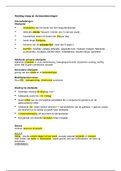
Summary The Americas 1B
Week 1...............................................................................................................................2
The Inaugural Address of Governor George C. Wallace (1963)..................................2
Martin Luther King, Jr. – I Have a Dream (1963).......................................................2
Stokely Carmichael - Black Power (1966)....................................................................2
Political Prisoners, Prisons and Black Liberation – Angela Y. Davis (1971)..............3
The Young Lords on Health and Hospitals (1970)......................................................4
Week 2...............................................................................................................................5
The Ecstatic Edge of Politics: Sociology and Donald Trump – Arlie Russel
Hochschild.....................................................................................................................5
Seale Put In Chains At Chicago 8 Trial – J. Anthony Lukas (1969)...........................6
Okie from Muskogee – Merle Haggard........................................................................7
Senator Josh Hawley – The Future of the American Man..........................................7
Free to Choose: Part 1 of 10 (The Power of the Market)..............................................7
Week 3...............................................................................................................................8
Nixon’s Class Struggle – Cowie....................................................................................8
Mother Jones – Ch. 5: Victory at Arnot.....................................................................10
Harlan County USA documentary – Barbara Kopple (1976)....................................10
Class War in Colorado – Max Eastman (1914)...........................................................11
The Delano Grape Strike – Cesar Chavez (1966).......................................................12
Week 4.............................................................................................................................12
My Fight for Birth Control – Margaret Sanger..........................................................12
The Feminine Mystique – Betty Friedan....................................................................13
Double Jeopardy: To Be Black and Female – Frances M. Beal.................................14
How ERA Would Change Federal Laws – The Phyllis Schlafly Report (1981).........16
Is My Marriage Gay? – Jennifer Finney Boylan (2009)............................................17
Lecture week 4: Feminism and Gay Liberation; Family, Work, and the
Transformation of U.S. Politics..................................................................................19
Week 5.............................................................................................................................23
60 words podcast........................................................................................................23
US demands hinder Spanish probe into alleged CIA ties to security firm that spied
on Assange – José María Irujo...................................................................................24
What I heard about Iraq – Eliot Weinberger.............................................................24
, The Campaign to Shut Down Guantánamo – Anna J. Brown (2008)......................25
The Falling Man – Tom Junod (2009)......................................................................25
Courtesy of the Red, White and Blue (The Angry American) – Toby Keith (2001).26
Lecture week 6: Pandemic and the Political Imagination.............................................27
Week 1
The Inaugural Address of Governor George C. Wallace (1963)
Starting the speech with the emphasis on how many people had voted for him. Also
emphasis on the importance of family (values). Prohibition plans. A real ‘man of the
people’. “Cradle of the Confederacy, this very Heart of the Great Anglo-Saxon
Southland … Segregation now… segregation tomorrow… segregation forever.”
Emphasis on his war past. Southern pride. He is against the growing authority of the
government. A lot of references to the founding fathers and the original idea of the
US + the Southern role in the origins of the US. The US never was meant to be a unit
of one, with freedom of religion and politics, which he uses to legitimate segregation:
“And so it was meant in our racial lives… each race, within its own framework has
the freedom to teach… to instruct.. to develop… to ask for and receive deserved help
from others of separate racial stations. … The true brotherhood of America, of
respecting the separateness of others… and uniting in effort… has been so twisted
and distorted from its original concept that there is small wonder that communism
is winning the world.” link communism-desegregation, interesting! Again: “But
we warn those, of any group, who would follow the false doctrine of communistic
amalgamation that we will not surrender our system of government… our freedom
of race and religion”. Interestingly, he calls the 14th amendment (Civil War legacy)
illegal.
Martin Luther King, Jr. – I Have a Dream (1963)
This speech helped build momentum for the Civil Rights Act of 1964, given at the
Lincoln Memorial in Washington D.C. He urges his followers to fight the Civil Rights
struggle in a dignified and disciplined manner, no physical violence. He tied his
dream to the American Dream. He also mentions the origins of the US (like Wallace),
mentioning a promissory note that every men would be guaranteed the unalienable
rights of life, liberty and the pursuit of happiness the US defaulted on this
promissory note concerning its coloured citizens.
Stokely Carmichael - Black Power (1966)
Stokely Carmichael was the chairman of the Student Non-Violent Coordinating
Committee (SNCC). He states how the institutions of the US are clearly racist, they’re
built upon racism. The SNCC does not fight for the right to integrate, but against
white supremacy. According to Carmichael, every civil rights bill in the US was
passed for white people, not for black people. Black people know their rights, whites
, do not seem to know the rights of blacks, so they need to be told by law. “We not only
condemn the country for what it has done internally, but we must condemn it for
what it does externally. We see this country trying to rule the world, and someone
must stand up and start articulating that this country is not God, and that it cannot
rule the world.”
Link with article 1 ToC: “A man was picked as a slave for one reason–the color of his
skin. Black was automatically inferior, inhuman,. And therefore fit for slavery, so
the question of whether or not we are individually suppressed is nonsensical, and
it’s a downright lie. We are oppressed as a group because we are black, not
because we are lazy or apathetic, not because we’re stupid or we stink, not because
we eat watermelon or have good rhythm. We are oppressed because we are black.”
To escape that oppression, blacks should wield the power of the group, not the
individual. White people should change the racist institutions within the white
community. White activists cannot go into black communities (Dailey). Another link
with Dailey: “The peace movement has been a failure because it hasn’t gotten off the
college campuses where everybody has a 2S and is not afraid of being drafted
anyway.”
Carmichael states that white people should organise themselves within the white
community, but will they have the courage to do that? Derogatorily talking about
Lyndon instead of President Johnson.
Double standard: when whites beat up blacks everyday, there are no talks of non-
violence. When blacks start to organize, they suddenly need to be non-violent. “Are
white people who call themselves activists ready to move into the white
communities on two counts, on building new political institutions to destroy the old
ones that we have, and to move around the concept of white youth refusing to go
into the army? If so, then we can start to build a new world.”
Political Prisoners, Prisons and Black Liberation – Angela Y. Davis
(1971)
In the CRM, black people were told to be patient, to remain faithful to the existing
democratic order. Then, there moment will come that they will be treated as human
beings. But, there’s a glaring difference between democracy and the capitalist
economy (the source of blacks’ ills). From the start, US history has been marred
[=ontsierd] by a huge quantity of unjust laws, far too many expressly solidifying black
people. These laws are reflections of existing social inequities and proof the
exploitative and racist core of the society itself. The fact that is a legal framework the
blacks are battling, gives practical implications: in resisting black oppression,
sometimes these laws had to be violated + when they stayed legal in their actions,
they were still labelled as criminals and were persecuted as such by a racist legal
apparatus.
During the slavery era, blacks and progressive whites recurrently discovered that
their commitment to the anti-slavery cause frequently meant overtly violating the
laws of the land. After the Civil War, the Black Codes codified racism. The Declaration
of Rights urged people in the 2 nd decade of the 20th century to disobey all
Week 1...............................................................................................................................2
The Inaugural Address of Governor George C. Wallace (1963)..................................2
Martin Luther King, Jr. – I Have a Dream (1963).......................................................2
Stokely Carmichael - Black Power (1966)....................................................................2
Political Prisoners, Prisons and Black Liberation – Angela Y. Davis (1971)..............3
The Young Lords on Health and Hospitals (1970)......................................................4
Week 2...............................................................................................................................5
The Ecstatic Edge of Politics: Sociology and Donald Trump – Arlie Russel
Hochschild.....................................................................................................................5
Seale Put In Chains At Chicago 8 Trial – J. Anthony Lukas (1969)...........................6
Okie from Muskogee – Merle Haggard........................................................................7
Senator Josh Hawley – The Future of the American Man..........................................7
Free to Choose: Part 1 of 10 (The Power of the Market)..............................................7
Week 3...............................................................................................................................8
Nixon’s Class Struggle – Cowie....................................................................................8
Mother Jones – Ch. 5: Victory at Arnot.....................................................................10
Harlan County USA documentary – Barbara Kopple (1976)....................................10
Class War in Colorado – Max Eastman (1914)...........................................................11
The Delano Grape Strike – Cesar Chavez (1966).......................................................12
Week 4.............................................................................................................................12
My Fight for Birth Control – Margaret Sanger..........................................................12
The Feminine Mystique – Betty Friedan....................................................................13
Double Jeopardy: To Be Black and Female – Frances M. Beal.................................14
How ERA Would Change Federal Laws – The Phyllis Schlafly Report (1981).........16
Is My Marriage Gay? – Jennifer Finney Boylan (2009)............................................17
Lecture week 4: Feminism and Gay Liberation; Family, Work, and the
Transformation of U.S. Politics..................................................................................19
Week 5.............................................................................................................................23
60 words podcast........................................................................................................23
US demands hinder Spanish probe into alleged CIA ties to security firm that spied
on Assange – José María Irujo...................................................................................24
What I heard about Iraq – Eliot Weinberger.............................................................24
, The Campaign to Shut Down Guantánamo – Anna J. Brown (2008)......................25
The Falling Man – Tom Junod (2009)......................................................................25
Courtesy of the Red, White and Blue (The Angry American) – Toby Keith (2001).26
Lecture week 6: Pandemic and the Political Imagination.............................................27
Week 1
The Inaugural Address of Governor George C. Wallace (1963)
Starting the speech with the emphasis on how many people had voted for him. Also
emphasis on the importance of family (values). Prohibition plans. A real ‘man of the
people’. “Cradle of the Confederacy, this very Heart of the Great Anglo-Saxon
Southland … Segregation now… segregation tomorrow… segregation forever.”
Emphasis on his war past. Southern pride. He is against the growing authority of the
government. A lot of references to the founding fathers and the original idea of the
US + the Southern role in the origins of the US. The US never was meant to be a unit
of one, with freedom of religion and politics, which he uses to legitimate segregation:
“And so it was meant in our racial lives… each race, within its own framework has
the freedom to teach… to instruct.. to develop… to ask for and receive deserved help
from others of separate racial stations. … The true brotherhood of America, of
respecting the separateness of others… and uniting in effort… has been so twisted
and distorted from its original concept that there is small wonder that communism
is winning the world.” link communism-desegregation, interesting! Again: “But
we warn those, of any group, who would follow the false doctrine of communistic
amalgamation that we will not surrender our system of government… our freedom
of race and religion”. Interestingly, he calls the 14th amendment (Civil War legacy)
illegal.
Martin Luther King, Jr. – I Have a Dream (1963)
This speech helped build momentum for the Civil Rights Act of 1964, given at the
Lincoln Memorial in Washington D.C. He urges his followers to fight the Civil Rights
struggle in a dignified and disciplined manner, no physical violence. He tied his
dream to the American Dream. He also mentions the origins of the US (like Wallace),
mentioning a promissory note that every men would be guaranteed the unalienable
rights of life, liberty and the pursuit of happiness the US defaulted on this
promissory note concerning its coloured citizens.
Stokely Carmichael - Black Power (1966)
Stokely Carmichael was the chairman of the Student Non-Violent Coordinating
Committee (SNCC). He states how the institutions of the US are clearly racist, they’re
built upon racism. The SNCC does not fight for the right to integrate, but against
white supremacy. According to Carmichael, every civil rights bill in the US was
passed for white people, not for black people. Black people know their rights, whites
, do not seem to know the rights of blacks, so they need to be told by law. “We not only
condemn the country for what it has done internally, but we must condemn it for
what it does externally. We see this country trying to rule the world, and someone
must stand up and start articulating that this country is not God, and that it cannot
rule the world.”
Link with article 1 ToC: “A man was picked as a slave for one reason–the color of his
skin. Black was automatically inferior, inhuman,. And therefore fit for slavery, so
the question of whether or not we are individually suppressed is nonsensical, and
it’s a downright lie. We are oppressed as a group because we are black, not
because we are lazy or apathetic, not because we’re stupid or we stink, not because
we eat watermelon or have good rhythm. We are oppressed because we are black.”
To escape that oppression, blacks should wield the power of the group, not the
individual. White people should change the racist institutions within the white
community. White activists cannot go into black communities (Dailey). Another link
with Dailey: “The peace movement has been a failure because it hasn’t gotten off the
college campuses where everybody has a 2S and is not afraid of being drafted
anyway.”
Carmichael states that white people should organise themselves within the white
community, but will they have the courage to do that? Derogatorily talking about
Lyndon instead of President Johnson.
Double standard: when whites beat up blacks everyday, there are no talks of non-
violence. When blacks start to organize, they suddenly need to be non-violent. “Are
white people who call themselves activists ready to move into the white
communities on two counts, on building new political institutions to destroy the old
ones that we have, and to move around the concept of white youth refusing to go
into the army? If so, then we can start to build a new world.”
Political Prisoners, Prisons and Black Liberation – Angela Y. Davis
(1971)
In the CRM, black people were told to be patient, to remain faithful to the existing
democratic order. Then, there moment will come that they will be treated as human
beings. But, there’s a glaring difference between democracy and the capitalist
economy (the source of blacks’ ills). From the start, US history has been marred
[=ontsierd] by a huge quantity of unjust laws, far too many expressly solidifying black
people. These laws are reflections of existing social inequities and proof the
exploitative and racist core of the society itself. The fact that is a legal framework the
blacks are battling, gives practical implications: in resisting black oppression,
sometimes these laws had to be violated + when they stayed legal in their actions,
they were still labelled as criminals and were persecuted as such by a racist legal
apparatus.
During the slavery era, blacks and progressive whites recurrently discovered that
their commitment to the anti-slavery cause frequently meant overtly violating the
laws of the land. After the Civil War, the Black Codes codified racism. The Declaration
of Rights urged people in the 2 nd decade of the 20th century to disobey all