

Week 6 Case Studies: Transfusion
Case 1
A full-term baby boy was born to a 34-year-old woman at 38 weeks of gestation without any
complications. This is the mother’s second pregnancy; the first delivery was traumatic but incurred
no long-term complications for the mother or baby. By day 2 of life, the baby was noted to have
developed significant jaundice with dyspnoea and hepatospenomegaly .
The baby is Blood Group A positive and is suffering from haemolytic disease of the foetus and
newborn (HDFN). Mother is blood group A negative and has developed anti-D antibodies that have
caused haemolytic anaemia in the baby.
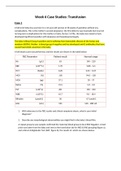
A full blood count was performed, and the results are shown in the table below:
FBC Parameter Patient result Normal range
Hb (g/L) 63 140 – 220
RBC (x10¹²/L) 1.70 3.80 – 6.5
HCT (Ratio) 0.20 0.45 – 0.67
MCV (fL) 118 94.0 – 130
MCH (pg) 37.1 30 – 37
Retics (%) 31.5 1.0 – 3.0
PLT (x10⁹/L) 201 150 – 450
WBC (x10⁹/L) 10.7 9.0 – 18.4
Bilirubin (μmol/L) 36 <17 μmol/L
LDH (U/L) 595 140 – 280 U/L
1. With reference to the FBC results and clinical symptoms above, what is your initial
diagnosis?
2. Describe any morphological abnormalities you might find in the baby’s blood film.
A repeat group & save sample confirmed the maternal blood group to be A RhD Negative. A heel
prick was taken from the baby and sent to the transfusion lab for ABO & RhD grouping (figure a),
and a Direct Antiglobulin Test (DAT, figure b), the results of which are shown below:
Case 1
A full-term baby boy was born to a 34-year-old woman at 38 weeks of gestation without any
complications. This is the mother’s second pregnancy; the first delivery was traumatic but incurred
no long-term complications for the mother or baby. By day 2 of life, the baby was noted to have
developed significant jaundice with dyspnoea and hepatospenomegaly .
The baby is Blood Group A positive and is suffering from haemolytic disease of the foetus and
newborn (HDFN). Mother is blood group A negative and has developed anti-D antibodies that have
caused haemolytic anaemia in the baby.
A full blood count was performed, and the results are shown in the table below:
FBC Parameter Patient result Normal range
Hb (g/L) 63 140 – 220
RBC (x10¹²/L) 1.70 3.80 – 6.5
HCT (Ratio) 0.20 0.45 – 0.67
MCV (fL) 118 94.0 – 130
MCH (pg) 37.1 30 – 37
Retics (%) 31.5 1.0 – 3.0
PLT (x10⁹/L) 201 150 – 450
WBC (x10⁹/L) 10.7 9.0 – 18.4
Bilirubin (μmol/L) 36 <17 μmol/L
LDH (U/L) 595 140 – 280 U/L
1. With reference to the FBC results and clinical symptoms above, what is your initial
diagnosis?
2. Describe any morphological abnormalities you might find in the baby’s blood film.
A repeat group & save sample confirmed the maternal blood group to be A RhD Negative. A heel
prick was taken from the baby and sent to the transfusion lab for ABO & RhD grouping (figure a),
and a Direct Antiglobulin Test (DAT, figure b), the results of which are shown below:


