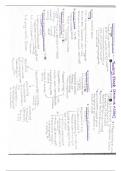
heuristics and biases (HB) and naturalistic decision making (NDM)
NDM approach focuses on the successes of expert intuition
A central goal of NDM is to demystify intuition by identifying the cues that experts use to make their
judgments, even if those cues involve tacit knowledge and are difficult for the expert to articulate.
Fireground commanders could draw on the repertoire of patterns that they had compiled during
more than a decade of both real and virtual experience to identify a plausible option, which they
considered first. They evaluated this option by mentally simulating it to see if it would work in the
situation they were facing—a process that deGroot (1946/1978) had described as progressive
deepening. If the course of action they were considering seemed appropriate, they would implement
it. If it had shortcomings, they would modify it. If they could not easily modify it, they would turn to
the next most plausible option and run through the same procedure until an acceptable course of
action was found. This recognition-primed decision (RPD) strategy was effective because it took
advantage of the commanders’ tacit knowledge
HB approach favors a skeptical attitude toward expertise and expert judgment.
Three phenomena that have been discussed in the HB literature illustrate the sources of flawed
intuitive judgments.
- Intuitive response
- Anchoring (connecting something that is being judged now to information that has been
provided before.)
- Attribute substitution has been described as an automatic process. It produces intuitive
judgments in which a difficult question is answered by substituting an easier one—the
essence of heuristic thinking
algorithms significantly outperform humans under two quite different conditions: (a) when
validity is so low that human difficulties in detecting weak regularities and in maintaining
consistency of judgment are critical and (b) when validity is very high, in highly predictable
environments, where ceiling effects are encountered and occasional lapses of attention can
cause humans to fail. Automatic transportation systems in airports are an example in that class
Conditions necessary for the construction and use of an algorithm are stringent. These conditions
include (a) confidence in the adequacy of the list of variables that will be used, (b) a reliable and
measurable criterion, (c) a body of similar cases, (d) a cost/benefit ratio that warrants the
investment in the algorithmic approach, and (e) a low likelihood that changing conditions will
render the algorithm obsolete.
NDM approach focuses on the successes of expert intuition
A central goal of NDM is to demystify intuition by identifying the cues that experts use to make their
judgments, even if those cues involve tacit knowledge and are difficult for the expert to articulate.
Fireground commanders could draw on the repertoire of patterns that they had compiled during
more than a decade of both real and virtual experience to identify a plausible option, which they
considered first. They evaluated this option by mentally simulating it to see if it would work in the
situation they were facing—a process that deGroot (1946/1978) had described as progressive
deepening. If the course of action they were considering seemed appropriate, they would implement
it. If it had shortcomings, they would modify it. If they could not easily modify it, they would turn to
the next most plausible option and run through the same procedure until an acceptable course of
action was found. This recognition-primed decision (RPD) strategy was effective because it took
advantage of the commanders’ tacit knowledge
HB approach favors a skeptical attitude toward expertise and expert judgment.
Three phenomena that have been discussed in the HB literature illustrate the sources of flawed
intuitive judgments.
- Intuitive response
- Anchoring (connecting something that is being judged now to information that has been
provided before.)
- Attribute substitution has been described as an automatic process. It produces intuitive
judgments in which a difficult question is answered by substituting an easier one—the
essence of heuristic thinking
algorithms significantly outperform humans under two quite different conditions: (a) when
validity is so low that human difficulties in detecting weak regularities and in maintaining
consistency of judgment are critical and (b) when validity is very high, in highly predictable
environments, where ceiling effects are encountered and occasional lapses of attention can
cause humans to fail. Automatic transportation systems in airports are an example in that class
Conditions necessary for the construction and use of an algorithm are stringent. These conditions
include (a) confidence in the adequacy of the list of variables that will be used, (b) a reliable and
measurable criterion, (c) a body of similar cases, (d) a cost/benefit ratio that warrants the
investment in the algorithmic approach, and (e) a low likelihood that changing conditions will
render the algorithm obsolete.