

Polina Lobacheva
Immunology: the study of the immune system and the mechanisms that provide immune defense. The immune system
consists of organs, tissues, cells and molecules that provide immune defense against microorganisms. The immune system
distinguishes between SELF and NONSELF
Nonspecific immunity is available immediately (first line of defense to any nonself material) ex. Inflammation
Acute Phase response is a nonspecific response to infection
Specific immunity:involves immune cells recognizing specific parts of a microorganism (proteins, glycoproteins). Specific
immunity takes longer to develop (not immediate), it’s long lasting because memory cells are formed
Immunogen/antigen: any substance which causes an immune response
Epitope: part of an antigen recognised by an antibody or T-cell receptor
Immunity can be classes as:
1. Humoral: involves the production of antibodies, important for extracellular microorganisms
2. Cell-mediated involved the production of cells that kill or recruit other cells that kill infected
cells, important for intracellular microorganisms
Different parts of the immune system work together to provide protection against infectious
disease like chicken pox cause by virus varicella zoster
Autoimmune disease: where the immune system mistakenly attacks the body's own molecules
(self material). Treatments aimed at suppressing immunity or specific symptoms. Ex. insulin-
dependent diabetes (T-cells targeting B islet cells in the pancreas), multiple sclerosis (T cells target
myelin sheath)
Systemic Lupus Erythematosus: B lymphocytes produce antibodies against a variety of self-
molecules including histones and DNA. Symptoms include skin rashes, fever, arthritis and kidney malfunction
Rheumatoid arthritis-antibody mediated, resulting in damage, pain and inflammation of joints
Immunodeficiency disease: results when 1 or more components of the immune system are missing. Individuals have
frequent infections. The person can be born with disease (primary) or acquire it during lifetime (secondary). An example of
severe combined immunodeficiency (SCID) is the David Vetter Bubble Boy.
Acquired Immunodeficiency Syndrome (AIDS): is an infection with the retroviruses HIV1 or HIV2. These viruses infect
immune cells (which express CD4 including T cells and sme antigen presenting cells) and disease progresses into AIDS.
Highly Active Antiretroviral Treatment (HAART) has had an enormous impact upon survival. There’s still no effective vaccine
available
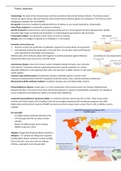
HIV and AIDS:
- 37 million people worldwide affected by HIV
- 54% of people with HIV are aware of their
infection
- Almost 16 million people were receiving
HAART treatment in 2015
Allergies: Exaggerated (hypersensitive) responds to
allergens. 1 in 3 people are allergic due to genetic
predisposition (atopy). Symptoms include swelling,
hives (urticaria), runny eyes and nose (allergic
rhinitis), anaphylactic shock (treated with
, Polina Lobacheva
adrenaline injection). Treatments are aimed at reducing the immune response (antihistamines, anti-inflammatory) or
desensitisation
Immunization: vaccination is immunization with a vaccine
Immunotherapy: treatment of disease by stimulating the body’s own immune system (biological therapy)
Immunoassays: is a test used to detect presence/quantity of a substance
based on its ability to act as an antigen or antibody. It’s used routinely
used worldwide in hospitals and research labs
Antigen: any molecule that can be recognised by B or T cells
Antibody: protein produced after contact with an antigen
Cells of the immune system
- Role of the immune system is to protect the body from damage caused by microorganisms
- This is achieved by white blood cells (leukocytes) and various accessory cells found throughout the body particularly in
the lymphoid organs
- Lymphoid organs include bone marrow, thymus, spleen and mucosa-associated lymphoid tissue
- Lymphoid organs are strategically placed to protect different area of the body from infection
- Cells move between the tissues via the bloodstream and lymphatic system. Whilst they do this, they interact with each
other
- Lymphoid organs are strategically placed to protect different area of the body from infection
- Cells move between the tissues via the bloodstream and lymphatic system. Whilst they do this, they interact with each
other to generate coordinated immune responses, in order to eliminate pathogens or minimise the damage they cause.
Different types of immune cells include: Lymphocytes, Antigen-presenting cells, Phagocytes, Accessory cells
Lymphocytes:
- Important cells controlling the immune response
- Achieve this by recognising molecules produced by pathogens
- Can recognise molecules on cells of body, but don’t normally react against the body’s own tissues (unless in
autoimmune disease)
- Molecules recognised by lymphocytes are called antigens
- Recognise foreign material by specific cell-surface antigen receptors
- Receptors are very diverse so that they can recognise any potential molecule encountered during individual's lifetime
- Each lymphocyte makes only 1 type of antigen receptor = they are specific (part of adaptive immunity)
Types of lymphocytes are:
1. B cells/B lymphocytes which produce antibodies:
a. Count of 20% of total lymphocytes
b. Recognise enemy (B cell receptor)
Immunology: the study of the immune system and the mechanisms that provide immune defense. The immune system
consists of organs, tissues, cells and molecules that provide immune defense against microorganisms. The immune system
distinguishes between SELF and NONSELF
Nonspecific immunity is available immediately (first line of defense to any nonself material) ex. Inflammation
Acute Phase response is a nonspecific response to infection
Specific immunity:involves immune cells recognizing specific parts of a microorganism (proteins, glycoproteins). Specific
immunity takes longer to develop (not immediate), it’s long lasting because memory cells are formed
Immunogen/antigen: any substance which causes an immune response
Epitope: part of an antigen recognised by an antibody or T-cell receptor
Immunity can be classes as:
1. Humoral: involves the production of antibodies, important for extracellular microorganisms
2. Cell-mediated involved the production of cells that kill or recruit other cells that kill infected
cells, important for intracellular microorganisms
Different parts of the immune system work together to provide protection against infectious
disease like chicken pox cause by virus varicella zoster
Autoimmune disease: where the immune system mistakenly attacks the body's own molecules
(self material). Treatments aimed at suppressing immunity or specific symptoms. Ex. insulin-
dependent diabetes (T-cells targeting B islet cells in the pancreas), multiple sclerosis (T cells target
myelin sheath)
Systemic Lupus Erythematosus: B lymphocytes produce antibodies against a variety of self-
molecules including histones and DNA. Symptoms include skin rashes, fever, arthritis and kidney malfunction
Rheumatoid arthritis-antibody mediated, resulting in damage, pain and inflammation of joints
Immunodeficiency disease: results when 1 or more components of the immune system are missing. Individuals have
frequent infections. The person can be born with disease (primary) or acquire it during lifetime (secondary). An example of
severe combined immunodeficiency (SCID) is the David Vetter Bubble Boy.
Acquired Immunodeficiency Syndrome (AIDS): is an infection with the retroviruses HIV1 or HIV2. These viruses infect
immune cells (which express CD4 including T cells and sme antigen presenting cells) and disease progresses into AIDS.
Highly Active Antiretroviral Treatment (HAART) has had an enormous impact upon survival. There’s still no effective vaccine
available
HIV and AIDS:
- 37 million people worldwide affected by HIV
- 54% of people with HIV are aware of their
infection
- Almost 16 million people were receiving
HAART treatment in 2015
Allergies: Exaggerated (hypersensitive) responds to
allergens. 1 in 3 people are allergic due to genetic
predisposition (atopy). Symptoms include swelling,
hives (urticaria), runny eyes and nose (allergic
rhinitis), anaphylactic shock (treated with
, Polina Lobacheva
adrenaline injection). Treatments are aimed at reducing the immune response (antihistamines, anti-inflammatory) or
desensitisation
Immunization: vaccination is immunization with a vaccine
Immunotherapy: treatment of disease by stimulating the body’s own immune system (biological therapy)
Immunoassays: is a test used to detect presence/quantity of a substance
based on its ability to act as an antigen or antibody. It’s used routinely
used worldwide in hospitals and research labs
Antigen: any molecule that can be recognised by B or T cells
Antibody: protein produced after contact with an antigen
Cells of the immune system
- Role of the immune system is to protect the body from damage caused by microorganisms
- This is achieved by white blood cells (leukocytes) and various accessory cells found throughout the body particularly in
the lymphoid organs
- Lymphoid organs include bone marrow, thymus, spleen and mucosa-associated lymphoid tissue
- Lymphoid organs are strategically placed to protect different area of the body from infection
- Cells move between the tissues via the bloodstream and lymphatic system. Whilst they do this, they interact with each
other
- Lymphoid organs are strategically placed to protect different area of the body from infection
- Cells move between the tissues via the bloodstream and lymphatic system. Whilst they do this, they interact with each
other to generate coordinated immune responses, in order to eliminate pathogens or minimise the damage they cause.
Different types of immune cells include: Lymphocytes, Antigen-presenting cells, Phagocytes, Accessory cells
Lymphocytes:
- Important cells controlling the immune response
- Achieve this by recognising molecules produced by pathogens
- Can recognise molecules on cells of body, but don’t normally react against the body’s own tissues (unless in
autoimmune disease)
- Molecules recognised by lymphocytes are called antigens
- Recognise foreign material by specific cell-surface antigen receptors
- Receptors are very diverse so that they can recognise any potential molecule encountered during individual's lifetime
- Each lymphocyte makes only 1 type of antigen receptor = they are specific (part of adaptive immunity)
Types of lymphocytes are:
1. B cells/B lymphocytes which produce antibodies:
a. Count of 20% of total lymphocytes
b. Recognise enemy (B cell receptor)


